
Choosing the right printing method for your first cosmetic packaging project can be confusing. You may have a beautiful box design, but you still need to decide which finishes are worth the investment. Should you use only CMYK printing? Is foil stamping necessary? Will embossing make your logo look better or simply increase the cost?
For small beauty brands, packaging is often the first physical interaction customers have with your product. The wrong printing choice can affect your brand image, color accuracy, production cost, and delivery time.
This guide explains the most common custom box printing techniques used for cosmetic packaging, including CMYK printing, UV coating, foil stamping, and embossing. You will learn what each technique does, when to use it, and how to choose the right combination based on your product positioning and budget.
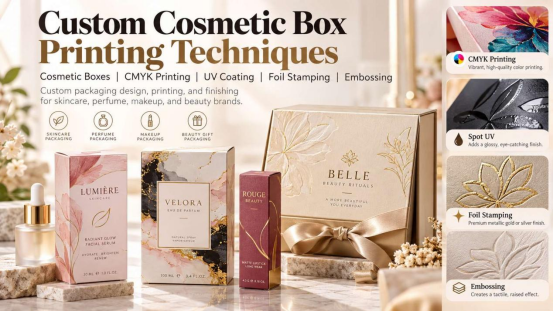
Understanding Custom Box Printing Techniques: Why CMYK Printing Is the Starting Point
Most cosmetic packaging projects start with CMYK printing.
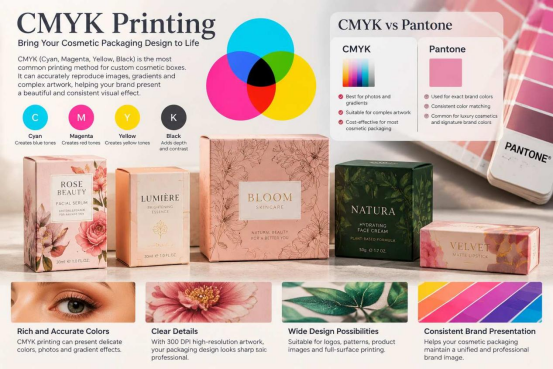
CMYK stands for:
- C — Cyan
- M — Magenta
- Y — Yellow
- K — Black
These four ink colors are combined during printing to create different shades, images, and patterns.
For cosmetic boxes, CMYK printing is commonly used for:
- Brand logos
- Product images
- Background colors
- Ingredient illustrations
- Decorative patterns
- Product information
For example, if you are launching a skincare brand with a floral design and pastel colors, CMYK printing can reproduce the artwork on your box surface before adding any special finishing effects.
However, CMYK printing alone creates a flat visual appearance. If you want your packaging to feel more luxurious or interactive, you usually combine it with additional finishes such as UV coating, foil stamping, or embossing.
CMYK Printing vs Pantone: Which Color System Should Cosmetic Brands Choose?
One of the most common questions from first-time packaging buyers is:
“Why does my printed box look slightly different from my design file?”
The reason is that your computer screen uses RGB colors, while printing uses CMYK colors.
RGB colors are created with light, while CMYK colors are created with ink. Because they work differently, some bright digital colors cannot be reproduced exactly through standard CMYK printing.
For most cosmetic packaging designs, CMYK is enough.
However, if your brand relies on a specific signature color, Pantone matching may be a better choice.
For example:
- A luxury skincare brand with a specific beige tone
- A makeup brand with a recognizable pink color
- A perfume brand with a consistent brand color system
A simple comparison:
| Printing Method | Best For | Consideration |
| CMYK printing | Photos, gradients, complex artwork | Some colors may vary slightly |
| Pantone color printing | Exact brand colors | Usually higher printing cost |
If your packaging color is very important for brand recognition, it is better to request a printed proof before mass production.
Important Artwork Requirements Before Printing
Many packaging problems happen before production starts because the artwork file is not prepared correctly.
For cosmetic box printing, common requirements include:
Resolution:
- 300 DPI artwork is recommended for clear printing.
Bleed:
- Usually 3mm bleed is needed to avoid white edges after cutting.
File format:
Common production files include:
- AI
- EPS
Before mass production, many brands choose to review:
- Digital proof
- Printed sample
- Color reference
This step helps reduce unexpected differences between the design file and the final box.
Choosing Custom Box Printing Techniques Based on Packaging Materials
The printing effect does not depend only on your design. The packaging material also plays an important role.
A gold foil logo on a rigid black box will create a completely different feeling from the same logo printed on kraft paper.
Below are common materials used for cosmetic packaging and the printing techniques that usually work well with them.
1. 250-350gsm White Cardboard Cosmetic Boxes
White cardboard is commonly used for folding cosmetic cartons.
Typical thickness:
- 250gsm
- 300gsm
- 350gsm
These boxes are lightweight and suitable for products that need efficient shipping.
Common applications:
- Lipstick boxes
- Face cream boxes
- Serum packaging
- Haircare products
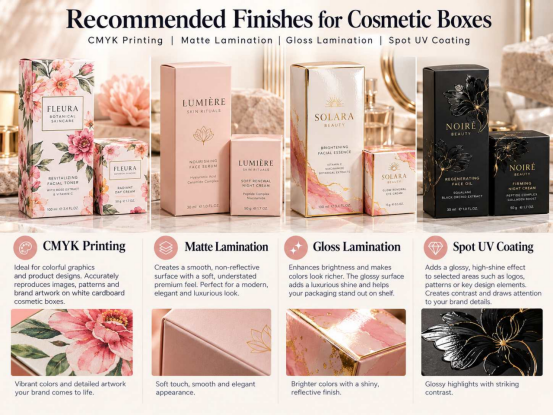
Recommended finishes:
- CMYK printing
- Matte lamination
- Gloss lamination
- Spot UV coating
Example:
A new skincare brand producing 1,000-3,000 boxes may choose:
- 300gsm white cardboard
- CMYK printing
- Matte finish
- Spot UV logo
This combination creates a clean appearance while keeping the packaging cost under control.
2. 157gsm Coated Paper + 1200-1600gsm Greyboard Rigid Boxes
For luxury cosmetic packaging, rigid boxes are commonly used.
A typical structure includes:
- Outer wrapping paper: 157gsm coated paper
- Inner support board: 1200-1600gsm greyboard
This structure creates a thicker and stronger box.
Common applications:
- Luxury perfume boxes
- Skincare gift sets
- Premium makeup collections
Recommended finishes:
- Soft-touch lamination
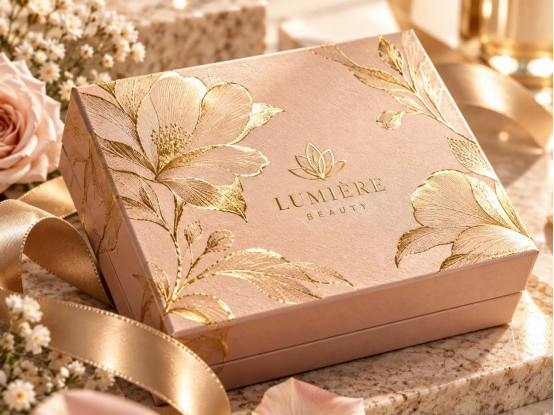
- Foil stamping
- Embossing
- UV coating
Example:
A premium perfume brand may use:
- Black rigid box
- Matte soft-touch surface
- Gold foil logo
- Embossed brand mark
The combination creates a stronger unboxing experience compared with standard folding cartons.
3. Kraft Paper Cosmetic Packaging
Kraft paper is popular among natural and eco-focused beauty brands.
It creates a:
- Natural appearance
- Handmade feeling
- Simple design style
Suitable products:
- Organic skincare
- Handmade cosmetics
- Natural beauty products
Recommended finishes:
- Simple CMYK printing
- Embossed logo
- Minimal graphics
One important point:
Because kraft paper has a brown base color, bright colors may appear darker compared with printing on white paper.
If your design contains bright pink, blue, or green colors, it is better to test a sample first.
How UV Coating Works in Cosmetic Box Printing
Among different custom box printing techniques, UV coating is one of the most popular finishing options because it creates contrast without adding too much cost.
UV coating applies a clear coating layer to the packaging surface and uses ultraviolet light to dry it.
A simple way to understand it:
UV coating is similar to adding a protective screen layer to your phone. It changes the surface feeling and adds protection.
There are two common types:
- Full UV coating
- Spot UV coating
Spot UV Coating: Highlighting Important Design Areas
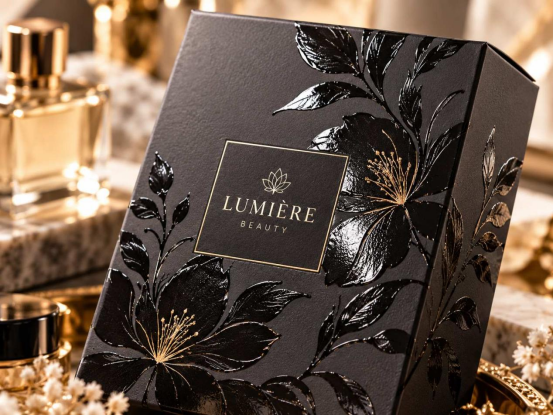
Spot UV means applying glossy coating only to selected areas.
For example:
A cosmetic box may have:
- Matte black background
- Glossy logo
- Glossy pattern details
The contrast between matte and glossy surfaces makes the design more noticeable.
Spot UV works especially well for:
- Minimal packaging
- Modern skincare brands
- Black or dark-colored boxes
UV Coating Advantages and Cost
Advantages:
1. Creates contrast
A simple logo can become more visible without adding another color.
2. Adds surface protection
UV coating can improve resistance against:
- Small scratches
- Surface wear
- Finger marks
3. Lower cost compared with some luxury finishes
Typical additional cost:
- Simple spot UV: around $0.03-$0.10 per box
- More complex UV patterns: higher depending on coverage area
The actual cost depends on:
- Box size
- Quantity
- UV coverage area
- Material choice
When Should You Choose UV Coating?
UV coating is suitable when you want:
- A modern appearance
- A premium feeling with controlled cost
- Extra visual contrast
Common combinations:
| Packaging Style | Recommended Finish |
| White skincare carton | CMYK + matte lamination + spot UV |
| Black cosmetic box | Matte surface + glossy UV logo |
| Minimal beauty packaging | CMYK + selective UV details |
Foil Stamping: Creating Metallic Luxury Details
Foil stamping is one of the most recognized luxury packaging finishes.
The process uses heat and pressure to transfer metallic foil onto the box surface.
Common foil colors include:
- Gold
- Silver
- Rose gold
- Black foil
- Holographic foil
Many luxury cosmetic brands use foil stamping because metallic details immediately attract attention.
How Foil Stamping Works
A custom metal plate is created based on your logo or design.
During production:
- The plate is heated.
- The foil layer is pressed onto the packaging.
- The metallic design remains on the surface.
Foil stamping works best for:
- Logos
- Brand names
- Simple decorative lines
Foil Stamping Cost and Limitations
Typical costs:
- Stamping plate: around $30-$100
- Additional foil cost: around $0.03-$0.15 per box, depending on size and coverage
The cost depends on:
- Logo size
- Foil area
- Quantity
- Box material
However, foil stamping is not always the best option.
Limitations:
- Very small text may lose detail
- Extremely thin lines may not transfer clearly
- Large foil areas increase cost
For example:
A simple gold logo on a black perfume box usually works very well.
A complicated logo with tiny details may need adjustment before production.
Embossing: Adding a Premium Touch Through Texture
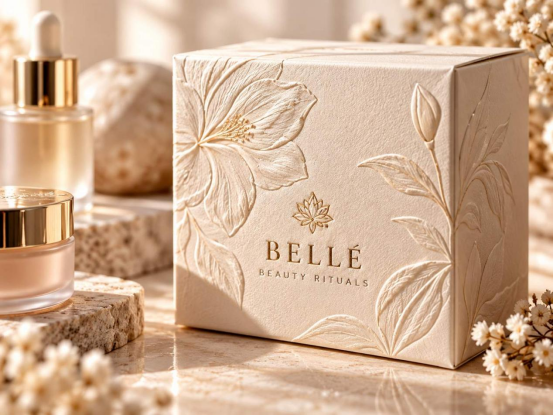
Embossing creates a raised effect by pressing the paper between specially made molds.
Unlike foil stamping, embossing does not add color.
It changes the surface structure.
Customers can feel the logo or pattern with their fingers.
This tactile experience is why embossing is commonly used for:
- Luxury skincare
- Perfume packaging
- Jewelry boxes
- Premium gift sets
Embossing Cost and Design Considerations
Typical mold cost:
- Around $50-$150
The final cost depends on:
- Logo size
- Design complexity
- Embossing area
Embossing works best with:
- Larger logos
- Simple shapes
- Clear lines
It may not work well with:
- Extremely small text
- Very thin patterns
- Highly detailed images
A common luxury combination is:
- Matte black box
- Gold foil logo
- Embossed logo shape
This creates both visual and tactile impact.
How to Select the Right Printing Combination for Your Cosmetic Brand
There is no single “best” printing method.
The right choice depends on:
- Your product price
- Your target customers
- Your brand style
- Your production quantity
- Your packaging budget
Common examples:
| Brand Positioning | Recommended Printing Combination |
| Small skincare startup | CMYK + matte lamination |
| Modern beauty brand | CMYK + spot UV |
| Luxury perfume brand | CMYK + foil stamping + embossing |
| Natural cosmetic brand | Kraft paper + embossing |
| Premium gift set | Rigid box + foil + soft-touch finish |
Example 1: A New Skincare Brand With 1,000-3,000 Boxes
Product:
Facial serum or cream.
Goal:
Professional appearance with controlled budget.
Recommended:
- 300gsm white cardboard
- CMYK printing
- Matte lamination
- Spot UV logo
Why?
The brand gets a premium appearance without adding too many expensive finishes.
Example 2: A Luxury Perfume Collection
Product:
High-end fragrance.
Goal:
Create a strong unboxing experience.
Recommended:
- 1200-1600gsm rigid box
- Soft-touch surface
- Gold foil stamping
- Embossed logo
Why?
Luxury products usually depend on both visual appearance and touch experience.
Example 3: A Natural Skincare Brand
Product:
Organic face care products.
Goal:
Simple and environmentally focused appearance.
Recommended:
- Kraft paper box
- Minimal CMYK printing
- Embossed logo
Why?
The material itself already communicates a natural feeling.
Common Mistakes First-Time Cosmetic Brands Make
1. Choosing too many finishes at the beginning
Adding:
- Foil stamping
- Embossing
- UV coating
- Special materials
does not always create a better result.
Sometimes a simple design with one strong finishing detail looks more expensive.
2. Ignoring the relationship between quantity and cost
Packaging cost changes significantly with order quantity.
General comparison:
| Quantity | Suitable Approach |
| 500-1000 pcs | Simple CMYK printing |
| 1000-5000 pcs | Add UV or foil details |
| 5000+ pcs | More customized finishing options |
Higher quantities usually reduce the unit cost because setup costs are spread across more boxes.
3. Not testing colors before mass production
A digital design preview is not always enough.
Before production, check:
- Printed colors
- Logo position
- Foil effect
- Embossing depth
A small sample investment can prevent larger production problems later.
Final Thoughts: Choosing the Right Custom Box Printing Techniques
Choosing cosmetic packaging finishes is not about adding the most expensive effects.
The goal is to select printing techniques that match your product, customer expectations, and budget.
Remember:
- CMYK printing creates your main artwork and colors.
- Pantone matching helps maintain important brand colors.
- UV coating adds contrast and surface protection.
- Foil stamping creates metallic luxury details.
- Embossing adds a premium tactile experience.
A well-planned packaging design usually comes from the right combination of material, printing method, and finishing technique.
If you already have a cosmetic box design but are unsure which printing finish fits your product and budget, comparing different options before production can help you avoid unnecessary cost and make better packaging decisions.