
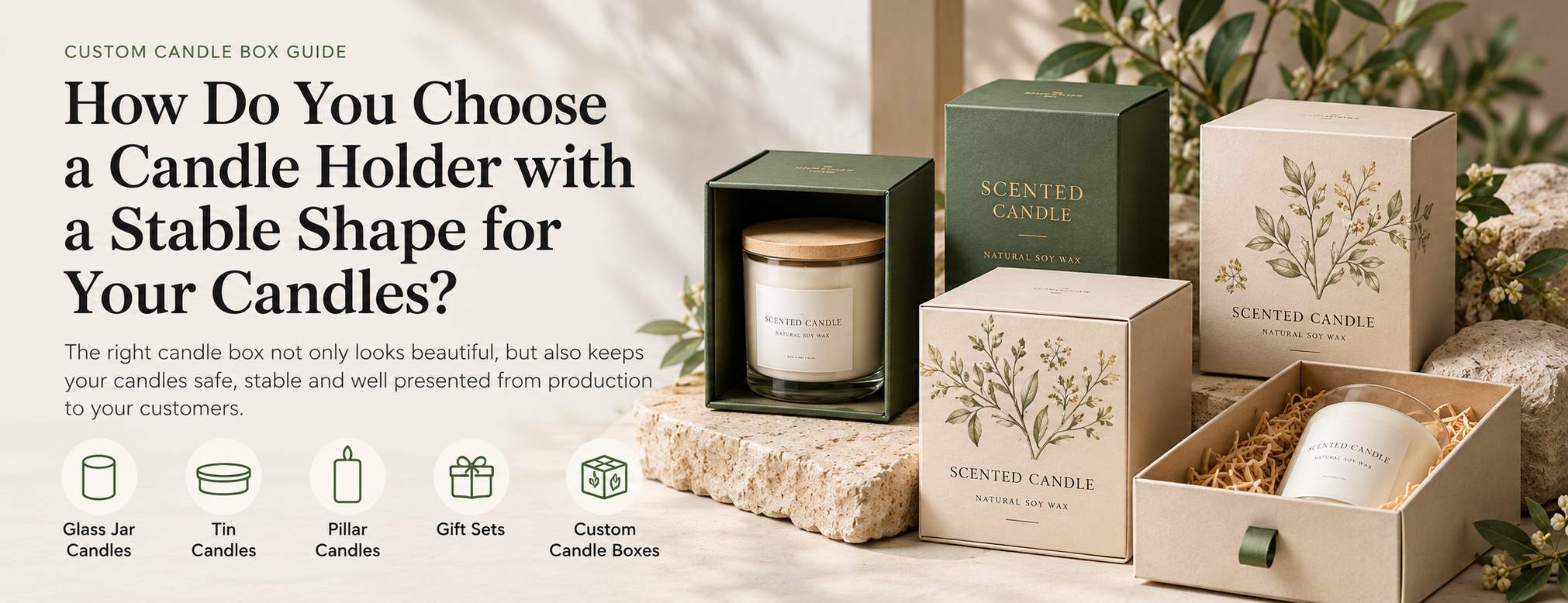

A beautiful candle box can still be the wrong box if the candle moves, tilts, puts too much pressure on the bottom, or arrives with a damaged label or cracked glass vessel.
That is why choosing a custom candle box should begin with the candle itself rather than the appearance of the packaging.
A lightweight tin candle, a 600 g glass jar candle, a tall pillar candle, and a sculptural candle all place different demands on packaging. Their weight distribution, center of gravity, surface sensitivity, and breakage risk are not the same. A box structure that performs well for one product may be unsuitable for another, even when the external dimensions are similar.
For brands developing custom candle packaging, the most reliable approach is to match the box structure, material, internal fit, and insert to the actual finished candle and the way it will be sold and transported.
A stable candle box should support the finished candle’s weight, keep the product upright, limit unwanted movement, protect the vessel and label, and maintain its shape during packing, storage, retail display, and transportation. Heavy glass jar candles normally require stronger bottom structures and more precise internal support, while lightweight tin or votive candles can often use simpler folding cartons. The right structure depends on candle shape, filled weight, center of gravity, vessel material, and the level of protection required.
The objective is not to create the thickest or heaviest package possible.
It is to create a stable, efficient, and brand-appropriate candle packaging system that protects the product without adding unnecessary material, weight, or cost.
What Makes a Custom Candle Box Stable for Different Candle Shapes?
A stable custom candle box is designed around the candle’s finished dimensions, filled weight, center of gravity, vessel material, and expected handling conditions. The outer box should resist deformation and support vertical load, while the internal structure should control side-to-side movement. Stability comes from the complete packaging system—including the box style, material, fit, and insert—not from paper thickness alone.
Two candles with almost identical dimensions can require very different packaging.
A lightweight aluminum tin and a filled glass jar, for example, may both measure approximately 90 mm in diameter and 100 mm in height. On a dieline, they may appear similar. In real use, however, the glass candle can weigh several times more and introduces a completely different level of breakage risk.
The packaging therefore has to do more than fit around the product. It has to manage the way the product behaves inside the box.
What Does “Stable” Mean in Candle Packaging?
A well-designed candle packaging box should normally:
- Keep the candle upright
- Support the finished product weight
- Control unnecessary internal movement
- Maintain clean box geometry
- Protect the vessel, label, and decorative surface
- Remain practical to pack and open
- Perform consistently during storage and transportation
These requirements have to be balanced.
A box that is too loose may allow the candle to move repeatedly during handling. A box that is too tight may slow down packing, scratch labels, damage coatings, or create inconsistent fit when normal manufacturing tolerances occur.
The outer box provides structural protection, while the candle box insert controls the position of the product.
When both are designed together, the candle can remain stable without unnecessary compression.
Why Does Candle Shape Affect Candle Box Stability?
A short, wide glass jar naturally has a lower center of gravity. It is generally less likely to tip and places more of its load directly onto the base of the package.
A tall, narrow jar behaves differently. Even when the total weight is the same, a higher center of gravity increases the tendency to tilt when the box is handled sideways or experiences vibration.
Tall candle packaging may therefore require:
- deeper internal support
- tighter control around the upper vessel
- stronger side walls
- more accurate internal dimensions
- reduced lateral clearance
Irregular candles create different challenges.
A sculptural candle may have decorative edges that should never carry packaging pressure. A pillar candle can suffer dents or abrasion even though it cannot shatter like glass. Long taper candles are more sensitive to bending and need better lengthwise support.
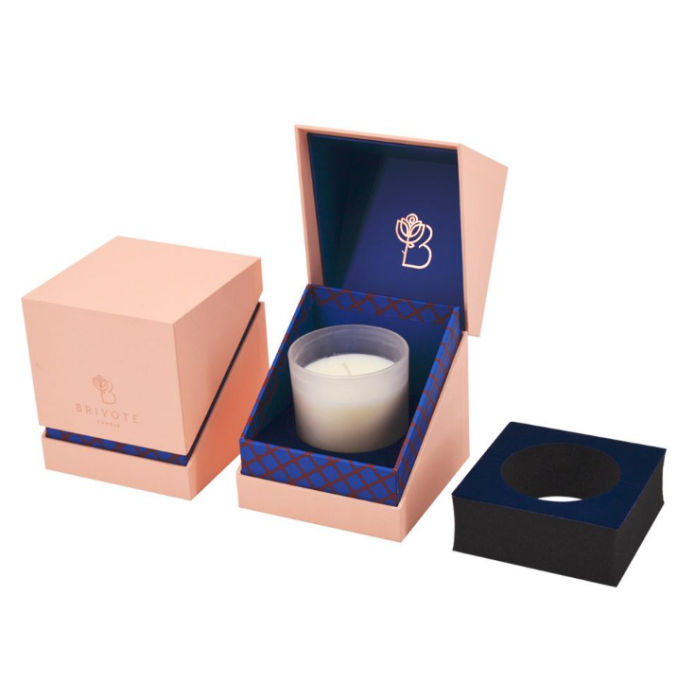
For premium glass vessels, a rigid box or lid and base box may offer stronger shape retention, while lightweight candles can often use efficiently engineered folding cartons.
Why Does Finished Candle Weight Matter?
Packaging should be designed around the finished candle rather than the empty vessel.
A glass jar that weighs 250 g before filling can easily reach 600–800 g after wax, a lid, labels, and accessories are added.
That difference changes the load placed on:
- bottom panels
- locking tabs
- glue joints
- inserts
- side walls
- master cartons
A structure that feels strong around an empty jar may flex once the real candle is loaded.
For heavier products, suitable options may include:
- auto-lock bottom cartons
- reinforced folding cartons
- rigid candle boxes
- lid and base boxes
- corrugated inserts
- EVA inserts
The correct solution depends on both protection and brand positioning.
Is Thicker Paperboard Always Better?
No.
Thicker board may improve stiffness, but material thickness alone does not guarantee a stable candle package.
A weak bottom can still fail with heavier board. An oversized rigid box can still allow the candle to move if the internal fit is poor.
A more reliable design evaluates four elements together:
Material + Structure + Fit + Insert
A medium-weight candle may perform very well in a folding carton with an auto-lock bottom and a paperboard insert. Upgrading to a rigid box may add cost without adding meaningful protection.
A heavy premium candle, on the other hand, may justify a luxury rigid box because structural performance and presentation are both important.
How Does the Center of Gravity Affect Candle Box Design?
Consider two candles that both weigh 500 g.
One is low and wide. The other is tall and narrow.
Although the weight is identical, the taller candle produces more leverage against the side wall when the package is tilted.
Possible solutions include:
- deeper paperboard inserts
- upper support collars
- tighter side clearance
- stronger side panels
- two-point internal support
This becomes particularly important in e-commerce candle packaging, where parcels may experience vibration, rotation, compression, and changes in orientation.
For direct-to-consumer shipping, the retail box may also need to work together with corrugated shipping boxes.
Secure Fit vs Overly Tight Fit
A secure fit should provide:
- controlled clearance
- stable positioning
- easy loading
- easy removal
- protection for labels
- allowance for production tolerances
An overly tight fit may cause:
- label scratching
- difficult assembly
- damaged coatings
- carton distortion
- slower packing
- inconsistent production
The goal is not zero clearance. The goal is controlled clearance.
A custom box insert can then keep the product in the correct position without squeezing it against the outer walls.
Which Candle Box Structure Is Best for Glass Jars, Tin Candles, Pillar Candles, and Gift Sets?
The best candle box structure depends on weight, vessel material, fragility, opening experience, sales channel, and brand positioning. Glass jars generally need better load support and movement control, while tin candles allow lighter structures. Pillar and sculptural candles need surface protection, and gift sets usually require multi-cavity inserts to manage several products in one presentation.
Choosing a box by appearance alone often leads to either over-packaging or insufficient protection.
The more useful question is: what does this specific candle require from the structure?
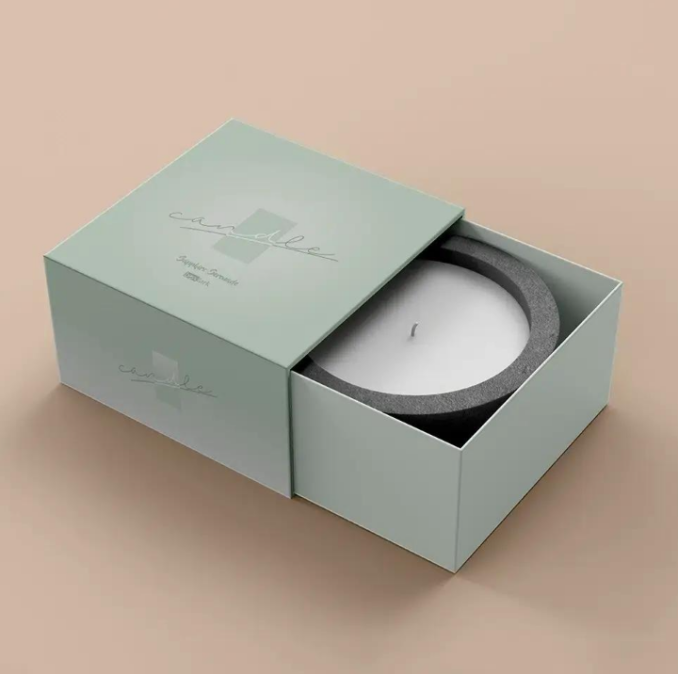
Glass Jar Candles
Glass candle jars combine weight and fragility.
Common packaging choices include:
- auto-lock bottom cartons
- rigid boxes
- lid-and-base boxes
- drawer boxes
- reinforced folding cartons
For premium products, magnetic boxes can also create a more controlled unboxing experience while offering enough space for a fitted insert.
The structural priorities are usually:
- strong bottom support
- stable internal positioning
- controlled clearance
- protected glass edges
- easy vertical removal
For e-commerce, the retail box should often be placed inside secondary corrugated packaging rather than expected to survive courier handling alone.
Tin Candles
Tin candles are lighter, less brittle, and generally more forgiving.
They may use:
- straight tuck cartons
- reverse tuck cartons
- simple auto-bottom boxes
- sleeves
- compact mailer boxes
Because the product is lighter, there is usually less need for thick rigid board unless luxury presentation is part of the brand strategy.
For high-volume retail programs, a folding carton can often provide the best balance of appearance, storage efficiency, printing flexibility, and cost.
Pillar Candles
Pillar candles do not have a protective container.
The wax surface itself becomes the sensitive product surface.
Packaging should help prevent:
- dents
- edge damage
- surface abrasion
- deformation
- color transfer
A paperboard carton with controlled clearance and internal supports can work well.
The packaging should not press too tightly against the wax, especially when the candle has textured, painted, metallic, or handcrafted surfaces.
Taper and Dinner Candles
Long, narrow candles need lengthwise protection.
The main risks include:
- bending
- rubbing
- tip damage
- product-to-product contact
For multi-piece sets, dividers or paper trays can separate individual candles.
The carton should also resist flexing across its longest dimension.
Sculptural Candles
Bubble candles, torso candles, geometric candles, floral candles, and artistic wax forms often need custom support.
The strongest point of the candle should carry the packaging load. Decorative edges should not be used as contact points simply because they fit conveniently against the box.
A custom insert can be shaped around the more structurally stable regions of the candle.
Candle Gift Sets
Gift sets may combine:
- candle jars
- matches
- wick trimmers
- candle snuffers
- diffusers
- oils
- greeting cards
The packaging challenge is no longer only protection. It also involves weight distribution and visual organization.
A heavy candle placed on one side of a large box can create an unbalanced feel. A multi-cavity insert can distribute products more intentionally while making the opening experience more premium.
Depending on positioning, suitable options include drawer boxes, magnetic boxes, and luxury gift boxes.
Quick Candle Box Selection Guide
| Candle Type | Suitable Structure | Insert Need | Main Priority |
| Heavy glass jar | Auto-lock / rigid box | High | Load + breakage protection |
| Small glass jar | Folding carton | Medium | Fit + shelf presentation |
| Tin candle | Folding carton | Low-Medium | Cost + branding |
| Pillar candle | Folding carton | Medium | Surface protection |
| Taper candle | Long carton | Medium | Bend protection |
| Sculptural candle | Custom carton | High | Shape protection |
| Gift set | Rigid / drawer box | High | Presentation + positioning |
| E-commerce candle | Retail box + corrugated shipper | High | Transit protection |
How Do Candle Weight, Center of Gravity, and Size Affect Custom Candle Box Design?
Candle packaging dimensions should be based on the finished product’s maximum size, real weight, center of gravity, lid geometry, surface finish, and required internal clearance. Two candles with the same outer dimensions may still need different structures because weight distribution and vessel shape change the way force is transferred through the packaging.
Accurate measurement is one of the simplest ways to prevent expensive packaging problems.
Before development begins, measure the actual finished candle whenever possible.
What Should Be Measured?
For jar candles, record:
- maximum diameter or width
- total height
- lid diameter
- lid overhang
- base diameter
- widest point
- filled weight
- label thickness
- decorative accessories
For non-round candles, measure the true maximum dimensions instead of assuming the product is perfectly symmetrical.
A handmade ceramic vessel, for example, may vary slightly from one unit to another.
Why Is Internal Clearance Important?
Internal clearance is necessary because packaging components are not manufactured to mathematically perfect dimensions.
Paperboard thickness can vary slightly. Glass jars can vary slightly. Labels add thickness. Assembly introduces tolerances.
A good package allows for these realities.
Too much clearance creates movement. Too little clearance creates friction and packing problems.
The correct tolerance depends on:
- vessel material
- label sensitivity
- insert design
- packaging structure
- packing method
Tall vs Short Candle Jars
Tall, narrow vessels need better control against tilting.
Short, wide vessels usually need stronger vertical load support but are naturally more resistant to tipping.
Therefore, using the same insert depth for every candle size in a collection may not be ideal.
For brands with multiple SKUs, it may be more effective to develop a family of related structures rather than forcing every product into one universal box.
This can improve both visual consistency and functional performance.
When Does Candle Packaging Need an Insert, and Which Candle Box Insert Works Best?
A candle box needs an insert when the product is heavy, fragile, smaller than the outer box, unusually shaped, part of a gift set, or likely to move during transportation. The insert should stabilize the candle at suitable contact points without damaging labels or decorative surfaces. Paperboard, corrugated, EVA, molded pulp, and flocked inserts each offer different levels of protection, cost, presentation, and sustainability.
A good insert is not simply filler.
It is part of the structural design.
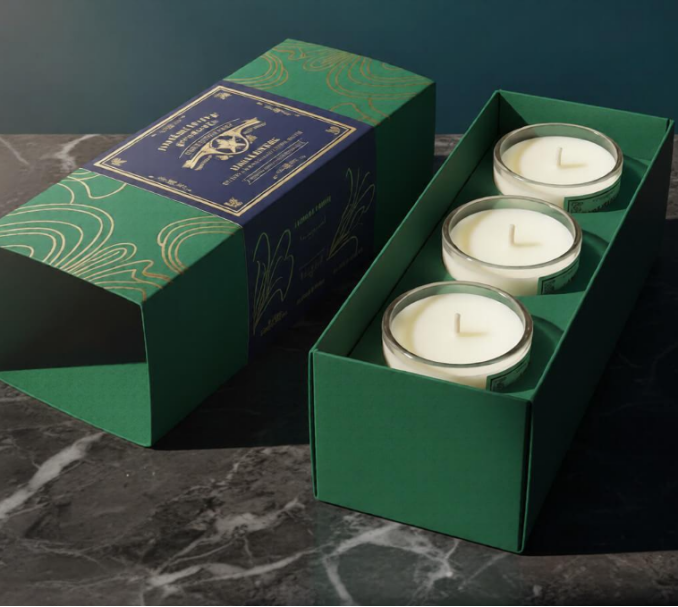
Paperboard Inserts
Paperboard inserts are widely used for candle packaging because they can be:
- die-cut
- folded
- printed
- matched to the outer box
- produced from paper-based materials
They are suitable for many retail candle programs and are particularly attractive when brands want to keep the packaging largely fiber-based.
Paper inserts can use:
- circular cutouts
- locking tabs
- raised platforms
- folded side supports
- layered structures
Corrugated Inserts
Corrugated inserts offer greater cushioning and compression resistance.
They work well for:
- heavier glass candles
- e-commerce packaging
- multi-product sets
- export shipping
They are less refined visually than some luxury insert materials, but they can be very effective when protection is the priority.
EVA Inserts
EVA can provide precise product positioning.
It is often used for:
- luxury candle gift sets
- premium glass containers
- candle accessories
- multi-component sets
The trade-off is that EVA adds another material type to the package and may not align with brands pursuing simplified fiber-based packaging.
Molded Pulp Inserts
Molded pulp is increasingly used when brands want dimensional protection while maintaining a paper-based material story.
It can be effective for repeatable vessel shapes and larger production programs.
Tooling and development requirements should be considered, especially for lower quantities.
Flocked Inserts
Flocked surfaces are selected primarily for presentation.
They can create a softer, more luxurious visual effect and are suitable for premium gifting.
They should be evaluated not only for appearance but also for:
- dust control
- surface contact
- material compatibility
- recyclability expectations
Which Insert Should You Choose?
| Requirement | Recommended Insert |
| Paper-based retail packaging | Paperboard |
| Heavy glass protection | Corrugated |
| Precision premium positioning | EVA |
| Fiber-based molded protection | Molded pulp |
| Luxury presentation | Flocked |
| Multi-product gift set | Custom multi-cavity insert |
For brands developing several products, custom box inserts can also be designed as part of a wider packaging system rather than as one-off components.
Which Candle Box Materials and Finishing Options Best Balance Strength, Appearance, and Cost?
The best candle box material should support the required structure while matching the product’s price point, visual positioning, production quantity, and sustainability goals. Folding cartons commonly use white paperboard, coated paper, kraft, or specialty paper, while rigid candle boxes combine thick greyboard with printed or decorative wrap. Finishing should reinforce the brand identity without making the packaging unnecessarily expensive or difficult to manufacture.
Materials and finishes should not be treated as separate decisions.
The finish sits on the structure. The structure depends on the material.
White Paperboard
White paperboard is a practical option for:
- retail folding cartons
- printed candle packaging
- colorful artwork
- clean premium presentation
It supports:
- CMYK printing
- Pantone colors
- lamination
- foil stamping
- embossing
- spot UV
It is suitable for brands that need strong print reproduction and efficient commercial production.
Kraft Paper
Kraft paper creates a more natural appearance.
It is commonly used for:
- handmade candle brands
- natural lifestyle products
- eco-positioned candles
- minimalist packaging
Kraft can work well with:
- one-color printing
- black ink
- foil stamping
- debossing
- simple labels
The natural paper color should be considered when accurate brand-color reproduction is required.
Specialty Paper
Specialty papers can add:
- texture
- color depth
- tactile character
- premium presentation
They are particularly effective for luxury gift boxes and premium rigid candle packaging.
However, specialty paper should be tested before production because surface texture can influence foil adhesion, ink density, lamination, and embossing results.
Greyboard
Greyboard is the structural core used in many rigid boxes.
It provides:
- strong shape retention
- defined corners
- premium hand feel
- support for heavier candles
It is normally wrapped with printed paper, specialty paper, or other decorative materials.
Corrugated Board
Corrugated board is useful when transport protection matters more than luxury presentation.
It is commonly used for:
- mailer boxes
- shipping cartons
- e-commerce candle packaging
- protective secondary packaging
What Finishing Options Can Be Added?
AKpack can support a wide range of decorative and functional finishes depending on the box structure and material.
CMYK Printing
Suitable for full-color graphics, photography, gradients, and illustrated branding.
Pantone and Spot Color Printing
Useful when accurate brand colors are important across a packaging collection.
Matte Lamination
Creates a smoother, more understated surface.
It can also add a layer of protection against minor scuffing.
Gloss Lamination
Produces stronger shine and color contrast.
It is more suitable for brands seeking a polished visual style.
Soft-Touch Lamination
Provides a soft tactile effect commonly associated with premium packaging.
It can work particularly well for luxury candle boxes where touch is part of the unboxing experience.
Foil Stamping
Gold, silver, or colored foil can highlight logos, borders, names, and decorative elements.
Foil works especially well when used selectively rather than covering too much of the surface.
Embossing and Debossing
Embossing raises an element from the surface. Debossing presses it inward.
Both can add tactile branding without relying entirely on printed graphics.
Spot UV
Spot UV adds selective gloss to specific areas.
It can create contrast between matte and glossy surfaces.
Screen Printing
Screen printing can be useful for specialty papers, strong opaque colors, or selected decorative effects.
How Should Finishes Be Selected?
The goal should not be to add as many finishes as possible.
A minimal candle brand may look stronger with: kraft paper + black printing + debossed logo
A premium fragrance candle may benefit from: specialty paper + foil stamping + embossing
A modern DTC brand may prefer: white paperboard + CMYK + soft-touch lamination + spot UV
The strongest design is the one where the finish supports the brand identity and product positioning.
For brands developing coordinated packaging across several products, custom printed boxes can also use consistent color, typography, materials, and finishing rules to create a stronger packaging system.
What Should You Check in a Custom Candle Box Sample Before Bulk Production?
A candle box sample should be evaluated with the real finished product whenever possible. Buyers should check product fit, bottom strength, box geometry, insert positioning, label clearance, opening experience, artwork alignment, color, and finishing quality before approving bulk production. A visually attractive empty sample is not enough; the packaging should be tested under the actual weight and dimensions of the final candle.
Sampling is where packaging ideas become physical reality.
This stage should not be rushed.
Check Product Fit
Place the finished candle into the sample.
Confirm:
- it enters smoothly
- it sits in the correct position
- it does not feel compressed
- it can be removed comfortably
The box should not depend on force to hold the product.
Check Movement
Gently move the package.
Excessive rattling or movement may indicate:
- too much clearance
- weak insert retention
- incorrect insert dimensions
Some movement can be acceptable depending on the package, but the candle should not repeatedly strike the outer walls.
Check Bottom Strength
Heavy glass candles place significant load on the bottom.
Look for:
- bending
- flap separation
- locking-tab stress
- glue-joint movement
For folding cartons, the bottom structure should remain stable after repeated handling.
Check the Insert
The insert should remain in place when:
- the box is opened
- the candle is removed
- the candle is replaced
A visually attractive insert that shifts during use may create a poor customer experience.
Check Label and Surface Protection
Inspect the candle after insertion and removal.
Look for:
- label rubbing
- scratches
- coating damage
- residue
- pressure marks
This is especially important for painted glass, matte finishes, paper labels, and decorative coatings.
Check Artwork and Finishing
Review:
- logo position
- text alignment
- color
- foil registration
- embossing position
- lamination quality
- edge wrapping
A structural sample and a final printed sample may serve different purposes.
Useful Sample Types
Depending on the project, sampling may include:
- structural white sample
- digital printed sample
- color sample
- finished production sample
- pre-production sample
Brands that need to validate complex structures can use packaging sample development before committing to bulk production.
Candle Box Sample Approval Checklist
| Item | What to Confirm |
| Product fit | Easy loading and removal |
| Internal movement | Controlled and acceptable |
| Bottom strength | No visible deformation |
| Insert | Stable and accurately positioned |
| Label protection | No rubbing or scratching |
| Box geometry | Corners remain clean |
| Artwork | Correct position |
| Color | Matches approved reference |
| Foil / emboss | Accurate registration |
| Opening | Smooth and intentional |
| Filled weight | Structure performs under real load |
How Does a Candle Box Manufacturer Keep Sample and Bulk Production Consistent?
Sample-to-bulk consistency depends on controlling materials, color, printing, die-cutting, finishing, assembly, and inspection throughout production. A reliable candle box manufacturer should treat the approved sample as a production reference rather than a presentation piece. Clear specifications, measurable tolerances, in-process inspections, and final quality checks help reduce variation between the approved sample and the finished order.
A beautiful sample is valuable only if the result can be reproduced consistently.
That is why production control matters.
Material Control
Paper, greyboard, specialty paper, corrugated board, inserts, and decorative materials should match the approved specification.
Changes in paper color, thickness, or surface can affect:
- print appearance
- box dimensions
- folding performance
- overall feel
Printing Control
Color can shift because of:
- substrate differences
- ink density
- machine settings
- coating
- lamination
Pantone references, approved physical samples, and controlled print standards can reduce unnecessary variation.
Die-Cutting Accuracy
Die-cutting affects:
- box size
- fold position
- insert fit
- flap locking
- overall geometry
Small dimensional differences become more noticeable when the candle fits tightly.
Finishing Control
Processes such as:
- foil stamping
- spot UV
- embossing
- debossing
- lamination
These processes need accurate registration. Misalignment that seems minor on a large package can be visually obvious on a small premium candle box.
Assembly Control
Rigid boxes and complex gift boxes depend heavily on assembly accuracy.
Poor assembly may cause:
- uneven corners
- skewed lids
- visible glue
- inconsistent gaps
- misaligned inserts
Quality Inspection
Quality control should occur throughout production rather than only at the end.
Typical checkpoints can include:
- incoming material inspection
- printing inspection
- finishing inspection
- die-cutting inspection
- assembly inspection
- finished-product inspection
- pre-shipment inspection
For brands looking for a long-term partner, a custom packaging manufacturer should be able to support not only the first order but also repeat-order consistency
What Information Does a Candle Box Factory Need to Prepare an Accurate Custom Packaging Quote?
An accurate candle box quote requires more than a photograph. A factory should know the candle’s dimensions, finished weight, quantity, preferred structure, material, insert requirement, printing, surface finishing, delivery destination, and project timing. If the final structure is not yet decided, product photos, reference packaging, or physical samples can be used to begin development.
The more complete the packaging brief, the easier it is to compare realistic options.
1. Product Dimensions
Provide length, width, and height, or diameter and height for round candles.
Use finished product dimensions whenever possible.
2. Finished Weight
Include the vessel, wax, lid, labels, and accessories.
This helps determine whether the structure needs additional reinforcement.
3. Product Photos
Photos help clarify vessel shape, label position, lid style, decorative features, and fragile areas.
4. Quantity
Quantity influences production method, tooling, unit price, material purchasing, and finishing efficiency.
AKpack supports custom projects from 500 pieces, depending on the box structure and specification.
5. Preferred Box Type
If you already know the desired structure, provide it.
Examples include folding carton, auto-lock box, rigid box, drawer box, lid-and-base box, and magnetic box.
If you are unsure, a reference photo or product information can be used to recommend a suitable structure.
6. Insert Requirement
Specify whether the package needs paperboard insert, corrugated insert, EVA, flocked insert, molded pulp, or a multi-product insert.
7. Artwork
Provide logo, print file, brand colors, typography, and reference graphics.
If final artwork is not ready, structural development can normally begin first.
8. Finishing Requirements
Examples include foil stamping, embossing, debossing, matte lamination, gloss lamination, soft-touch lamination, spot UV, and screen printing.
9. Sales Channel
Tell the factory whether the candle will be sold through retail stores, DTC websites, Amazon, wholesale, gifting, or subscription boxes.
This affects the protection strategy.
10. Delivery Country and Timeline
The delivery market influences shipping method, carton packing, freight planning, and project schedule.
For product launches, seasonal collections, and holiday gift sets, the required delivery date should be discussed before production begins.
What If You Do Not Have a Complete Packaging Specification?
A complete specification is helpful, but it is not always necessary at the beginning.
A project can often start from product dimensions, product photos, a reference box, a physical sample, a rough concept, or a target positioning.
From there, the structure, material, insert, and finishing can be developed step by step.
Brands that need more complete support can combine custom packaging boxes, structural development, sampling, and bulk manufacturing within one project.
Which Custom Candle Box Is Right for Your Product?
The right candle box is the one that provides enough protection for the real product while matching the brand’s price point, sales channel, and presentation goals. Lightweight candles can often use folding cartons, heavy glass jars may need reinforced bottoms and inserts, luxury candles benefit from rigid structures, and e-commerce products usually require additional shipping protection.
There is no universal candle box that performs best for every product.
Use the product itself as the starting point.
Choose by Candle Type
For lightweight tin candles:
- folding cartons
- sleeves
- compact retail boxes
For medium-weight glass jars:
- auto-lock folding cartons
- paperboard inserts
For heavy glass candles:
- reinforced folding cartons
- rigid boxes
- strong inserts
For premium gifting:
- magnetic boxes
- drawer boxes
- lid and base boxes
For e-commerce:
- retail box
- protective insert
- corrugated shipping boxes
Choose by Brand Positioning
Value-oriented products need efficient packaging that protects the candle without adding unnecessary cost.
Premium products can justify better materials, refined printing, and stronger presentation.
Luxury products often benefit from rigid construction, specialty paper, foil stamping, embossing, premium inserts, and controlled opening experiences.
Choose by Risk
The higher the product value, weight, fragility, and shipping risk, the more important structural validation becomes.
A simple tin candle sold in a store and a heavy glass candle shipped individually across the country should not be packaged according to the same protection standard.
Final Candle Packaging Decision Matrix
| Product Requirement | Recommended Structure | Insert | Protection Level | Positioning |
| Light tin candle | Folding carton | Optional | Medium | Value / Retail |
| Small glass jar | Auto-lock carton | Paperboard | High | Retail |
| Heavy glass jar | Reinforced carton | Corrugated / EVA | Very High | Premium |
| Luxury candle | Rigid box | EVA / Paper | Very High | Luxury |
| Candle gift set | Drawer / rigid box | Multi-cavity | Very High | Gift |
| Sculptural candle | Custom carton | Custom insert | High | Specialty |
| E-commerce candle | Retail + corrugated | Corrugated | Very High | DTC |
Start with the Candle, Then Build the Box Around It
Stable candle packaging is not created by selecting the most expensive structure or the thickest board.
It comes from understanding how the candle behaves.
Once these factors are understood, the box can be engineered around the product instead of forcing the product into a pre-selected structure.
For brands developing a new candle line, upgrading existing packaging, or preparing a premium gift collection, the most useful starting information is simple:
- candle dimensions
- finished weight
- product photos
- estimated quantity
- preferred packaging style
- target market
From there, the box structure, insert, material, printing, and finishing can be developed around the product.
A well-designed custom candle box should do more than look good on a shelf.
It should protect the candle, communicate the brand, simplify packing, support transportation, and remain consistent when the project moves from sample to bulk production.
That is the difference between a box that simply contains a candle and a packaging system that is ready for the market.