

Packaging is often the first physical interaction a customer has with a brand. Before a product is opened or used, its box can communicate positioning, attention to detail, and the experience a brand wants to create. A metallic logo, a fine gold border, or a subtle silver detail can make a simple package feel more distinctive. The goal, however, is not to decorate every available surface. The strongest packaging designs use finishes deliberately, balancing appearance, material, structure, production requirements, and budget.
Custom foil stamping transfers a thin layer of metallic or colored foil onto selected areas of a packaging surface. It is commonly used to highlight logos, product names, borders, and decorative details on premium paper packaging. When the foil, artwork, and paper surface work together, the result can strengthen brand recognition and create a clear visual focal point. Foil stamping is primarily a decorative finish; it does not replace a suitable box structure, protective insert, or shipping carton.
For buyers sourcing custom packaging, the important questions are practical: which finish suits the brand, whether it can be produced reliably on the chosen material, how it affects cost, and what should be checked before bulk production. This guide covers those decisions so brands can plan a foil-stamped packaging project with clearer specifications and fewer avoidable revisions.
1. What Can Custom Foil Stamping Add to Your Packaging Boxes?
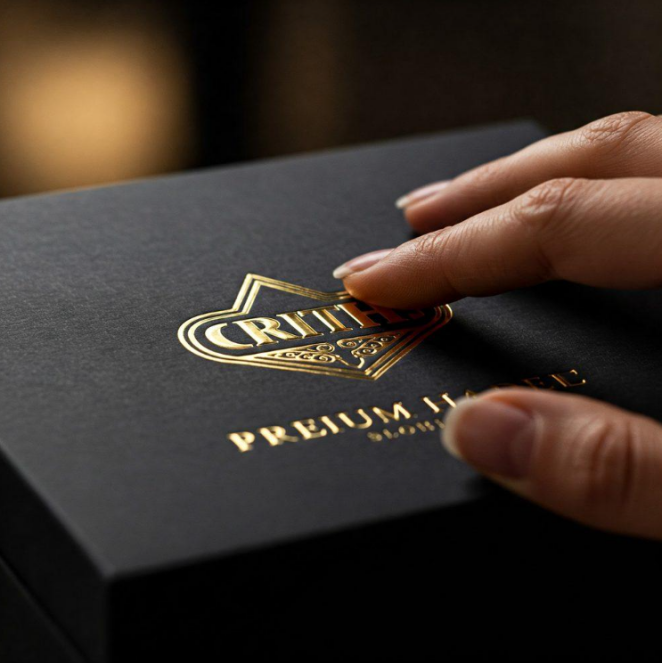
Custom foil stamping adds a reflective or colored decorative layer to selected parts of a box. It is most effective when it draws attention to a specific design element, such as a brand logo, product name, monogram, or border. Because foil can reflect light differently from ordinary ink, it can create contrast without requiring a large amount of additional artwork.
How Does Foil Stamping Change the Look and Perceived Value of a Box?
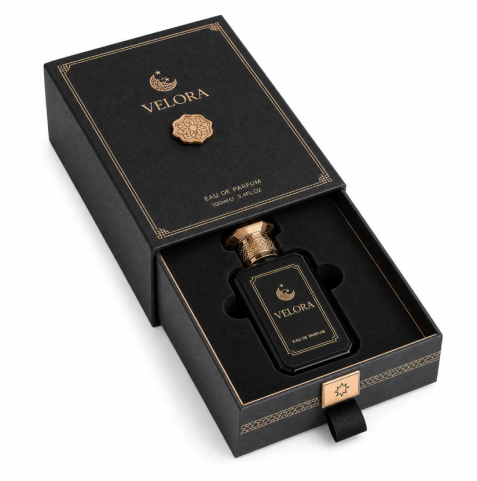
Metallic foil changes with light and viewing angle, which can give a logo more visual presence than a flat printed mark. A gold logo on a dark rigid box may create a classic contrast; silver can complement a cooler, more contemporary palette; and rose gold may suit selected beauty or lifestyle brands. These are design tendencies rather than fixed rules. Paper color, texture, surrounding graphics, and lighting all influence the final appearance.
Foil stamping can also help keep a product collection visually consistent. When several box sizes use a coordinated foil color, logo position, and finish, customers can recognize that the packages belong to the same brand family. For a brand selling multiple fragrances, skincare products, or seasonal gift sets, consistency may be more valuable than giving every package a different decorative treatment.
A metallic finish does not automatically make packaging look premium. Weak contrast, an oversized logo, crowded graphics, or a surface that does not suit the selected foil can reduce clarity. A restrained layout with one clear focal point often looks more considered than a design that applies foil to every open area.
Which Products Benefit Most from Foil-Stamped Packaging?
Foil stamping is useful when packaging contributes to brand recognition, retail presentation, gifting, or the unboxing experience. Typical applications include:
- Fragrance: custom perfume boxes can use a foil-stamped logo or fragrance name to complement the bottle and brand identity.
- Beauty and skincare: custom cosmetic boxes can use coordinated foil details to distinguish product lines while maintaining a consistent look.
- Jewelry: custom jewelry boxes can use a small metallic mark on a lid, drawer, or rigid box to create a restrained focal point.
- Gifting: custom gift boxes can combine foil with specialty paper and contrasting colors for corporate gifts, seasonal collections, or limited editions.
- Other applications: chocolate, candle, wine, and electronics packaging may also use foil details when the material, structure, and product requirements are suitable.
For food-related packaging, a decorative finish should not be treated as proof of food-contact compliance. The full packaging system, including materials and any components that may contact food, must meet the requirements that apply to the intended use and market.
When Is Foil Stamping Worth Adding to a Custom Box Design?
Foil stamping is worth evaluating when a logo, product name, or selected detail needs more emphasis than standard printing provides. A small foil area can deliver a noticeable effect without covering the whole box. Larger coverage, multiple foil colors, intricate artwork, or combinations of several finishes may add tooling and production complexity.
Consider foil stamping when the brand needs a recognizable metallic accent, the packaging will be displayed or given as a gift, a product family needs consistent visual details, and the selected surface can support the effect. If the design relies on large multicolor graphics or the finishing budget is very limited, conventional printing or metallic ink may be more practical. The right decision balances visual impact with manufacturing feasibility and total packaging cost.
What Can Foil Stamping Do That Standard Printing Cannot?
Standard printing is generally used for text, images, color blocks, and detailed graphics. Foil stamping is commonly used for selected decorative areas where metallic reflection or a distinctive foil color is required. The actual difference depends on the foil, ink system, paper, and production method; a physical sample comparison is more useful than assuming one process is always superior.
The two methods can work together. Printing can establish the main design while foil emphasizes the logo or product name. Depending on the artwork and production setup, foil may also be combined with embossing, debossing, or spot UV. Each added process should have a clear design purpose rather than being included simply because it is available.
2. Which Foil Stamping Finishes Are Best for Custom Packaging Boxes?
Foil stamping is not limited to bright gold. Available options may include gold, silver, rose gold, copper, colored foil, matte metallic foil, and holographic foil. The exact range depends on the foil supplier and manufacturing setup, so the final choice should be confirmed with physical samples.
| Finish | Visual character | Common applications | What to check |
| Gold foil | Warm metallic reflection | Gift, fragrance, jewelry, and premium product boxes | Contrast with paper color and brand palette |
| Silver foil | Cool, bright metallic appearance | Beauty, electronics, and contemporary packaging | Reflectivity and surface compatibility |
| Rose gold foil | Warm metallic tone with a pink cast | Selected beauty and lifestyle products | Harmony with surrounding colors |
| Copper foil | Rich, earthy metallic tone | Gifts, coffee, wine, and craft-inspired products | Legibility against dark or textured stock |
| Matte metallic foil | More subdued metallic effect | Minimalist and understated designs | Visibility under the intended lighting |
| Holographic foil | Angle-dependent color or pattern reflection | Special editions and attention-led designs | Whether the effect distracts from key information |
Gold, Silver, Rose Gold, and Matte Foil: Which Finish Fits Your Brand?
Choose a foil color in relation to the full packaging design rather than in isolation. Gold often works with deep green, black, cream, navy, and burgundy, but it is not automatically the best choice for every premium brand. Silver can create a cooler contrast, while rose gold may support a softer palette. Matte metallic options can be useful when a brand wants a quieter finish rather than a strong mirror-like reflection.
Color names are not exact standards across every supplier. Two gold foils can look noticeably different on the same paper, and a finish that looks balanced on a monitor may appear too yellow, too pale, or too reflective in person. Ask for a foil swatch or a sample on the intended wrapping paper before confirming the production specification.
How Do Metallic and Holographic Foils Change Packaging Appearance?
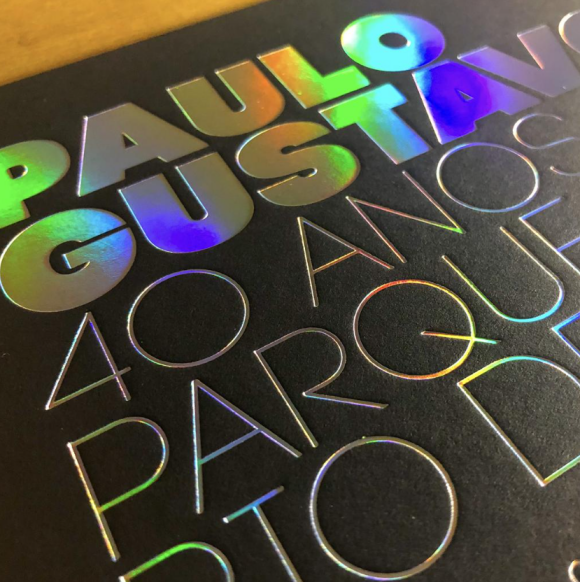
Metallic foil creates a recognizable reflective surface, while holographic foil can produce shifting colors or patterns as the viewing angle changes. Holographic effects can be suitable for special editions, promotional packaging, or designs that intentionally use a more expressive visual feature. For understated luxury packaging, a small metallic logo may be more effective than a large holographic area.
The finish should support the hierarchy of the design. If the logo, product name, decorative pattern, and background all compete for attention, customers may find the package visually busy. Decide which element matters most and use the foil to reinforce that choice.
Can Custom Foil Stamping Be Combined with Embossing or Debossing?
Depending on the artwork, materials, and production setup, foil stamping can be combined with embossing or debossing. Embossing raises a selected area; debossing presses it into the surface. Pairing one of these textures with foil can create both visual contrast and a tactile detail. Spot UV may also be used to create gloss contrast on selected areas.
Combination finishes require careful artwork preparation and registration. Very fine lines, small text, deep paper texture, or overlapping effects can increase production difficulty. The feasibility should be reviewed before tooling, and the intended effect should be checked on a physical sample.
How Do You Match Foil Color with Paper, Printing, and Box Structure?
Foil should be chosen alongside the wrapping paper, printed colors, surface coating, and box geometry. A textured stock may give the package a distinctive tactile quality, but deep texture can affect how evenly a foil transfers. Coated or laminated surfaces may require a compatible foil grade and process settings. Areas close to folds, edges, seams, or corners also need careful placement.
Before approval, confirm the paper or wrap material, foil color, artwork dimensions, logo position, and any additional finishes. If the design will be used across multiple box sizes, check how the layout scales and whether the logo remains legible at each size.
3. How Does Foil Stamping Work on Custom Rigid Boxes and Paper Packaging?
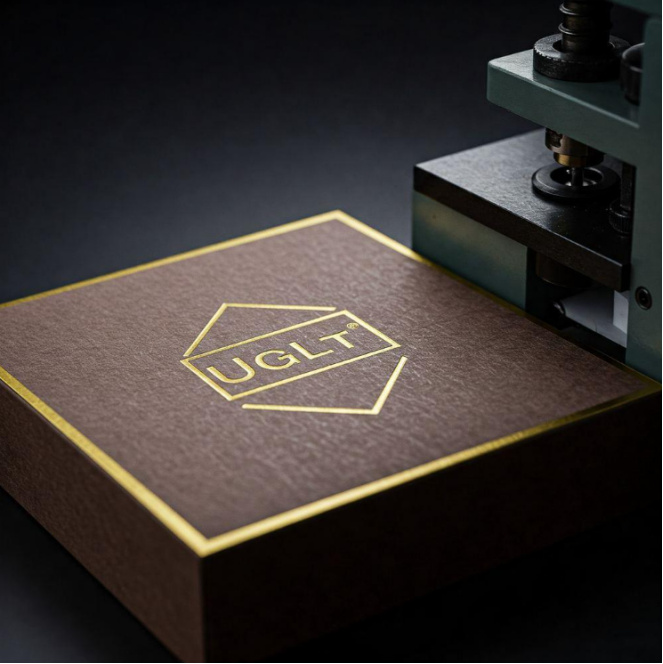
Hot foil stamping commonly uses a heated die and pressure to transfer foil from a carrier film onto a selected surface. The result depends on the foil formulation, temperature, pressure, contact time, surface condition, and artwork. A suitable process must be developed for the specific material combination rather than relying on a universal setting.
How Do Heat, Pressure, and Stamping Dies Create a Metallic Finish?
The die carries the design and applies controlled pressure to the foil and substrate. Heat and pressure activate the transfer system so the decorative layer adheres to the selected areas. If the conditions are unsuitable, the foil may transfer incompletely, fine details may lose definition, or the surface may be damaged.
A typical project involves artwork review, die preparation, material checks, machine setup, test impressions, and quality inspection. The exact steps vary by equipment and packaging format. For a rigid box, the manufacturer must also consider when the foil is applied in relation to printing, wrapping, and assembly.
Which Paper Stocks and Wrapped Box Surfaces Are Suitable for Foil Stamping?
Foil stamping may be used on coated paper, white paperboard, kraft paper, specialty paper, and paper used to wrap rigid boxes. Material names alone do not determine suitability. Surface smoothness, texture, coatings, contamination, and foil compatibility all affect transfer quality.
Deeply textured paper may prevent uniform contact in some areas. Certain coatings or laminations may require a compatible foil grade or adjusted production settings. For rigid boxes, the visible wrapping paper is particularly important because the finish must work with the actual surface that customers will see.
When discussing materials with a manufacturer, provide the preferred paper or wrap, any matte or gloss lamination, the intended foil color, the approximate stamping area, and whether the design contains fine text or intricate lines. A sample on the intended material is the most useful way to assess the combined result.
What Artwork Details Affect Foil Stamping Quality?
Artwork should identify the foil areas clearly rather than leaving the manufacturer to infer them from a mockup. Where possible, supply editable vector artwork or a production-ready PDF, with the foil areas separated on a clearly named layer or spot-color plate. Confirm whether different foil colors or separate stamping areas are required.
Small text, thin lines, tight spacing, and intricate patterns need particular attention. There is no single minimum line width that applies to every foil and substrate combination, so the manufacturer should review the artwork at its final size. Logos placed too close to folds, edges, seams, or corners may also look unbalanced or be more difficult to stamp consistently.
How Can Manufacturers Prevent Missing Foil, Poor Registration, and Fine-Detail Defects?
Common defects include incomplete transfer, uneven coverage, broken fine lines, registration shifts, scuffing, and differences between approved samples and bulk production. Potential causes include unsuitable material combinations, surface contamination, incorrect settings, artwork that is too fine, or inconsistent positioning.
| Potential issue | Possible cause | Preventive check |
| Incomplete foil transfer | Material incompatibility, contamination, or unsuitable settings | Check the surface and test process settings |
| Uneven coverage | Texture or inconsistent contact pressure | Review surface suitability and setup |
| Broken or blurred detail | Artwork too fine or process conditions unsuitable | Review artwork at final size and test a sample |
| Registration shift | Positioning or alignment variation | Confirm reference points and inspect samples |
| Scuffing or surface damage | Handling, friction, or unsuitable process conditions | Assess samples under realistic handling conditions |
| Sample-to-bulk variation | Changes in material or process control | Record approved specifications and inspect production |
A quality plan should reflect the product’s use, design complexity, and agreed acceptance criteria. Sample approval should identify the specific artwork and material version. If foil color, paper, dimensions, or design changes later, the revised specification should be reviewed before production continues.
4. Foil Stamping vs. Embossing vs. Spot UV for Custom Packaging Boxes
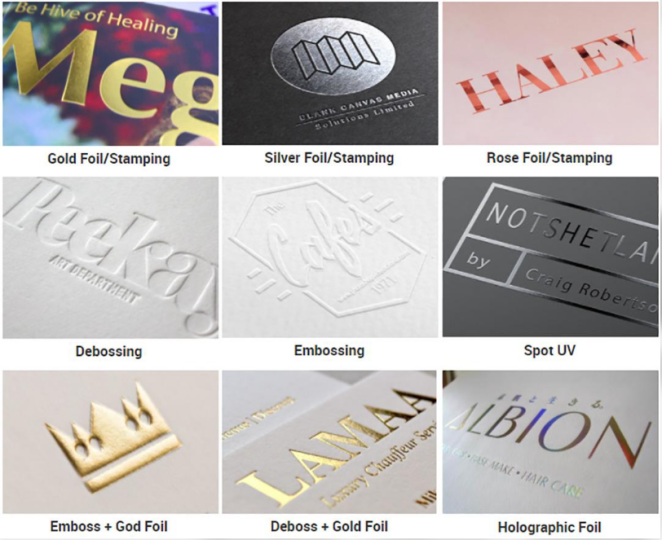
Foil stamping, embossing, debossing, and spot UV can all make packaging more distinctive, but they create different effects. Foil adds a decorative foil layer; embossing raises selected areas; debossing presses them into the surface; and spot UV adds gloss to chosen areas. The right option depends on whether the design needs metallic reflection, tactile depth, surface shine, or a combination.
| Finish | Main effect | Best reason to consider it |
| Foil stamping | Metallic or colored foil detail | Highlighting a logo, name, or decorative accent |
| Embossing | Raised texture | Adding tactile emphasis to a selected element |
| Debossing | Indented texture | Creating subtle depth in a logo or pattern |
| Spot UV | Localized gloss contrast | Contrasting glossy details with a matte surface |
| Metallic ink | Printed metallic-looking color | Evaluating metallic-style graphics within a print process |
Which Packaging Finish Creates Metallic Shine, Raised Texture, or Gloss Contrast?
If the main requirement is a reflective gold or silver logo, foil stamping is a logical option to evaluate. If the design needs a raised tactile mark, embossing may be more suitable. If contrast between gloss and matte surfaces is the goal, spot UV may fit better. These techniques can sometimes be combined, provided the artwork, material, and production sequence allow it.
When Should You Choose Foil Stamping Instead of Metallic Ink?
Foil stamping is worth evaluating when a design needs a distinct reflective foil surface or sharply defined decorative details. Metallic ink may be practical for certain printed graphics or larger printed areas, depending on the ink system and equipment. The visual difference should be assessed on the actual packaging stock, because the result varies by material and production method.
Do not assume foil stamping is always the better choice. For complex multicolor artwork, conventional printing or a suitable metallic ink may be more efficient. For a small logo on a premium rigid box, foil may provide the desired focal point with limited coverage. The appropriate choice depends on artwork, order quantity, equipment, material, and total cost.
Can Foil Stamping and Embossing Be Combined on One Box?
Yes, where the design and production setup permit it. Combining foil with embossing can add metallic color and raised texture to the same feature. The effect should be planned carefully: fine details, tight registration, and deep texture can increase production complexity. A sample should confirm that the combined effect remains clear and balanced.
Which Finish Offers the Best Balance of Appearance and Production Cost?
The best-value finish is the one that achieves the design objective without unnecessary processes. A single foil logo may create sufficient contrast; adding several finishes is worthwhile only when each contributes something visible and meaningful. Compare the complete result, including tooling, setup, material, production quantity, and inspection requirements, rather than judging only the visual effect in a digital mockup.
5. How Much Does Custom Foil Stamping Cost for Packaging Boxes?
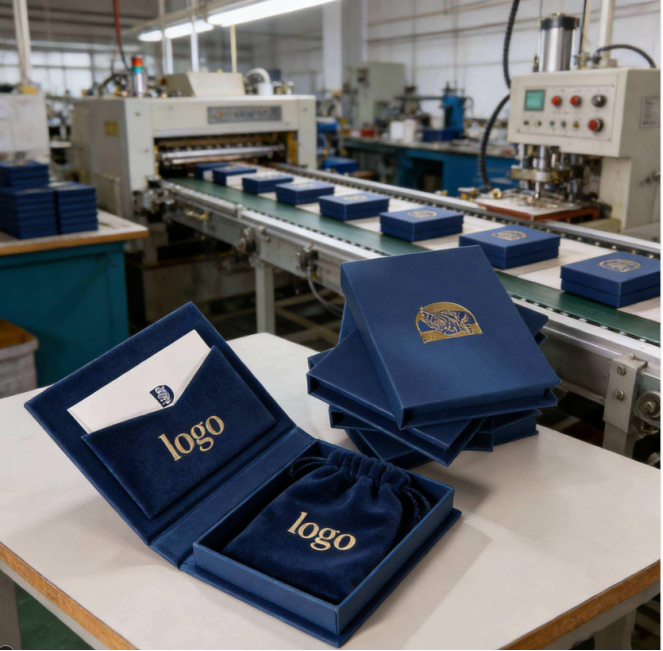
There is no single price that applies to every foil-stamped box. Cost depends on artwork, stamping area, die requirements, foil colors, paper or wrap, box structure, order quantity, and production setup. A useful quotation distinguishes one-time tooling and setup charges from recurring per-unit production costs.
How Do Stamping Dies, Foil Coverage, and Artwork Complexity Affect Price?
A custom die is generally a project-specific setup cost for traditional hot foil stamping. Its cost can depend on die material, size, detail, and production requirements. Foil coverage affects material consumption and processing time, while multiple colors or separate stamping areas may require additional tooling or passes.
Fine artwork and strict registration requirements can add setup and inspection time. Box structure also matters: a flat folding carton and a wrapped rigid box may require different handling and production arrangements. Ask the supplier to identify what is included in the quotation, including die charges, sampling, setup, and any additional finishing steps.
Does Order Quantity Reduce the Foil Stamping Cost per Box?
Increasing the order quantity can spread fixed tooling and setup costs across more units, which may reduce the fixed-cost portion of the unit price. It does not mean that every component of the price decreases in a straight line. Material purchasing, production efficiency, waste, packing, and delivery arrangements can also affect the final cost.
For illustration only, if a one-time die cost were $200, that fixed cost would represent $0.40 per box across 500 boxes, or $0.04 per box across 5,000 boxes. This is a mathematical example of cost allocation, not a market price or an AKpack quotation. Actual die costs and production prices must be confirmed for the project.
How Do Materials and Additional Finishes Change the Total Packaging Cost?
The foil itself is only one part of the packaging cost. Specialty paper, lamination, printing, embossing, debossing, inserts, assembly, and protective packing can all affect the total. A finish that requires repeated adjustments or creates a high rejection rate may also increase cost, even if the initial quoted unit price appears attractive.
Ask for a quotation based on the complete specification: box dimensions, structure, material, print requirements, foil color and area, additional finishes, inserts, quantity, and delivery destination. This makes supplier comparisons more meaningful and reduces the risk of comparing quotes that include different components.
What Information Does a Manufacturer Need to Prepare an Accurate Quote?
Provide the product type, box dimensions or product dimensions, preferred box style, quantity, artwork or reference images, material preference, foil color, approximate stamping area, additional finishes, target delivery date, and destination. If some details are undecided, identify which items are flexible. A manufacturer can then explain which choices have the greatest effect on price, appearance, and production feasibility.
6. How to Choose a Custom Foil Stamping Manufacturer for Your Packaging Project
A supplier should be evaluated on more than the quoted price. The manufacturer needs to understand the box structure, materials, artwork, finishing requirements, sampling process, and production expectations. A clear development process helps identify issues before bulk production and gives both sides a shared basis for approving the result.
What Should You Check Before Selecting a Packaging Factory?
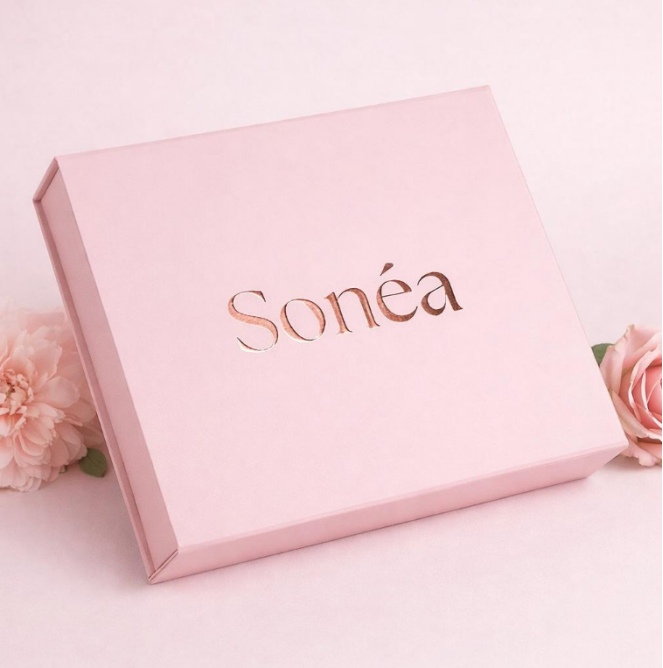
Look for a manufacturer that can discuss the project in practical production terms. Useful capabilities include packaging structure development, material recommendations, artwork review, sample making, surface finishing, quality checks, and coordination of production and delivery. Ask for relevant examples and confirm that the proposed process suits the specific box format.
AKpack is a custom paper packaging manufacturer based in Dongguan, China. Its company information describes support for structural design, material selection, sample development, printing and surface finishing, insert solutions, bulk production, quality inspection, and export delivery. The actual process and finish should be confirmed against the requirements of each project.
How Can a Manufacturer Assess Your Artwork and Material Requirements?
A useful review should consider the foil area, artwork scale, line and text detail, paper or wrap surface, box dimensions, folds and edges, and any additional finishes. If a design uses specialty paper or a laminated surface, the manufacturer should assess whether the selected foil is compatible and whether testing is needed.
Send the production artwork where available, not only a styled mockup. Mark foil areas clearly and identify the intended color. If the project includes several box sizes, provide the dimensions for each version so the manufacturer can check logo scale and placement across the range.
What Quality Checks Matter Before Bulk Foil Stamping Production?
Quality checks should follow the approved specification. Depending on the project, they may cover foil color, position, coverage, legibility, surface condition, box dimensions, assembly, and overall appearance. The manufacturer should also confirm the sample version and materials that have been approved for production.
For packaging that will be transported, stacked, or handled frequently, discuss the intended use and suitable checks before production. A sample should be assessed under realistic lighting and handling conditions, not only from a photograph. Acceptance criteria should be agreed before the order moves into bulk manufacturing.
What Should You Confirm About Sampling, Lead Time, and Repeat Orders?
Sampling and production lead times depend on the box structure, artwork readiness, die requirements, material availability, revision count, order quantity, and factory schedule. Ask the manufacturer to distinguish sample development from bulk production and to identify what must be approved before the production schedule is confirmed.
For repeat orders, confirm whether the approved die and specification can be retained and reused, and whether any maintenance or replacement requirements apply. Keep a record of the approved artwork, foil reference, material, dimensions, and sample version so later orders can be compared with the original specification.
7. How to Order Custom Foil-Stamped Box Samples and Request a Quote
A physical sample is one of the most useful ways to confirm the appearance and practicality of a foil-stamped package. Digital mockups can communicate layout and color direction, but they cannot fully reproduce metallic reflection, surface texture, or the way a finish interacts with the actual paper.
What Should You Check on a Foil-Stamped Packaging Sample?
Review the sample under suitable lighting and inspect the complete box, not only the logo close-up. Check the foil color against the approved reference, the position of each detail, the clarity of small text and lines, coverage consistency, and any visible marks. Also assess the box structure, edges, corners, wrapping, and overall presentation.
If the packaging will be handled often or transported over long distances, discuss appropriate handling or rub checks with the manufacturer. The tests should reflect the actual use and agreed acceptance criteria. A sample should be approved against a specific artwork and material version; changes to paper, foil color, dimensions, or design may require another review.
Which Files and Specifications Should You Send to the Manufacturer?
For a more efficient quotation, provide:
- Product type and intended use.
- Box dimensions, or the dimensions of the product to be packed.
- Estimated order quantity and expected repeat-order frequency, if known.
- Preferred box style, paper or wrapping material, and insert requirements.
- Editable artwork or a clear reference image, with foil areas identified.
- Preferred foil color, approximate coverage, and any additional finishes.
- Target delivery date and destination.
You do not need to have every technical detail finalized before the first discussion. If you have a reference box, product photo, or initial design idea, share it and identify the points that remain flexible. This gives the manufacturer a basis for suggesting practical options.
How Do Sample Approval and Production Specifications Work Together?
Sample approval should be linked to the exact artwork, material, dimensions, and finishing details intended for production. Record any agreed adjustments and make sure the final version is clear to both the buyer and manufacturer. This reduces the risk of misunderstandings between the approved sample and the bulk order.
If a later change affects the paper, coating, foil, box size, or position of a design element, review whether the change could alter the appearance or manufacturing process. Do not assume that a previous sample automatically validates a materially different specification.
How Can You Prepare Your Packaging Project for Bulk Production?
Before placing a bulk order, confirm the final box structure, dimensions, material, artwork, foil color, finish combination, insert, quantity, packing requirements, and delivery schedule. Confirm the quotation includes the agreed components and clarify the quality criteria and sample approval status.
A clear brief makes it easier to evaluate manufacturing options and compare quotations on a like-for-like basis. It also helps the supplier identify potential risks early, before tooling or production begins.
Frequently Asked Questions About Foil Stamping on Packaging Boxes
Is foil stamping the same as gold printing?
No. Gold printing uses ink to create a gold-colored appearance, while foil stamping transfers a decorative foil layer onto the surface. The reflectivity and final appearance depend on the materials and production method.
Can rigid boxes be foil stamped?
Yes. Foil stamping is commonly considered for rigid boxes, including fragrance, jewelry, and gift packaging. Suitability depends on the wrapping paper, surface condition, artwork, and box structure.
Does every foil-stamped box require a custom die?
Traditional hot foil stamping generally uses a die to transfer the design. Other foil application methods may use different tooling and production setups. Confirm the requirements with the manufacturer.
Can foil stamping be combined with embossing?
It can be, when the artwork, material, and production setup permit it. The combination can create both metallic detail and tactile depth, but a sample should be used to check registration and clarity.
What determines the minimum order quantity?
Minimum order quantities depend on the box structure, tooling, manufacturing method, material, and supplier requirements. Request a project-specific MOQ rather than assuming that all box formats use the same quantity.
Does foil stamping increase packaging cost?
It generally adds tooling or processing costs compared with a box without foil. The amount depends on the stamping area, number of foil colors, artwork complexity, material, order quantity, and manufacturing method.
Can foil-stamped paper packaging be recycled?
Recyclability depends on the complete packaging construction, the materials and coatings used, and the collection and recycling systems available in the destination market. If recyclability is a requirement, discuss the full package with the manufacturer and verify any claims against the relevant local guidance.
Discuss Your Custom Foil-Stamped Packaging Project
A successful foil-stamped box balances visual impact, material suitability, box structure, production feasibility, and cost. The best starting point is to identify the design element that matters most, choose a suitable finish, review the artwork and substrate, and approve a physical sample before bulk production.
AKpack supports custom paper packaging projects from structure and material selection through sample development, surface finishing, production, and quality inspection. To discuss a project, share your box dimensions, estimated quantity, artwork or reference images, preferred foil finish, and target delivery schedule. The team can review the requirements and discuss suitable options for your packaging.
Contact AKpack to request a quotation for your custom packaging project.