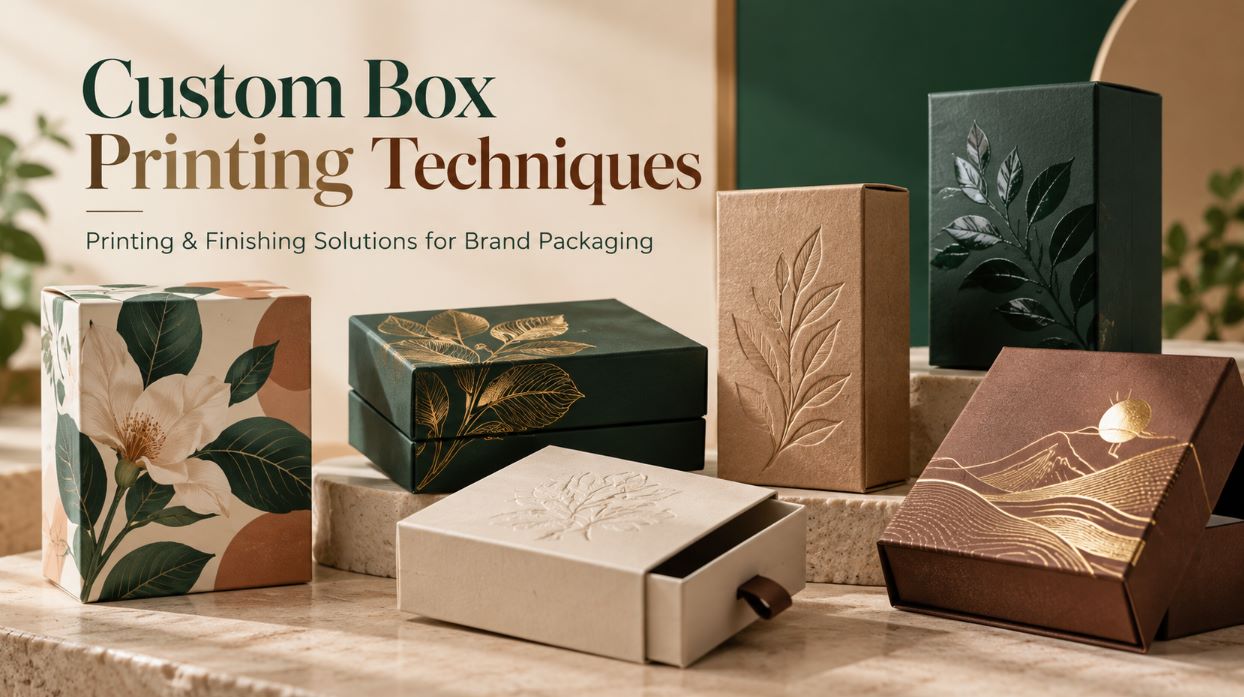

Choosing the right custom box printing techniques can be challenging when you are developing packaging for a new product. Should you use CMYK or Pantone printing? Will gold foil stamping make your packaging more attractive? Is matte lamination worth the extra cost? And how can you make sure the finished boxes look like the samples you approved?
These decisions affect more than appearance. Your printing method, paper material, surface finish, and box construction influence production cost, brand presentation, and how customers experience your product.
AKpack helps brands develop custom printed packaging boxes through structural design, material selection, printing, surface finishing, sample development, and bulk manufacturing. Whether you have completed artwork or only a packaging reference image, our team can help you evaluate suitable printing options for your product.
The best approach is to choose printing and finishing techniques that support your design, work with your packaging materials, and remain practical for your order quantity and budget.
1. Custom Box Printing Techniques for Different Packaging Applications
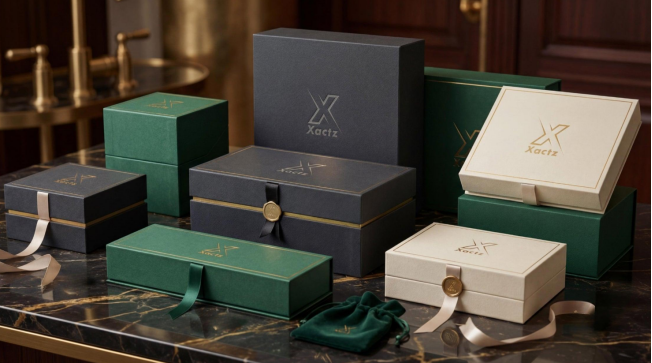
Different products require different printing and finishing solutions. A luxury perfume box may benefit from metallic foil and textured paper, while a skincare carton may need accurate color reproduction and a smooth matte surface.
The right custom box printing techniques should reflect how your product is positioned, displayed, handled, and sold.
For example, a premium gift box may justify additional decorative finishes because packaging plays an important role in the gifting experience. Everyday retail packaging, however, may benefit more from simple printing, clear product information, and efficient production.
Custom Printing for Cosmetic and Skincare Packaging
Cosmetic and skincare packaging needs to present product information clearly while maintaining a recognizable brand identity.
CMYK printing is commonly used for detailed illustrations, gradients, photographs, and multicolor designs. Pantone spot colors may be appropriate when particular brand colors require tighter reproduction control.
Surface finishing also influences the appearance of the carton.
Matte lamination creates a relatively low-glare surface that often works well with minimalist skincare packaging. Gloss lamination produces stronger reflections and can make colorful graphics appear more vibrant.
For example, a 30 ml facial serum could use a folding carton made from 350 gsm white paperboard with CMYK printing and matte lamination.
If the brand wants to emphasize its logo, a small gold foil detail or selected spot UV elements could be added.
For custom cosmetic packaging boxes, printing choices should also consider product dimensions, paperboard properties, folding structure, and the readability of product information.
A consistent combination of materials, colors, and finishes can help create a recognizable appearance across a skincare collection.
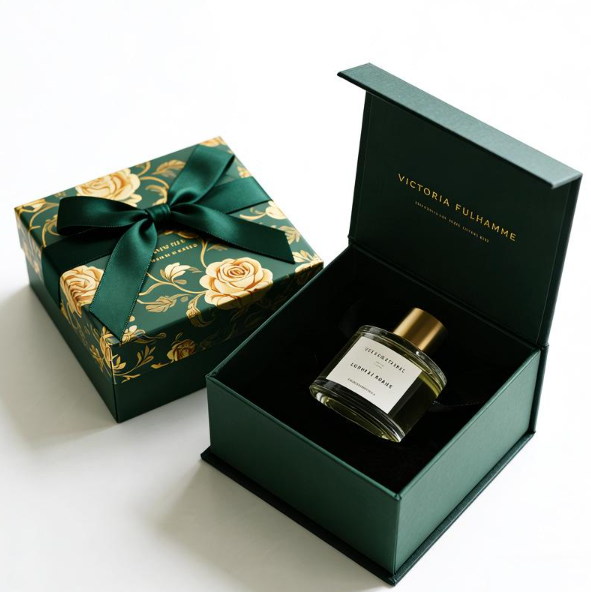
Premium Printing Finishes for Perfume Packaging
Perfume packaging often plays an important role in communicating the personality of a fragrance.
Customers may notice the box’s texture, color, and decorative details before they experience the fragrance itself.
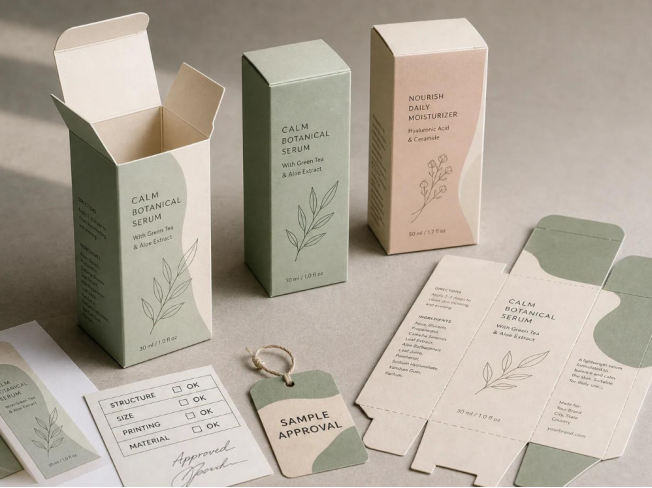
Common finishes include gold foil stamping, silver foil stamping, embossing, debossing, soft-touch lamination, and specialty paper.
For example, a fragrance brand could select a dark green rigid box with a gold foil logo and soft-touch finish.
Another brand may prefer textured paper with a debossed logo for a more understated appearance.
Both approaches can create attractive packaging, but they communicate different brand identities.
When developing custom perfume boxes, you should also consider product protection.
Glass perfume bottles require suitable internal support. Depending on the bottle’s shape and weight, manufacturers may use EVA foam, flocked inserts, paperboard inserts, or other customized structures.
The decorative printing should complement the box construction rather than distract from practical packaging requirements.
Foil Stamping and Embossing for Jewelry Boxes
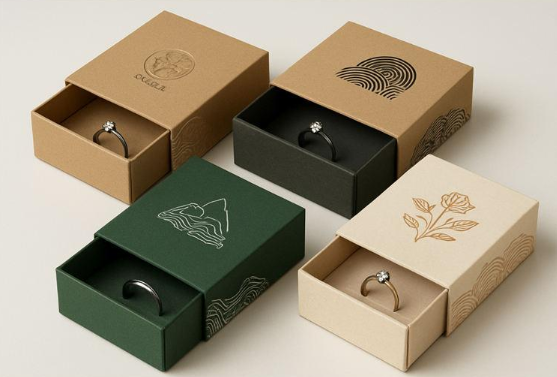
Jewelry packaging often serves as both protective packaging and a presentation box that customers may keep after purchasing the product.
For this reason, surface texture and decorative details can be especially important.
Gold and silver foil stamping can emphasize a brand logo, while embossing and debossing create a tactile impression.
For example, a jewelry brand might use a cream-colored rigid lid-and-base box covered with textured specialty paper.
A small silver foil logo on the lid and a flocked insert inside the box can create a coordinated appearance.
Another option is a magnetic closure gift box with matte lamination and a debossed logo.
When selecting finishes for custom jewelry boxes, consider how the exterior design works with the opening structure and interior insert.
Fine metallic details and intricate embossing patterns may require additional testing to confirm that the selected paper can reproduce the intended effect.
Printing Options for Candle and Home Fragrance Packaging
Candle brands often use packaging to communicate warmth, relaxation, natural ingredients, or a particular lifestyle.
Kraft paper, muted colors, and simple printing are common starting points for brands that prefer a natural appearance.
For example, a botanical candle collection could use kraft folding cartons with dark green printed logos.
A premium candle gift set might use a rigid box with matte lamination and gold foil stamping.
Embossing or debossing may also be suitable when the material and structure allow it.
For custom candle boxes, packaging protection remains important.
Glass candle containers can be heavy and fragile. The paperboard, dimensions, and internal support should be chosen according to the product.
A decorative finish cannot compensate for an unsuitable structure.
Custom Printing for Chocolate and Food Gift Boxes
Food gift packaging often combines colorful graphics with practical product presentation.
CMYK printing works well for illustrations, photographs, and seasonal designs.
Matte lamination may suit premium chocolate packaging, while gloss lamination can create a more reflective appearance for colorful retail products.
Foil stamping may be used to highlight selected details on gift boxes.
For example, a chocolate assortment might use a printed rigid box with a gold foil logo and an internal tray holding individually wrapped chocolates.
When developing custom food gift boxes, you must distinguish between decorative outer packaging and materials intended for direct food contact.
Not every printed paperboard, coating, or lamination is suitable for direct contact with food.
Material suitability should be evaluated against the applicable requirements for the intended use and destination market.
2. Which Custom Box Printing Techniques and Finishes Should You Choose?
The best printing method depends on your artwork, color requirements, packaging material, production quantity, and desired appearance.
Some methods reproduce detailed graphics. Others create metallic reflections, surface texture, or tactile effects.
Understanding what each technique contributes can help you avoid unnecessary finishing costs.
CMYK Printing for Detailed and Full-Color Packaging
CMYK printing uses four process colors: cyan, magenta, yellow, and black.
By combining these inks, printers can reproduce photographs, illustrations, gradients, and multicolor graphics.
CMYK offset printing is widely used for folding cartons, printed paper wraps, cosmetic boxes, and retail packaging.
Its main advantages include detailed image reproduction, flexibility for complex artwork, and economical production at suitable quantities.
However, CMYK cannot reproduce every color visible on a digital screen.
Extremely bright or saturated colors may look different after printing. Paper color, ink absorption, and surface finishing can also influence the result.
For example, a skincare brand using colorful botanical artwork may find CMYK printing suitable because it can reproduce several colors and gradients within one design.
If your design includes a highly specific brand color, additional color-management measures may be necessary.
Pantone Spot Color Printing for Brand Consistency
Pantone spot color printing uses specifically formulated inks to reproduce selected colors.
It is useful when a brand relies on a recognizable color that must be controlled across different packaging components.
For example, a cosmetics company may want the same signature green on its folding cartons, rigid gift boxes, and printed paper sleeves.
A specified Pantone color can provide a reference for production.
However, the final appearance still depends on the paper material, ink formulation, coating, and lighting conditions.
Printing the same Pantone reference on white coated paper and brown kraft paper will not necessarily produce an identical appearance.
Spot color printing may also increase cost when additional inks or printing operations are required.
Pantone printing is therefore most useful when color consistency is important enough to justify the additional production considerations.
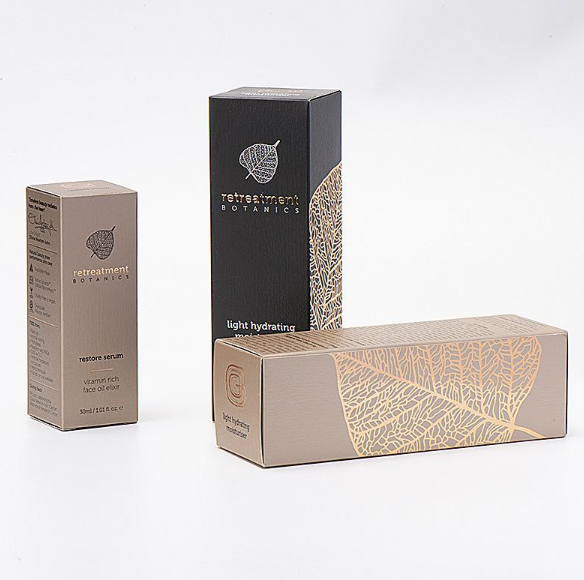
Gold and Silver Foil Stamping for Metallic Details
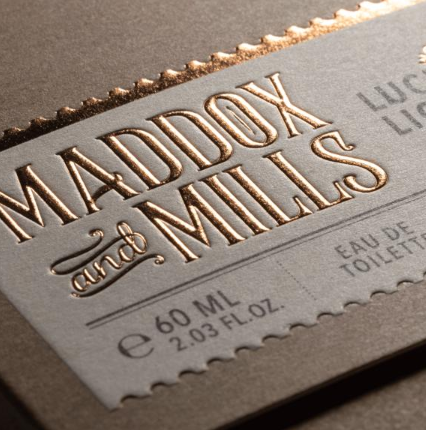
Foil stamping transfers decorative foil onto selected packaging areas using a die, pressure, and, in many conventional processes, heat.
Unlike ordinary metallic-colored printing ink, foil stamping can produce strong reflective effects.
Gold and silver foil are frequently used on perfume packaging, jewelry boxes, luxury gifts, and premium retail products.
Other foil colors and specialty effects may also be available.
For example, a dark blue perfume box with a small silver foil logo can create a distinctive contrast without requiring extensive decoration.
Foil stamping offers several advantages:
- Creates reflective metallic details.
- Highlights logos and product names.
- Works with many compatible specialty papers and coated surfaces.
- Can be combined with embossing for additional depth.
However, foil stamping introduces additional production considerations.
Conventional foil stamping usually requires dedicated tooling. Large decorative areas, intricate patterns, and fine lettering may affect production feasibility and cost.
Very thin lines or small gaps can make clean foil transfer more difficult.
Before production, your manufacturer should review the artwork and confirm whether adjustments are needed.
For custom rigid boxes, foil stamping is often applied to the outer wrapping paper before or during the box finishing and assembly process.
The exact production sequence depends on the box structure and equipment.
Spot UV Coating for Glossy Highlights
Spot UV coating applies a UV-curable coating to selected areas of the printed surface.
It is commonly used to create glossy details against a matte background.
Imagine a black gift box with a matte surface and a glossy logo that becomes visible when light reflects across it.
This contrast can create visual interest without adding another printed color.
Spot UV is suitable for logos, geometric patterns, decorative elements, and selected product graphics.
Its advantages include strong visual contrast and the ability to highlight specific design features.
However, accurate registration is important.
If the coating does not align correctly with the printed artwork, the final appearance may be uneven.
Fine details, narrow gaps, and certain materials may also require adjustments.
Spot UV is not automatically compatible with every laminated or uncoated surface.
A representative sample helps confirm adhesion, appearance, and registration quality.
Embossing and Debossing for Tactile Packaging
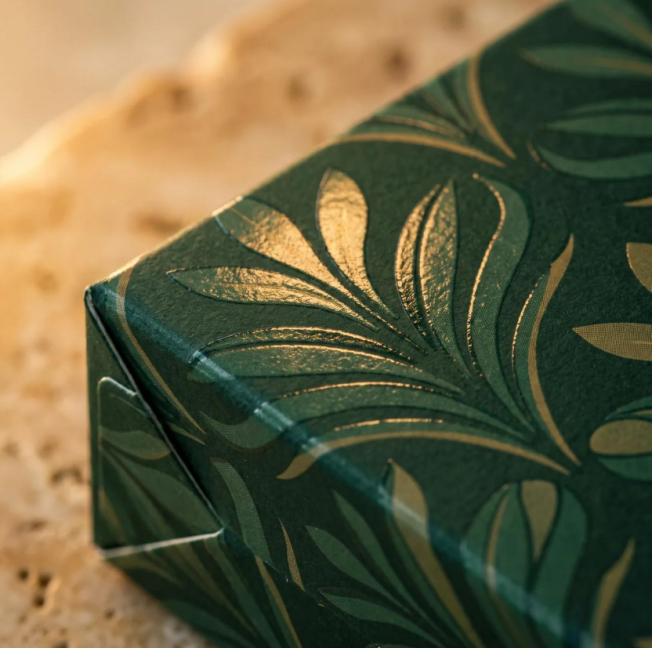
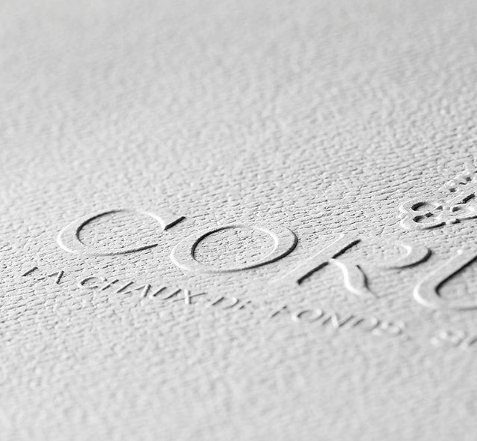
Embossing and debossing change the physical surface of the paper.
These processes are commonly used for logos, decorative patterns, and premium branding elements.
For example, a jewelry brand may choose an embossed logo on textured specialty paper instead of metallic foil.
This creates a tactile effect while maintaining a restrained design.
Embossing may also be combined with foil stamping, depending on the artwork and material.
However, the result depends on the paper characteristics, die design, pressure, and construction.
Very thin materials or unsuitable paper structures may not produce the desired impression.
Matte, Gloss, and Soft-Touch Lamination
Lamination applies a thin film over the printed surface.
It changes the appearance and handling characteristics of the packaging.
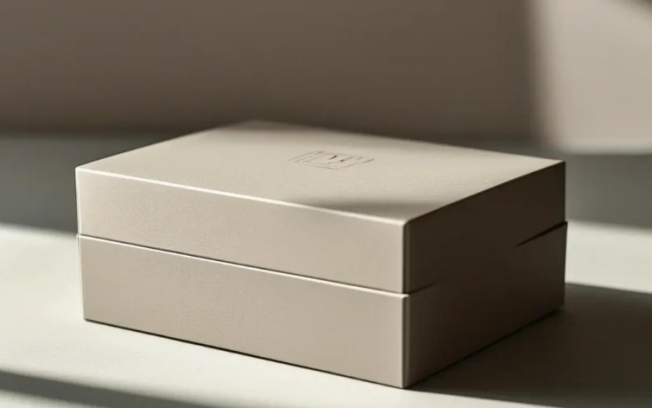
Matte lamination creates a relatively low-glare appearance and is commonly selected for minimalist and premium designs.
Gloss lamination provides a more reflective surface and can make printed graphics appear more vibrant.
Soft-touch lamination creates a smooth, velvety tactile finish.
Each option has advantages and limitations.
Matte surfaces may show scuffs or fingerprints depending on the film. Gloss surfaces can create unwanted glare. Soft-touch finishes generally involve additional material cost and require attention to abrasion resistance.
Lamination can provide an additional surface layer, but it does not make a paper box completely waterproof or resistant to all scratches.
Film-based laminations can also affect packaging recyclability depending on the material combination and available recycling systems.
The right finish depends on your product positioning, artwork, handling conditions, and sustainability requirements.
Compare Printing Techniques and Surface Finishes
| Printing Technique | Main Effect | Suitable Applications | Key Consideration |
| CMYK Printing | Full-color images and gradients | Cosmetic cartons, retail boxes | Color reproduction |
| Pantone Printing | Controlled solid colors | Brand packaging collections | Color matching |
| Foil Stamping | Reflective metallic details | Perfume and jewelry boxes | Tooling and foil area |
| Spot UV | Selective glossy highlights | Luxury packaging | Registration accuracy |
| Embossing | Raised surface details | Rigid gift boxes | Material and die design |
| Debossing | Recessed surface details | Specialty paper boxes | Impression definition |
| Matte Lamination | Low-glare appearance | Skincare and fragrance boxes | Scuff resistance |
| Gloss Lamination | Reflective appearance | Colorful retail packaging | Visual glare |
| Soft-Touch Lamination | Velvety surface | Premium gift packaging | Cost and durability |
A successful design rarely depends on using every technique available.
A simple combination of CMYK printing and matte lamination may be sufficient for one brand. Another brand may benefit from specialty paper and a small foil-stamped logo.
The right choice depends on how well the finish supports the product and packaging design.
3. How Do Custom Box Printing Techniques Affect Packaging Costs?
Printing cost depends on more than the number of colors in your design.
Paper material, box dimensions, printing method, finishing operations, tooling, production quantity, and structural complexity all influence the final quotation.
Understanding these factors helps you compare packaging proposals more accurately.
Printing Setup and Tooling Costs
Some printing processes require initial setup before production begins.
Offset printing may involve printing plates, machine preparation, and color adjustments.
Foil stamping and embossing may require dedicated dies.
These initial costs are typically spread across the production quantity.
For example, consider a hypothetical tooling and setup cost of $150.
For 500 boxes, this represents $0.30 per box.
This example illustrates how fixed costs are distributed. It does not represent an AKpack quotation or include paper, printing, finishing, labor, waste, and other production expenses.
Larger quantities may reduce unit cost, but ordering more boxes is not always the best financial decision.
For a new brand, excess packaging inventory can create storage costs and additional risk if the design changes.
Paper Material and Packaging Structure
The type of paper and construction method can significantly affect cost.
Folding cartons commonly use paperboard selected according to the box dimensions, product weight, and structural requirements.
Examples include 250 gsm, 300 gsm, 350 gsm, and 400 gsm paperboard.
GSM measures paper weight per square meter rather than directly specifying thickness or load-bearing capacity.
Rigid boxes typically use a thicker board core covered with printed or decorative paper.
For these constructions, the wrapping paper, greyboard thickness, assembly process, and internal inserts all affect cost.
A large rigid gift box generally requires a different manufacturing process from a small folding carton.
Therefore, you should compare printing quotations only after confirming that the box structures and material specifications are equivalent.
Decorative Finish Coverage and Complexity
Additional finishing processes can increase manufacturing cost.
For example, adding foil stamping may introduce tooling, foil material, and additional processing.
Embossing requires suitable dies and production setup.
Spot UV requires coating application and registration with the printed artwork.
The area and complexity of each decorative treatment also matter.
A small foil logo may be more economical than a large metallic background, although minimum setup and tooling costs still apply.
When designing packaging, consider whether every decorative effect contributes meaningful visual or tactile value.
A carefully placed logo treatment can often achieve the desired presentation without covering the entire box in specialty finishes.
How to Control Packaging Printing Costs
If your budget is limited, start by identifying the features that matter most to your customers.
You can then explore ways to simplify the specification.
Practical options include:
- Using fewer decorative finishing processes.
- Reducing the coverage area of foil stamping or spot UV.
- Selecting a paper material that works well with the intended printing method.
- Comparing folding carton and rigid box structures where appropriate.
- Keeping dimensions consistent across related products when practical.
- Evaluating quantity-based quotations before confirming the order.
For example, a new skincare brand could compare two packaging concepts.
The first uses CMYK printing, matte lamination, gold foil stamping, and embossing.
The second uses CMYK printing, matte lamination, and a printed metallic-colored design element.
The first provides a more reflective and tactile presentation.
The second removes some finishing operations and may reduce production complexity.
The better option depends on the brand positioning and the value customers place on the additional details.
If you are comparing suppliers, make sure each quotation uses the same dimensions, paper grade, order quantity, printing specification, and finishing requirements.
Otherwise, the quoted prices may reflect different packaging specifications.
For a more complete understanding of the factors involved, review custom packaging cost considerations before finalizing your order.
4. How to Prepare Custom Box Printing Artwork and Approve Samples
A packaging design can look impressive on a computer screen but produce unexpected results when printed.
Differences in color, paper texture, foil alignment, and structural assembly can affect the finished box.
Preparing suitable artwork and reviewing physical samples can reduce these risks before bulk production.
Prepare Artwork in a Suitable File Format
Packaging manufacturers commonly work with print-ready PDF and Adobe Illustrator files.
Vector artwork is generally preferable for logos, small text, and decorative elements that must remain sharp.
Photographic images should have sufficient resolution for their intended print size.
For many standard printed images, 300 pixels per inch at final size is a useful starting point, although exact requirements depend on the process and artwork.
Your design should also follow the manufacturer’s approved packaging dieline.
A dieline identifies the cutting, folding, creasing, and glue areas of the box.
Important logos and text should remain within the specified safe area.
Where bleed is required, a common starting allowance is approximately 3 mm, but the manufacturer’s actual prepress specification takes priority.
Separate Printing and Finishing Artwork
If your design uses multiple finishing techniques, the artwork should identify each process clearly.
For example, a packaging project might require separate artwork elements for CMYK printing, gold foil, spot UV, and embossing.
A gold-colored shape in a digital design does not automatically communicate that the area should receive metallic foil.
Similarly, a glossy-looking design element does not provide a complete spot UV production specification.
Clearly defined production artwork helps reduce misunderstandings.
For complicated designs, your manufacturer may need to review minimum line widths, gaps, registration tolerances, and finishing compatibility.
These requirements vary by machine, material, and process.
Understand Color Differences Between Screens and Paper
RGB colors displayed on a monitor may not match the same design reproduced through CMYK printing.
Screen brightness, color profiles, ink characteristics, and paper properties can all influence the result.
For example, a bright green displayed on a laptop may look less saturated on printed paper.
A brown kraft substrate can also affect the appearance of printed colors.
If a particular color is critical to your brand identity, provide an appropriate reference and discuss color-matching options before production.
Pantone references, physical samples, and agreed printing conditions can support more consistent results.
However, the same reference color may still appear different across coated, uncoated, and textured materials.
Why Physical Packaging Samples Matter
A digital rendering helps you visualize the design, but it cannot fully demonstrate the final material texture, folding performance, foil reflection, or embossing depth.
A physical sample allows you to evaluate the packaging more realistically.
Depending on the project stage, sample options may include structural white samples, digitally printed samples, finished color samples, and pre-production samples.
These samples do not always verify the same things.
A structural sample helps evaluate box dimensions, opening mechanisms, and product fit.
A digitally printed sample helps assess design placement and approximate appearance but may not exactly match the offset printing process used for mass production.
A representative pre-production sample can provide a more complete reference for the intended final result.
Before approving production, examine:
- Overall box dimensions and structural fit.
- Paper material and surface texture.
- Printed colors and logo appearance.
- Foil placement and finish quality.
- Embossing or debossing definition.
- Lamination and coating appearance.
- Insert fit and product protection.
- Folding, opening, and assembly performance.
The exact inspection criteria should be agreed upon according to the product and manufacturing process.
Maintaining Consistency During Bulk Production
A successful sample is an important starting point, but bulk manufacturing requires additional process control.
Consistency can be influenced by raw material variation, printing conditions, surface finishing, die-cutting, and assembly.
For printed packaging, important inspection areas may include color variation, artwork registration, cutting accuracy, folding performance, adhesive application, and finished appearance.
AKpack supports quality inspection during its manufacturing process, helping customers move from approved packaging specifications to bulk production.
When discussing an order, you should confirm the applicable quality requirements, approved reference sample, inspection criteria, and packaging specifications.
These details provide a clearer basis for production and final acceptance.
For businesses planning repeat purchases, retaining approved specifications and reference samples can also support more consistent future orders.
5. Custom Box Printing Services: From Packaging Design to Bulk Manufacturing
Developing printed packaging involves a series of connected decisions.
A printing finish must be compatible with the material. The material must support the box structure. The structure must fit and protect the product.
Working through these decisions in a clear sequence can make the development process more efficient.
Step 1: Share Your Packaging Requirements
Start by providing the basic details of your project.
Useful information includes the product dimensions, approximate weight, desired packaging style, estimated order quantity, branding requirements, and target market.
If you already have a box sample, design file, or reference photograph, it can help communicate the intended appearance.
You do not need to know every technical term before beginning a packaging discussion.
Clear product information and visual references can provide a practical starting point.
Step 2: Select the Box Structure and Material
Your packaging structure should be chosen according to the product and intended use.
For example, custom folding cartons may suit lightweight retail products that require compact packaging.
custom magnetic boxes can be considered for presentation packaging that uses a hinged lid and magnetic closure.
custom drawer boxes offer a sliding opening mechanism and are often used for jewelry, cosmetics, and premium gifts.
A rigid lid-and-base box may be suitable when a more substantial presentation is required.
Material selection follows the structure.
Coated paper, white paperboard, kraft paper, specialty paper, greyboard, recycled paper, and corrugated board offer different performance and printing characteristics.
The best option depends on the box dimensions, appearance, product requirements, and production method.
Step 3: Confirm Printing and Finishing Options
Once the box structure and material are defined, you can evaluate printing and decorative finishes.
For detailed artwork, CMYK printing may be appropriate.
For important brand colors, Pantone spot color printing can be considered.
If you want metallic details, foil stamping may be suitable.
For tactile logos, embossing or debossing may offer the intended effect.
Your choice should also reflect the order quantity and available budget.
Not every combination is technically appropriate for every material, so feasibility should be reviewed before sample production.
Step 4: Develop and Review Packaging Samples
Sample development allows you to evaluate the design before ordering bulk quantities.
During this stage, adjustments may be needed to improve the structure, refine the artwork, modify an insert, or change a surface finish.
For example, a foil-stamped logo may need slightly wider lines to reproduce cleanly.
A paperboard insert may require dimensional adjustments to hold a product securely.
A color may need further evaluation on the selected substrate.
Resolving these issues during development can reduce the likelihood of avoidable production changes.
Step 5: Confirm Specifications and Start Production
After the sample and production specification are approved, the project can proceed toward bulk manufacturing.
Typical operations may include material preparation, printing, surface finishing, die-cutting, assembly, inspection, and packing.
The exact process depends on the packaging structure and selected finishes.
AKpack offers OEM and ODM support for custom paper packaging, with a stated minimum order quantity starting at 500 pieces.
The final production arrangement depends on the confirmed design, materials, quantity, and project requirements.
For brands planning multiple products, consistent specifications can also make future packaging development and repeat orders easier to manage.
6. Frequently Asked Questions About Custom Box Printing Techniques
What is the best printing method for custom packaging boxes?
There is no single method that works best for every packaging design.
CMYK printing is suitable for detailed graphics and multicolor artwork, while Pantone spot colors may help with specific brand colors.
Foil stamping, spot UV, and embossing add decorative or tactile effects rather than replacing the primary printing process.
The best combination depends on your artwork, paper material, production quantity, and desired appearance.
Is CMYK printing better than Pantone printing?
CMYK and Pantone printing serve different purposes.
CMYK is well suited to photographs, gradients, and multicolor designs.
Pantone spot color printing may be preferable when particular solid colors need more controlled reproduction.
Some packaging projects use both approaches.
The choice should be based on the design and color requirements rather than assuming one process is always superior.
What is the difference between foil stamping and embossing?
Foil stamping adds a decorative foil layer to selected areas of the packaging surface.
Embossing physically raises selected details in the material.
Foil stamping creates metallic or specialty visual effects, while embossing creates tactile depth.
The two processes can sometimes be combined, but their compatibility depends on the artwork, material, and production method.
Does spot UV coating make packaging waterproof?
No. Spot UV coating is primarily used to create selected surface effects.
It may influence the surface characteristics of coated areas, but it does not make the entire paperboard package waterproof.
Packaging intended for wet, refrigerated, or otherwise demanding environments may require additional material selection and testing.
Can I print on kraft paper?
Yes. Kraft paper can be printed using suitable methods and inks.
However, its natural brown color and absorbent surface can affect printed colors and detail.
Dark or simple graphics often work well visually, while certain bright colors may require alternative printing approaches or additional preparation.
A sample is useful when accurate color reproduction is important.
How can I reduce the cost of custom box printing?
Start by simplifying the specification without compromising essential packaging requirements.
You may be able to reduce cost by limiting decorative processes, reducing foil coverage, selecting a suitable material, or adjusting production quantity.
The most economical option depends on the full project specification.
Comparing quotations based on identical materials, dimensions, quantities, and finishes is essential.
What is the minimum order quantity for custom printed boxes?
Minimum order quantities vary between manufacturers and packaging specifications.
AKpack’s stated MOQ starts at 500 pieces.
The feasibility of a particular order depends on the box design, dimensions, materials, finishes, and production requirements.
For projects involving several designs or complex finishing combinations, discuss the quantities for each variation before confirming your order.
Can I order samples before bulk production?
Yes. Sample development is an important part of the custom packaging process.
Depending on the project, samples can help verify the box structure, artwork placement, material selection, printing appearance, and finishing details.
Different sample types represent different aspects of the final product, so clarify the sample specification before approval.
What information do I need to request a custom packaging quote?
To obtain a useful quotation, provide your box dimensions, required quantity, packaging style, and preferred material.
Artwork files, reference images, product dimensions, finishing requirements, and delivery destination are also helpful.
If you are unsure about the material or printing process, share your intended appearance and product details so suitable options can be discussed.
Can the same printing finish be used on folding cartons and rigid boxes?
Many finishes can be used on both packaging types, but their production methods and compatibility may differ.
For example, printing and foil stamping on a rigid box may be applied to its wrapping paper rather than directly to the thick board core.
Folding cartons have different material, creasing, and finishing considerations.
The design should be assessed for the specific structure before production.
Get a Custom Box Printing Quote from AKpack
Choosing the right printing and finishing combination can help you create packaging that reflects your brand while remaining practical for production.
AKpack supports custom paper packaging development, including box structure design, material selection, printing, surface finishing, custom inserts, sample development, and bulk manufacturing.
Whether you need cosmetic cartons, perfume boxes, jewelry packaging, candle boxes, or premium gift packaging, our team can help you evaluate suitable options for your project.
Send us your box dimensions, estimated order quantity, artwork or reference images, and preferred finishing requirements.
We can help you discuss the next steps toward developing a custom packaging solution that fits your product and brand.
Request Your Custom Packaging Quote