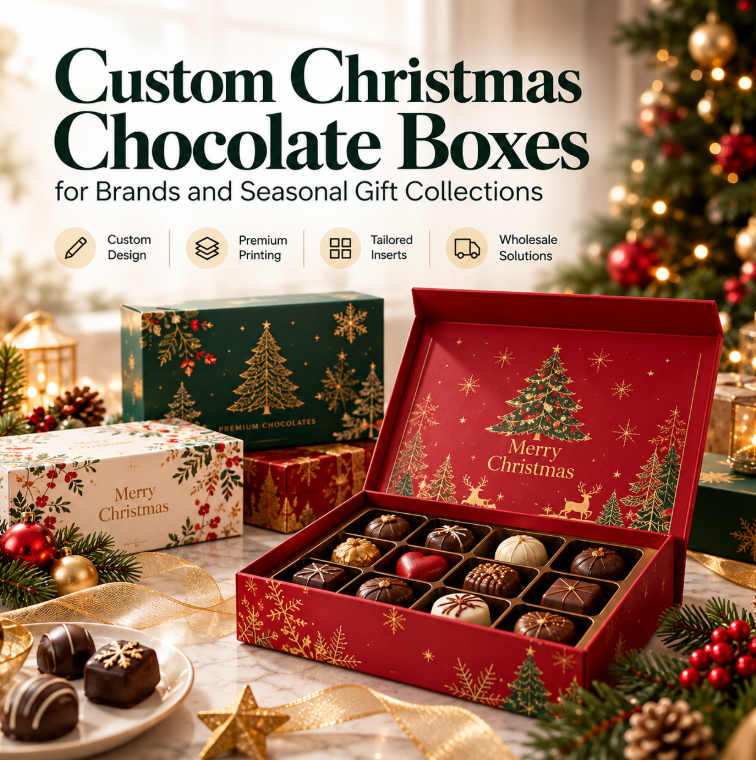

Christmas is one of the few selling seasons when packaging becomes part of the product people are buying. A chocolate assortment may taste exceptional, yet its perceived gift value is often judged before the recipient opens the box. For confectionery brands, specialty retailers, corporate gift suppliers, and distributors, seasonal packaging therefore has two jobs: communicate a festive, recognizable brand experience and keep the contents organized through packing, handling, and delivery.
Custom Christmas chocolate boxes offer more control than an off-the-shelf seasonal carton. Brands can specify the box dimensions, opening style, printed artwork, decorative finishes, and internal layout around the chocolates they actually sell. That does not mean the most elaborate box is always the strongest choice. A premium assortment may justify a rigid gift box with individual cavities, while a retail collection of wrapped chocolate bars may perform better in a slim folding carton that is easier to store and replenish.
The right custom Christmas chocolate box starts with the chocolate assortment, sales channel, brand positioning, and intended delivery date. Match the outer structure to the product dimensions and quantity, select inserts that support the intended presentation, and use printing and finishes where they create visible value. Confirm which components contact food, approve a physical sample, and compare quotations against the same specification. These decisions help balance festive appeal, product protection, purchasing cost, and seasonal launch requirements.
A seasonal packaging program is also a timing decision. Artwork revisions, insert development, material selection, production approval, and international transport can all influence when finished boxes become available. Treating packaging as part of the product launch—rather than the last decorative step—helps buyers ask better questions and evaluate suppliers more consistently.
Custom Christmas Chocolate Boxes Designed Around Your Products and Brand
Custom Christmas chocolate boxes should be developed around the chocolates they contain and the experience a brand wants to deliver. Product dimensions, piece count, wrapping method, sales channel, and intended gift value determine the appropriate structure and internal layout. A coherent specification also helps avoid buying a visually attractive box that is inefficient to pack, difficult to ship, or unsuitable for the actual assortment. The starting point is the product and its customer, not a decorative template.
Match the Box to the Chocolate Assortment
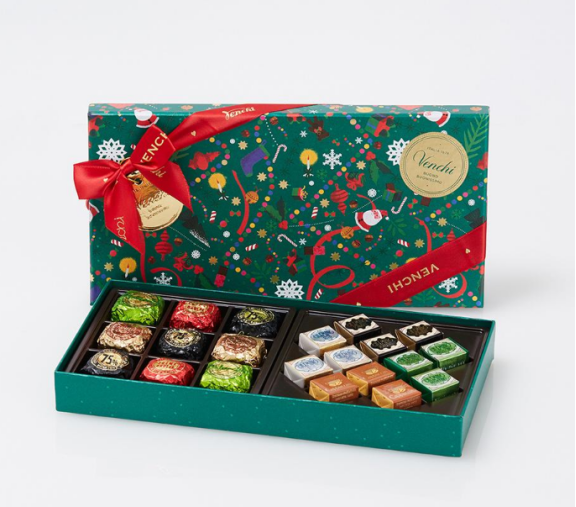
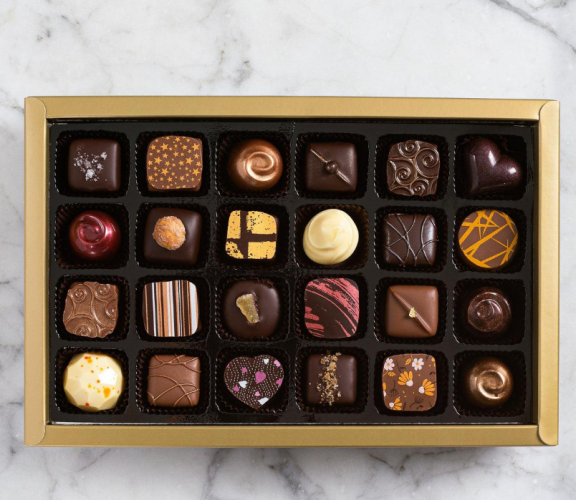
Truffles and pralines are often presented as individual pieces, so their arrangement is immediately visible when the lid opens. A fitted tray or divider can separate varieties, reduce movement, and create a deliberate visual rhythm. Measurements should include cups, wrappers, or liners where used; a cavity that fits a bare chocolate may not fit the finished product.
Mixed collections bring additional complexity. A brand may combine round truffles, rectangular filled chocolates, and wrapped seasonal pieces in the same box. Instead of choosing a standard grid first, define the intended arrangement and then develop the insert around it. For a multi-flavor assortment, consider whether the presentation helps customers distinguish the varieties and remove pieces without disturbing neighboring products.
Chocolate bars and individually wrapped candies may require less complex separation. Slim folding cartons, sleeves, or compact gift boxes can work well when the primary package already provides the necessary contact barrier. Larger Christmas gift sets may need a rigid outer box with compartments for multiple products, a message card, or an additional presentation element. The useful internal dimensions—not just the external box measurements—should guide the final choice.
Align Structure with Price Positioning
Packaging structure influences the customer’s impression of value. Rigid Gift Boxes can support a substantial, gift-ready presentation for premium assortments, while Magnetic Closure Boxes create a deliberate opening action that may suit corporate gifts or higher-priced collections. Drawer Boxes provide another distinct interaction and can work with carefully planned inserts.
For retail lines where storage space, replenishment, and packaging cost matter, Folding Carton Boxes may be a more practical choice. A window can show selected products, but its material, placement, and effect on structural strength should be evaluated. There is no universal “best” style: a useful choice balances the product, selling environment, and budget rather than selecting the most complicated construction.
| Packaging format | Typical application | Decision to check |
| Rigid lid-and-base | Premium assorted chocolates | Opening experience and packing volume |
| Magnetic closure | Corporate and luxury gifts | Closure fit and assembly |
| Drawer structure | Boutique collections | Tray fit and removal |
| Folding carton | Retail bars and wrapped candy | Storage and unit economics |
| Window box | Display-led assortments | Visibility and product protection |
Create a Recognizable Seasonal Identity
A Christmas collection should feel festive without losing the brand that customers already recognize. Red, green, gold, and white can be effective, but they are not mandatory. A premium brand might use a restrained palette and tactile paper; a family-oriented candy collection might favor illustration, playful typography, and clear flavor cues. The strongest artwork connects the seasonal theme to an existing visual identity.
For multiple seasonal SKUs, consider a common design system: consistent logo placement, related illustrations, and a recognizable color family. Individual variants can then change product names, flavor identifiers, or selected colors. This approach can make a range look coordinated in store and in online photography, while each artwork version still needs careful approval for accuracy.
Design for the Sales Channel
Retail packaging must communicate quickly from the visible faces of the box. E-commerce gift packaging needs to be considered alongside a suitable outer shipping package, because a decorative presentation box is not automatically a transit carton. Corporate gifts often prioritize an orderly unboxing experience, logo visibility, and room for a message or card.
Before confirming a design, ask how the chocolates will be filled, where the finished boxes will be stored, who will open them, and whether the assortment will be shipped individually or in master cartons. A structure that photographs beautifully but slows down filling or leaves products difficult to remove can create avoidable operational costs.
Christmas Chocolate Box Styles, Structures, and Custom Inserts for Different Products
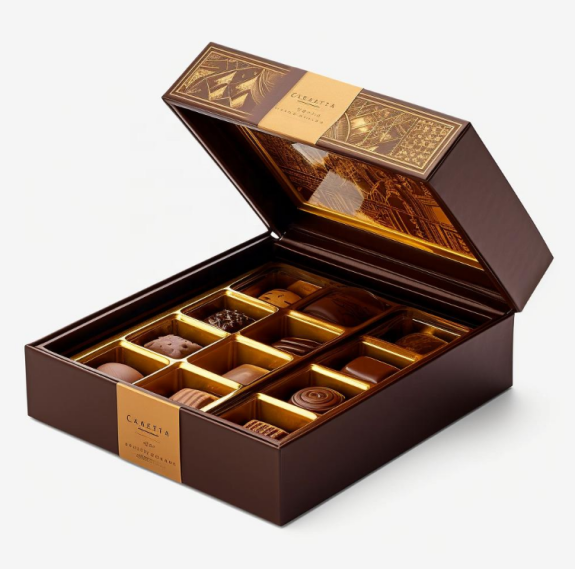
The outer box and internal insert should be designed as one system. Christmas chocolate box styles vary in appearance and storage efficiency, but the internal layout determines whether the assortment stays orderly and presents well when opened. For delicate chocolates, product-specific cavities or dividers may be more important than a complicated lid. Confirm the arrangement using actual samples or reliable finished-product measurements before locking the structure.
Select an Insert Based on Product Movement and Presentation
Custom Packaging Inserts can help position products, separate flavors, and establish a repeatable filling layout. Paperboard dividers may suit wrapped products and regular shapes. Formed trays or other shaped inserts may suit more complex arrangements, subject to the material and food-contact requirements of the application. Individual confectionery cups can also be part of the presentation when suitable for the product.
The insert should neither compress delicate chocolates nor leave excessive clearance. Consider how a packer places each piece, whether the recipient can remove it easily, and how the contents behave when the box is tilted or handled. A neat arrangement in a static photograph is only one part of a workable design.
Confirm Dimensions Before Artwork
Packaging dimensions are connected. Changing the insert thickness can change the available cavity depth; adding a liner can alter the fit; increasing the product count may require a wider box or a different layout. Establish the contents, their finished dimensions, and the preferred arrangement before completing print artwork. For multi-size collections, record each approved specification separately to prevent mix-ups during production.
Custom Printed Christmas Chocolate Boxes with Premium Finishing Options
Custom printed Christmas chocolate boxes can look premium without applying every available decorative technique. The most effective approach starts with a clear visual hierarchy: the brand, the seasonal message, and the product information should be easy to recognize. Selective finishes can emphasize these elements, but each addition should be assessed for material compatibility, sampling requirements, and cost. A restrained design with one well-executed accent may be more persuasive than an overloaded surface.
Use Finishes Where They Add Visible Value
Custom Printing and Finishing can combine printed artwork with tactile or reflective details. Foil stamping can highlight a logo, lettering, or a Christmas motif. Embossing and debossing add raised or recessed texture, while spot UV can create glossy contrast against a less reflective background. Matte and gloss lamination alter the overall surface appearance and may offer surface protection depending on the construction.
These effects are not interchangeable. Fine lines, textured stocks, folding areas, and complex artwork can affect the feasibility or appearance of a finish. Ask to review physical samples using the proposed material and artwork whenever the finish is central to the design. Digital previews are useful for layout approval, but they cannot fully represent texture, metallic reflection, or the way a lid opens.
Build a Cohesive Christmas Design System
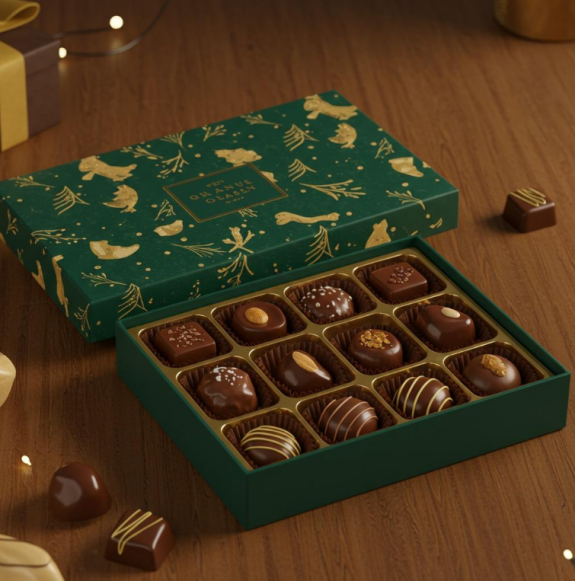
A holiday design does not need to rely on large amounts of red and green. A dark green rigid box with restrained gold accents can support a premium positioning; a white carton with colorful illustrations can communicate a cheerful retail assortment. What matters is whether the finish supports the intended customer experience and remains consistent across the product range.
If several sizes share a visual system, define which elements are fixed and which vary. This can simplify creative decisions, but production efficiencies should never be assumed without checking the actual structure, artwork count, and setup requirements with the supplier.
Balance Visual Impact Against Complexity
For procurement teams, the useful comparison is not simply “foil versus no foil.” Compare a base specification with one or two optional upgrades. Ask what changes in tooling, setup, sampling, unit price, and schedule. A small foil logo might deliver the desired result more economically than broad coverage; in other cases, a textured paper without extra finishes may better suit the brand.
Treat the final sample as a decision tool. Review print alignment, color appearance, finish placement, visible glue or folds, closure performance, and the fit of the completed chocolate assortment. Agree on the approved version before production rather than relying on verbal descriptions of the desired effect.
Food-Safe Christmas Chocolate Packaging: Materials, Inserts, and Compliance Checks
Food-safe Christmas chocolate packaging depends on how each component is used, what it contacts, and the requirements of the destination market. A decorative outer gift box is not automatically suitable for direct food contact. Wrapped chocolates and unwrapped chocolates may need different packaging arrangements, and material documentation must relate to the actual component and intended use. Confirm these points before approving an insert, liner, window, or surface treatment.
Distinguish Primary Packaging from the Gift Box
Primary packaging is the layer that directly contains or contacts the chocolate, such as a suitable wrapper, cup, liner, or tray. Secondary packaging may surround the primary pack to provide branding, organization, and presentation. For individually wrapped chocolates, the outer box may not need to contact food directly; for unwrapped assortments, the tray or other inner component may require additional attention.
Do not treat a generic “food-grade” statement as proof that every material, adhesive, coating, and printing application is suitable. The relevant assessment depends on food type, contact conditions, material construction, and market rules. Custom Food Packaging Boxes should therefore be specified by intended use, not by appearance alone.
Request Component-Specific Documentation
Ask the supplier which components are intended for direct contact, what materials and finishes they use, and what supporting documentation is available for the relevant market. Depending on the application, this may include material specifications, declarations or statements of compliance, and test information. Check that the documentation covers the exact material and conditions rather than a vaguely similar product.
If materials or finishes change after approval, revisit the applicable information. Where regulatory requirements are unclear, seek review from a qualified compliance professional or relevant authority. Packaging manufacturers can help supply technical details, but compliance should not be assumed from the presence of a certificate with an unrelated scope.
Custom Christmas Chocolate Box Cost, MOQ, and Wholesale Order Planning
Custom Christmas chocolate box cost depends on the specification, not just the outside dimensions. Structure, board selection, printing, finishes, insert complexity, order quantity, and packing requirements can all affect the quotation. For wholesale Christmas chocolate boxes, the lowest unit price is not always the lowest-risk purchase: seasonal demand, storage volume, multiple artwork versions, and unsold stock should also be considered when choosing an order size.
Compare Quotes Using the Same Specification
A useful comparison identifies exactly what is included. Two quotations for “a custom chocolate box” may refer to different board grades, insert materials, finishes, assembly requirements, or packing methods. Ask suppliers to state assumptions, exclusions, sample costs, setup or tooling items, and shipping terms where relevant. Without a shared specification, apparent price differences may reflect different products rather than better value.
| Cost driver | What buyers should clarify |
| Box structure | Rigid, folding, drawer, or other format |
| Materials | Board, covering paper, window, liner, insert |
| Printing | Colors, artwork versions, coverage |
| Finishing | Foil, embossing, spot UV, lamination |
| Order quantity | Total units and quantity per design |
| Logistics | Packing method, carton volume, delivery terms |
Balance MOQ with Seasonal Inventory Risk
Larger quantities may spread certain setup costs over more units, but they also commit more cash and storage to a time-limited design. A Christmas-themed box that remains unsold after the season may be difficult to reuse. Estimate demand by SKU, identify which designs are most uncertain, and consider whether shared dimensions or a common base structure could reduce complexity.
A shared structure is only practical when the products and inserts fit. Different chocolate counts or shapes may still need distinct trays, and each printed version must carry accurate product information. The goal is not to force every product into one box; it is to avoid unnecessary variation where it provides little customer value.
Prepare a Quote-Ready Brief
Include the product type, finished dimensions, approximate weight, piece count, preferred layout, wrapping method, desired box style, artwork or references, finishing preferences, quantity per design, destination, and required delivery date. State which details are provisional. A supplier can then identify what needs to be confirmed before sampling and provide a quotation tied to a clearer set of assumptions.
If you have a target budget, share it as a planning constraint rather than asking for the cheapest possible construction. That allows alternative materials, finishes, or structures to be discussed against the desired presentation and product protection.
Custom Christmas Chocolate Box Manufacturing, Sampling, and Production Lead Times
Custom Christmas chocolate box manufacturing should be planned backward from the date the finished products need to be packed, shipped, or placed on sale. Structural development, artwork approval, physical sampling, material preparation, production, inspection, and freight all require coordination. There is no universal lead time for every design; complexity, revisions, quantity, material availability, and delivery method can change the schedule. Agree on milestones and the point at which production timing begins.
Work Backward from the Retail or Gifting Date
A holiday launch deadline is not the same as a factory dispatch deadline. The brand may need time to receive the empty boxes, inspect them, fill chocolates, assemble gift sets, move inventory to a warehouse, and distribute it to stores or recipients. International transport and customs processes may also require allowances.
Map the critical stages: confirm assortment and measurements; choose structure and insert; approve quotation and technical specifications; review a physical sample; finalize artwork; authorize production; inspect and pack finished boxes; then arrange transport and receiving. The exact dates should be confirmed for the project, with enough room to resolve sample feedback.
Approve the Physical Sample Against a Checklist
A sample should be tested with the actual chocolates or accurate representatives. Check external and internal dimensions, cavity fit, closure operation, print placement, color, finishes, assembly quality, and ease of removing the contents. Also check whether the proposed packing method protects the boxes during transport.
Record requested changes in one controlled version of the specification. Late adjustments to product dimensions, insert layout, or finishes can affect material usage, tooling, cost, and the schedule. Clear sign-off is more useful than a collection of informal messages describing what should change.
Reduce Avoidable Delays
Finalize the structural dimensions before polishing artwork, nominate one person to consolidate design feedback, and confirm which materials and finishes are available for the project. Ask whether quoted production time begins after deposit, artwork approval, sample approval, or another milestone. Separate factory production time from total delivered lead time.
A reliable schedule is built from specific dependencies, not a generic promise. If a launch date is fixed, communicate it at the first inquiry and ask which design options fit the available window.
Choose a Christmas Chocolate Box Manufacturer for Your Next Order
A Christmas chocolate box manufacturer should be evaluated on its ability to translate a product brief into a workable specification, not only on attractive photographs. Buyers need clear answers about structural design, insert development, material options, sampling, quality checks, quotation scope, and delivery assumptions. A supplier who asks detailed questions about the chocolates and their intended use is better positioned to identify practical constraints before they become production problems.
Ask Questions That Reveal Manufacturing Fit
Explain the chocolate dimensions, product count, wrapping method, intended price positioning, and distribution channel. Then ask which structures are appropriate, whether the supplier can develop an insert from samples or measurements, and how finish options will be evaluated. Request examples of comparable work where available and permitted to share.
Also clarify how revisions are recorded, what sample approvals are required, how print and dimensional quality are checked, and which defects or deviations would trigger discussion. A clear process matters more than a broad claim that every custom request is possible.
Clarify Responsibility for Packaging and Compliance
The chocolate producer or brand normally supplies product measurements, assortment details, market requirements, and final artwork approval. The packaging supplier can develop structures and advise on materials and manufacturing considerations. Responsibility for food-contact documentation, independent review, freight arrangements, and inspections should be assigned explicitly rather than assumed.
When evaluating AKpack for a seasonal project, share the product dimensions, preferred box structure, visual references, desired insert, order quantity, and destination. These details provide a practical basis for discussing a custom paper packaging solution and the next steps toward sampling and quotation.
Request a Quote for Custom Christmas Chocolate and Candy Boxes
Planning a Christmas chocolate or candy collection? A focused inquiry helps turn a design idea into a workable packaging specification. You do not need to begin with a finished dieline, but the more accurately you describe the products and the intended presentation, the easier it becomes to evaluate suitable options.
Include any required material or food-contact considerations that apply to the finished product.
AKpack develops custom paper packaging solutions for brands seeking tailored box structures, printed presentation, and product-specific inserts. Share your Christmas chocolate packaging requirements to discuss suitable design directions and request a quotation. A successful seasonal gift box begins with a precise understanding of the product—and ends with packaging that supports the brand experience customers expect.