
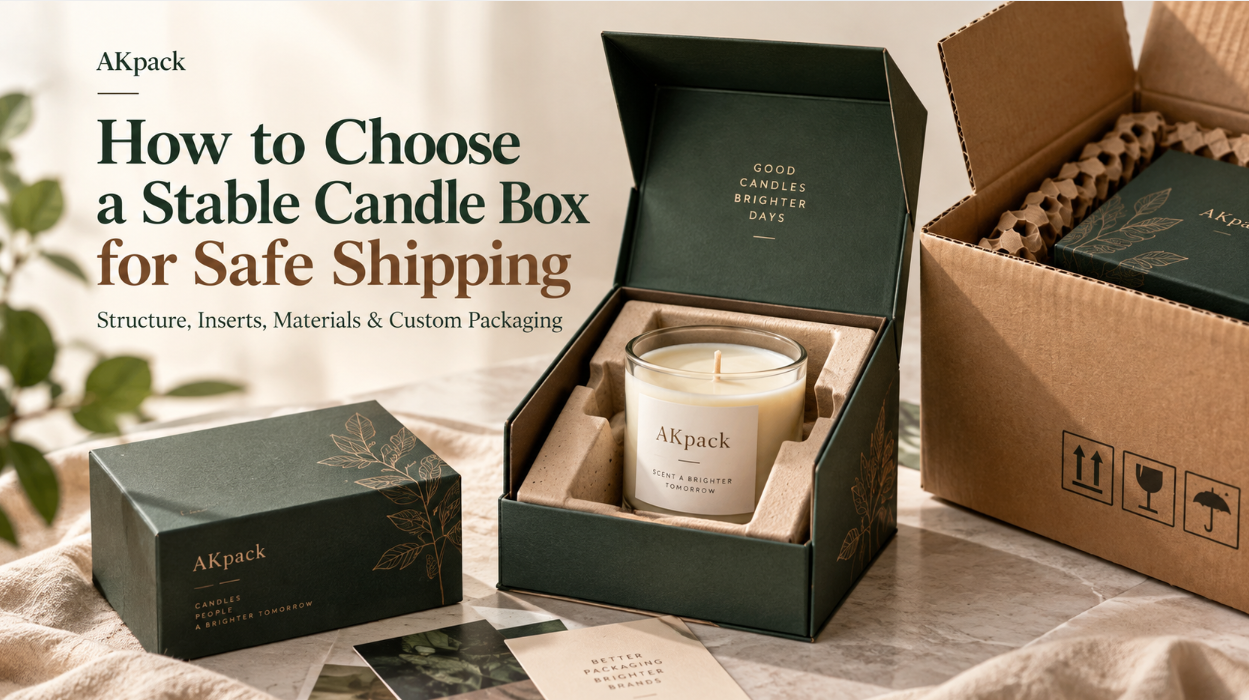

A candle may leave your production line in perfect condition and still arrive at a customer’s door with a cracked glass jar, a damaged corner, a loose lid, or a box that no longer looks premium. The problem is often not obvious from the outside. A packaging box can feel rigid and well-made while the candle inside is moving too much during transportation.
Shipping exposes candle packaging to repeated handling, vibration, stacking pressure, sudden movement, and accidental impact. For glass candle jars, these forces become more important because the product itself can be relatively heavy and fragile. When there is too much empty space inside the package, the candle can shift before contacting the protective structure, turning ordinary handling into repeated internal impact.
A stable candle shipping box should do more than surround the product. It should control movement by combining the right box structure, accurate internal dimensions, and an appropriate protective insert. For brands developing custom candle packaging, the best solution is usually determined by the candle’s actual size, weight, shape, shipping channel, and presentation requirements rather than by box thickness alone.
The goal is simple: keep the candle stable throughout transportation while maintaining an efficient package size, reliable production process, and appearance that reflects the value of the product. For brands working with AKpack, this product-first approach can be used as a practical starting point for developing a custom packaging structure rather than selecting a generic box size.
Why Does a Candle Shipping Box Fail During Transit Even When the Candle Box Looks Strong?
A candle shipping box can still experience product damage even when the outer box appears strong because protection depends on the entire packaging system, not just the outer walls. If a glass candle jar has excessive internal clearance, it can move, rotate, or shift during transportation. Repeated movement can create impact against the insert or box structure. Effective candle packaging therefore needs to control both external forces and internal product movement.
What Happens When a Glass Candle Jar Moves Inside the Box?
A candle package does not remain stationary once it enters the logistics system. It can be lifted, placed down, tilted, stacked, transported on conveyors, moved by truck, or transferred between different handling environments.
If the candle fits loosely inside the package, the jar can move from side to side, rotate, shift vertically, or contact the lid and box walls. A heavier glass jar can transfer greater force when it reaches a hard contact point. Multiple candles can also collide if they are not separated properly.
The outer box may remain visually intact while the product experiences repeated internal impacts. This is why asking whether a box is “strong enough” is incomplete. The more useful question is whether the packaging keeps the candle in a controlled position throughout normal transportation.
At AKpack, a practical packaging discussion should therefore begin with the actual candle dimensions and shipping conditions. This makes it easier to identify whether the primary risk comes from the outer structure, internal movement, product weight, or the interaction between these factors.
How Much Empty Space Is Too Much for Candle Packaging?
There is no universal clearance that works for every candle because the appropriate internal space depends on product dimensions, vessel shape, insert material, box structure, and packing method. A package that is too tight can make loading difficult and create unnecessary pressure. A package that is too loose can allow excessive movement.
The practical target is controlled clearance. Before developing a custom candle box, confirm the candle diameter and height, jar and lid dimensions, finished product weight, product shape, label or sleeve thickness, insert thickness, packing orientation, shipping method, and required presentation.
These details affect the final structure. A wide glass candle may require stronger lateral support than a narrow vessel. A tall candle may need additional control around its upper section. A decorative lid may require additional clearance to prevent contact during handling.
The right package is therefore not necessarily the smallest package. It is the package that provides enough space for efficient packing while preventing unnecessary product movement.
Is a Thicker Candle Box Always Better for Shipping?
Not necessarily. Increasing board thickness can improve certain structural properties, but it does not automatically solve product movement.
Two boxes can use similar board while performing very differently. One may have a thick outer wall but leave the candle loose. Another may use an accurately designed insert that holds the candle securely. The second solution can provide better practical protection without simply adding material.
This distinction matters for custom candle packaging because unnecessary material can increase packaging cost, package weight, and shipping volume without addressing the actual failure point.
Outer structure protects against compression, bending, stacking pressure, corner deformation, and general handling. Internal protection controls side-to-side movement, vertical movement, rotation, product-to-product contact, and glass-to-structure impact.
Both levels matter. If the outer structure is strong but the product is loose, the package may still perform poorly. If the insert holds the candle securely but the outer box collapses under pressure, internal protection cannot compensate for everything.
The objective is not to make every component stronger than necessary. It is to make each component perform the job it actually needs to perform. A well-developed custom candle box should therefore balance structural strength with product stability.
What Shipping Risks Should Be Considered for Different Candle Products?
Different candle products create different packaging requirements. A lightweight candle tin is not packaged in exactly the same way as a heavy glass jar. A single premium candle is also different from a multi-piece gift set containing several glass vessels.
The packaging priority should follow the product risk. For lightweight tins, accurate fit and structural support may be more important than heavy cushioning. For heavy glass candles, the base and lateral support deserve greater attention.
This is why there is no single answer to which candle box is best. The better question is which packaging structure is appropriate for the product, distribution channel, and required level of protection.
A candle sold through a physical retail store may prioritize shelf presentation and compact packaging. A candle shipped directly to consumers may require greater attention to parcel handling and internal movement. A premium gift set may need to combine product protection with a sophisticated opening experience.
How Should a Custom Candle Box Be Designed Around the Product?
A custom candle box should begin with the actual product rather than a standard box size. Product dimensions, weight, vessel shape, lid design, labeling, packing orientation, and shipping conditions all influence the internal and external structure.
The development process should establish the product envelope first, then determine the required clearance, support points, insert configuration, and outer box dimensions. This helps prevent a common packaging problem: designing an attractive box first and trying to make the product fit afterward.
A product-first approach can improve product positioning, reduce unnecessary internal space, create more consistent packing, and support a more predictable production specification. It can also help align protection with brand presentation instead of treating them as separate objectives.
For a brand developing a new candle line, sharing accurate product dimensions and target quantity early can make the packaging discussion much more productive. AKpack can use those specifications as a starting point for evaluating suitable box structures and insert configurations.
Which Candle Box With Insert Provides the Best Protection for Glass Candle Jars?
For fragile glass candle jars, the best candle box with insert is the one that controls movement without making the package unnecessarily complicated or expensive. The insert should support the product at appropriate contact points, prevent excessive side-to-side and vertical movement, and work with the outer box rather than acting as a separate component.
Paperboard, corrugated board, molded pulp, and foam-based inserts can each be suitable in different applications. The right choice depends on product geometry, required protection, presentation, production volume, packing speed, and target cost.
Paperboard Insert vs. Corrugated Insert for Candle Packaging
Paperboard inserts can provide a clean, retail-friendly solution with efficient material usage and good opportunities for die-cut structural support. Corrugated inserts can provide additional cushioning and rigidity when shipping conditions are more demanding.
The choice should not be based only on material strength. It should also consider how the insert will be assembled, how the candle will be loaded, how much storage space the packaging requires, and how consistently the structure can be produced at volume.
For premium candle sets, a well-designed paperboard insert can preserve a refined appearance. For heavier glass vessels or shipping-focused packaging, corrugated construction may offer a practical balance between support and protection.
How Does a Die-Cut Insert Prevent Candle Movement During Shipping?
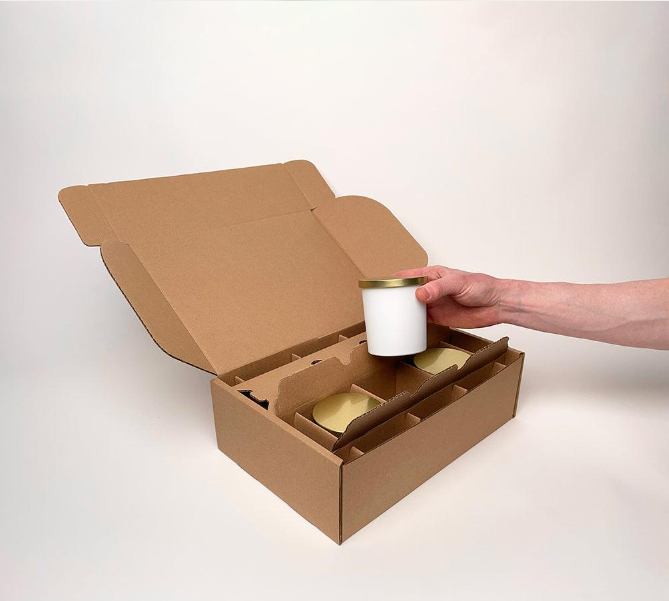
A die-cut insert works by creating controlled cavities, tabs, partitions, or support surfaces around the product. Instead of allowing the jar to move freely inside the box, the insert establishes defined contact points.
The important factor is fit. An insert should hold the candle securely without creating excessive pressure that could damage the vessel or make packing difficult. The geometry should be developed from the actual product rather than from a nominal size.
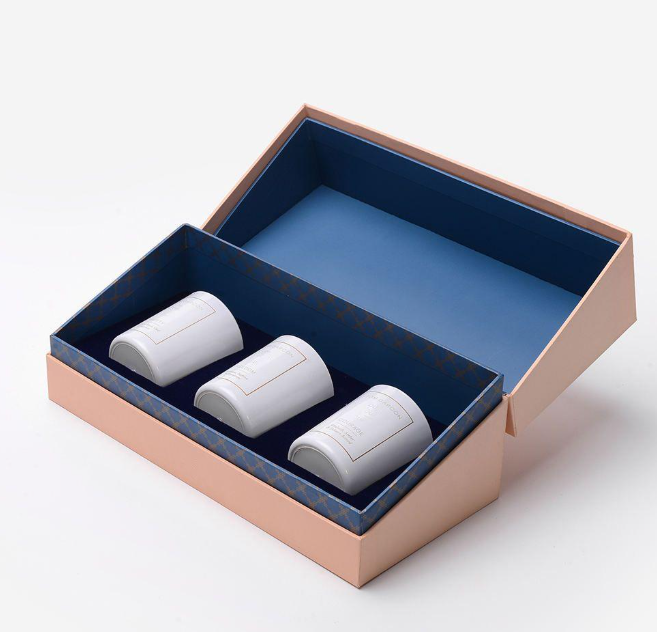
For multiple candles, individual cavities can also prevent jars from striking one another. This is particularly useful when the package contains different scents, sizes, or product variations that need to remain organized during transit.
When Do Multiple Candle Jars Need Individual Compartments?
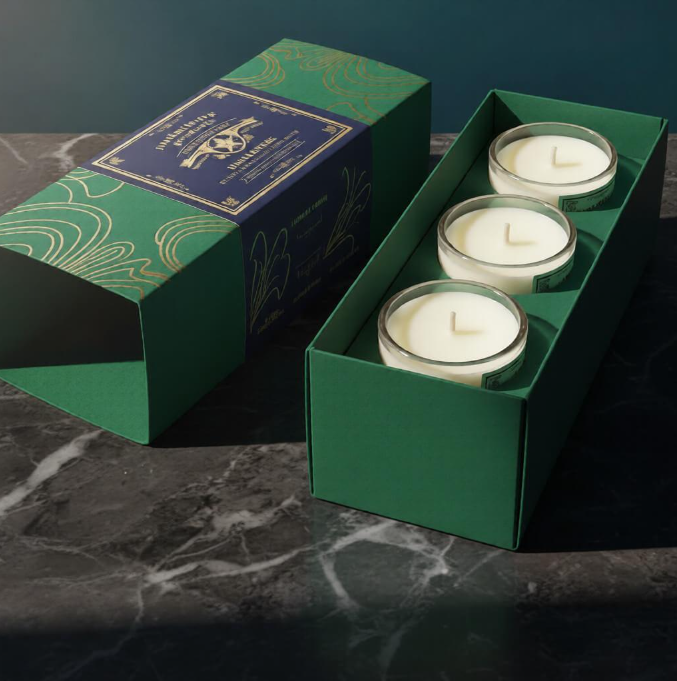
Individual compartments are especially useful when several glass candles share one package and movement between products could create impact. Separating each vessel also makes the package easier to organize and can improve the presentation when the customer opens the box.
The number and arrangement of compartments should be considered together with product dimensions, insert material, outer box size, packing speed, and shipping requirements. A compact multi-candle package is not necessarily the best package if the internal structure becomes too tight or difficult to assemble.
Which Candle Packaging Structure Is Right for Retail, DTC and Shipping?
The right candle packaging structure depends on how the product reaches the customer. Retail packaging often prioritizes presentation, shelf efficiency, and brand visibility. DTC packaging must handle parcel transportation and repeated handling. Premium gifting may place equal weight on protection and the unboxing experience.
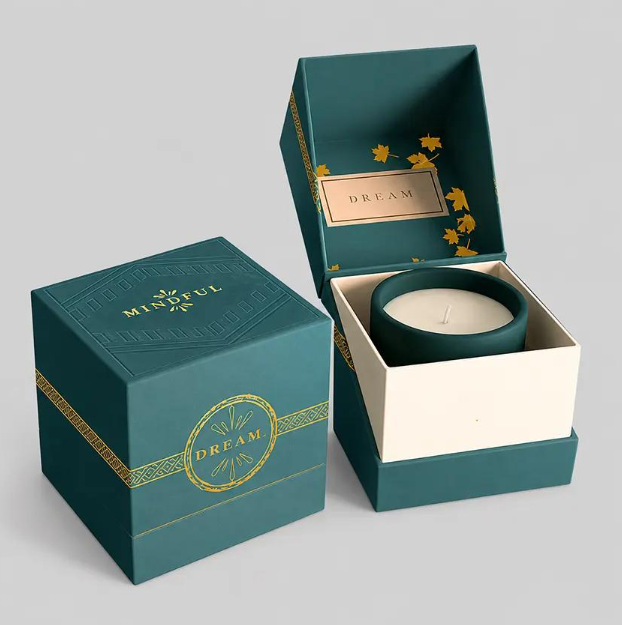
Folding cartons can provide efficient retail packaging. Rigid boxes can create a more substantial premium presentation. Corrugated mailers and shipping boxes can provide a practical outer layer for direct shipment. In some cases, combining a presentation box with a protective shipping structure is more appropriate than asking one box to perform every role.
The best choice is therefore a balance between protection, presentation, cost, storage, assembly, and shipping.
How Do Candle Box Materials and Finishing Affect Protection and Brand Presentation?
Materials and finishing should be selected according to both functional requirements and brand positioning. Paperboard, rigid board, and corrugated board provide different structural characteristics, while lamination, foil stamping, embossing, debossing, spot UV, silk screen printing, and flocking influence the tactile and visual experience.
Finishing does not replace structural protection. A premium surface treatment can improve brand presentation, but it cannot compensate for an unstable product inside the package. The strongest packaging programs treat structure first and finishing as a coordinated part of the final customer experience.
For a premium candle brand, AKpack can combine the structural requirements of the box with suitable printing and finishing choices so that the final package supports both protection and visual positioning.
What Should a Custom Candle Packaging Sample Prove Before Bulk Production?
A physical sample should answer practical questions before a large production run begins. It should confirm that the candle fits correctly, the insert holds the product securely, the box opens and closes as intended, the artwork appears as expected, and the packaging can be packed efficiently.
A useful sample review should check product fit, clearance, insert stability, lid or closure behavior, visual alignment, material appearance, and the overall packing sequence. If the package is intended for parcel shipping, the sample should also be considered against the expected handling environment.
Sampling is not merely a visual approval step. It is an opportunity to discover structural or operational problems while changes are still relatively manageable. AKpack can use the approved sample as the physical reference for production specifications and repeat orders.
How Much Does Custom Candle Packaging Cost and What Drives the Price?
Custom candle packaging does not have one fixed price because cost is affected by several interacting factors. Box structure, material, insert design, dimensions, finishing, order quantity, tooling, packing requirements, and shipping volume can all influence the final quotation.
A more expensive material is not automatically a better investment. A larger box can also increase logistics cost even when its unit price is reasonable. Likewise, an elaborate insert may improve protection but add assembly time.
The most useful way to evaluate price is to consider the total packaging system rather than one line item. A smaller, better-fitting package may reduce material use and shipping volume. A simpler insert may lower assembly cost while still providing sufficient stability. A higher production quantity may improve unit economics when demand is predictable.
A practical quotation should therefore be based on actual specifications rather than a generic price per box.
What Should You Look for in a Candle Box Manufacturer and Packaging Factory?
A capable candle box manufacturer should be able to discuss more than printing and box appearance. The supplier should understand how product dimensions, structure, inserts, materials, finishing, sampling, production, and quality control affect the finished package.
When evaluating a candle packaging factory, consider whether the supplier can support:
– Structural development
– Custom box sizing
– Protective insert development
– Material selection
– Printing and finishing
– Physical sampling
– Production consistency
– Quality control
– Repeat-order specifications
The supplier should also be willing to discuss the actual product rather than immediately recommending a standard box. Questions about candle dimensions, weight, vessel shape, quantity, shipping method, and target presentation are signs that the packaging is being treated as a product-specific solution.
AKpack approaches custom packaging from this product-first perspective, connecting box structure, insert development, materials, finishing, sampling, and production into one packaging development process.
How Can You Check a Candle Box Before Placing a Custom Packaging Order?
Before placing a custom packaging order, confirm the product specifications, box structure, insert design, material, artwork, finishing, quantity, and packing method. A short pre-production checklist can prevent small specification gaps from becoming expensive production problems.
Check that the candle dimensions and weight are correct, the insert has been reviewed with the actual product, the box structure matches the intended shipping environment, and the approved artwork and finishing specifications are clear. For repeat orders, keep an approved sample or reference specification so that future production can be compared against the original standard.
The final objective is not simply to purchase a box. It is to establish a repeatable packaging specification that protects the product, represents the brand, and can be produced consistently.
Ready to Develop Your Custom Candle Packaging?
If your candle packaging needs to balance product protection, premium presentation, shipping stability, and production efficiency, the next step is to work from the actual product specifications.
Send the candle dimensions, jar and lid details, target quantity, preferred box style, and shipping requirements. With these details, the packaging structure and insert can be evaluated together before moving into sampling and bulk production.
AKpack can support the development of custom candle packaging from structure and insert concepts through sampling, finishing, and production. The right starting point is not a standard box size. It is the product itself.
Candle Product Shipping Risk Reference
| Candle Product | Common Risk | Packaging Priority |
| Lightweight candle tin | Movement and denting | Accurate fit and structural support |
| Small glass candle | Impact to vessel | Controlled clearance and insert support |
| Heavy glass candle | Weight and impact | Strong base and lateral support |
| Wide candle jar | Side movement | Custom cavity or surrounding support |
| Candle with decorative lid | Lid movement or contact | Proper top clearance |
| Multiple candle set | Product-to-product contact | Individual compartments |
| Premium gift set | Protection and presentation | Structured insert and presentation box |
| DTC candle | Repeated parcel handling | Shipping-oriented outer structure |
Packaging Development Checklist
- Product dimensions confirmed
- Product weight confirmed
- Jar and lid specifications confirmed
- Box structure selected
- Internal clearance reviewed
- Insert approved
- Shipping scenario considered
- Material confirmed
- Artwork confirmed
- Sample approved
- Quantity confirmed
- Quality requirements confirmed