
Packaging does more than contain a product. It protects the item, communicates your brand identity, and shapes the experience customers have when they see, handle, or open it. For a brand, packaging is also part of the product itself: it influences shelf presentation, supports the unboxing experience, and helps customers recognize a product across retail, e-commerce, and gifting channels. A well-chosen package balances appearance with practical requirements such as fit, protection, storage, shipping, and budget.
AKpack is a custom packaging box manufacturer based in Dongguan, China, providing packaging development and production support for brands, e-commerce businesses, gift companies, retailers, and purchasing teams. Its services cover packaging requirements review, structural development, material selection, sample making, printing and finishing, insert customization, bulk production management, quality inspection, assembly, and export delivery support. The appropriate combination depends on the product and the requirements of each project.
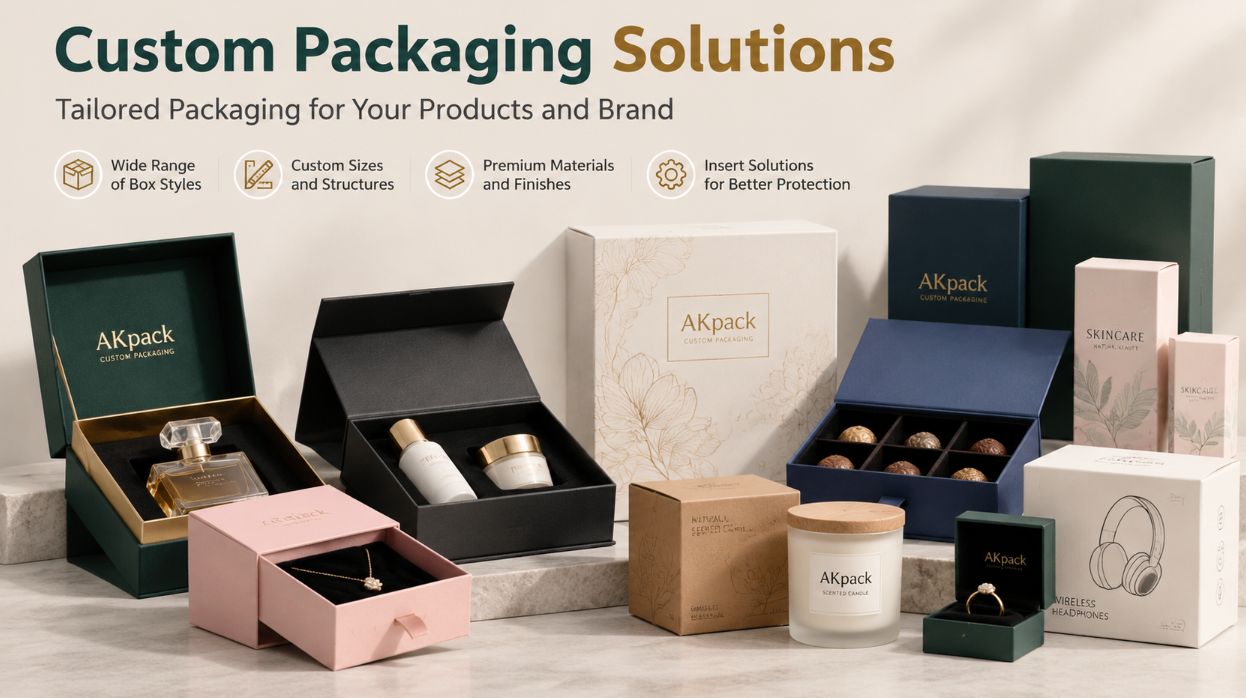
Custom packaging solutions can include rigid boxes, magnetic closure boxes, book-style boxes, drawer boxes, lid-and-base boxes, double-door boxes, folding rigid boxes, folding cartons, and corrugated packaging where suitable. They can also incorporate custom inserts, printed graphics, specialty papers, foil stamping, embossing, debossing, spot UV, lamination, and other finishing options. The goal is not to add every available feature; it is to choose a structure and finish that work together and support the product’s intended market position.
Whether you are developing your first branded package or looking for a manufacturing partner for repeat orders, the process should begin with a clear understanding of what the packaging needs to do. Product dimensions, weight, fragility, sales channel, target quantity, visual references, and budget all influence the recommendation.
1. What Custom Packaging Solutions Can We Develop for Different Products?
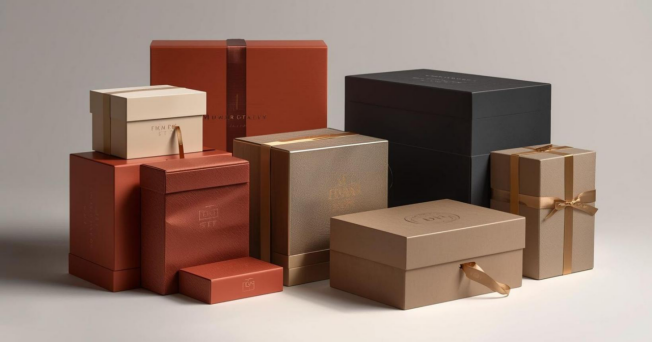
The most suitable packaging solution depends on the product, how it will be sold, and the experience the brand wants to create. A rigid gift box may suit a premium launch or gift set, while a folding carton may be a practical choice for products sold through retail channels. Drawer boxes and magnetic closure boxes offer distinctive opening experiences, and a fitted insert can help organize a product and its accessories.
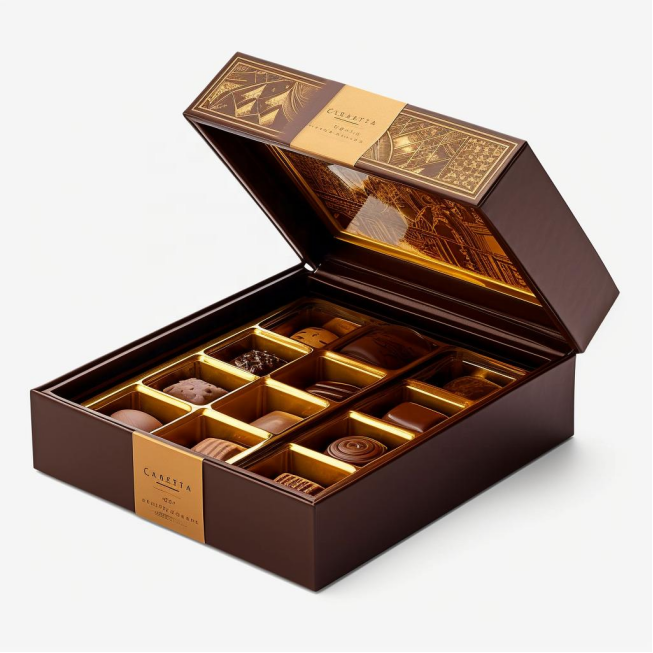
AKpack develops a range of custom paper-based packaging formats, including rigid gift boxes, magnetic closure boxes, book-style boxes, lid-and-base boxes, drawer boxes, double-door boxes, folding rigid boxes, and product-specific cartons. Depending on the project, packaging may be developed for perfume, cosmetics, skincare, jewelry, watches, chocolate, food gifts, candles, home fragrance, electronics, calendars, flowers, wigs, and other branded products. All specifications need to be reviewed against the actual product and intended application.
Which box style fits your product?
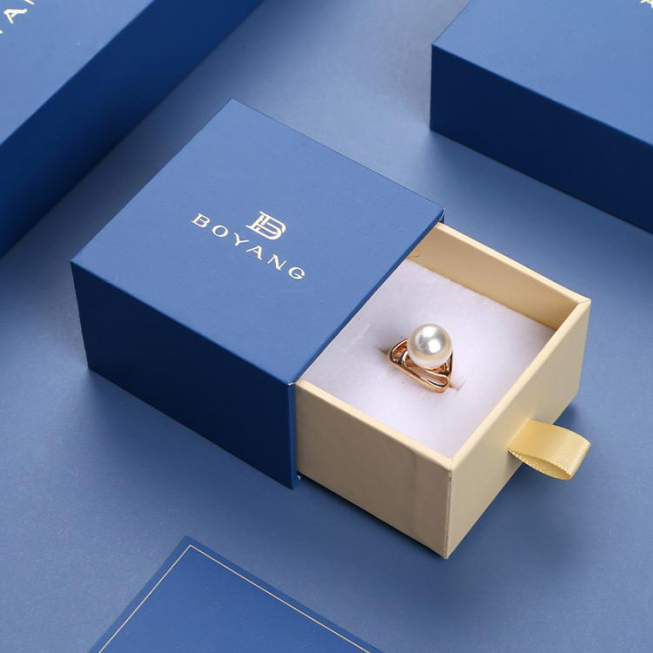
Magnetic closure boxes can create a convenient opening and closing experience, while book-style boxes provide a presentation format that opens like a cover. Drawer boxes use a sliding tray, which can work well for smaller products or gift sets. Lid-and-base boxes have a classic two-piece structure, and double-door boxes can create a more dramatic reveal for selected premium sets. Folding rigid boxes may reduce storage volume when folded, while folding cartons can suit lighter products and printed retail packaging.
These formats are not interchangeable in every situation. A heavier item may require a more supportive structure than a lightweight product. A box with multiple components may need dividers or a fitted insert.Discussing these factors before confirming a structure can reduce redesign and help align the package with its intended use.
What should be decided before selecting a structure?
- Product dimensions, weight, shape, and any fragile or protruding parts.
- The desired presentation level, opening experience, and brand positioning.
- Estimated order quantity, storage constraints, and target budget.
- Whether the package needs a fitted insert, compartments, or space for accessories and printed materials.
If you are comparing several formats, begin with the function that matters most and then evaluate appearance, cost, and production practicality. You can explore our custom rigid boxes, custom magnetic closure boxes, and custom drawer boxes for more specific structure options.
2. Which Custom Packaging Solutions Are Suitable for Different Industries?
Different product categories create different packaging requirements. The same box style may work well for one product and be unsuitable for another because of differences in weight, dimensions, fragility, use, or sales channel. Industry-specific planning helps identify the right starting point, but final specifications should always be based on the product itself.
Perfume and fragrance
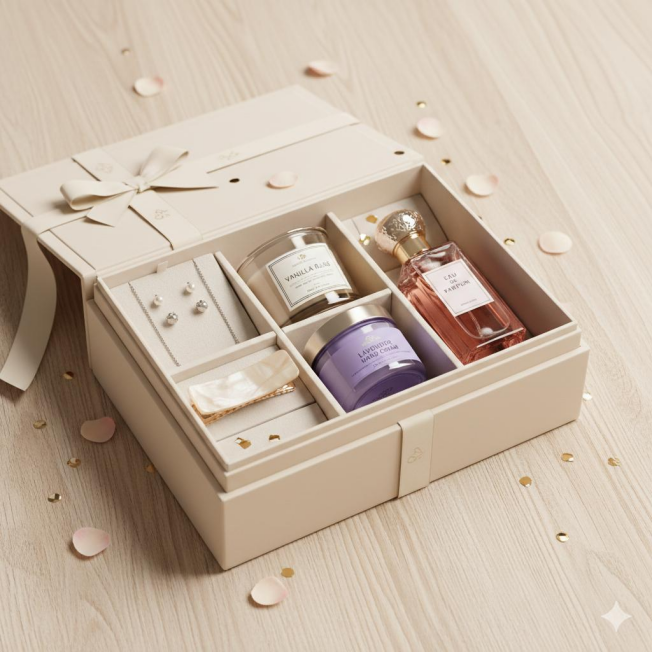
Fragrance packaging often needs to present a glass bottle attractively while keeping it properly positioned inside the box. Rigid boxes, magnetic closure boxes, and coordinated gift sets may be suitable depending on the bottle size, brand positioning, and budget. A fitted insert should account for the bottle body, cap, and any accessories, with enough space for practical removal. For fragrance brands, consistent color, logo placement, and surface finishes can help connect individual products within a collection. Explore custom perfume boxes for fragrance-specific packaging options.
Cosmetics and skincare
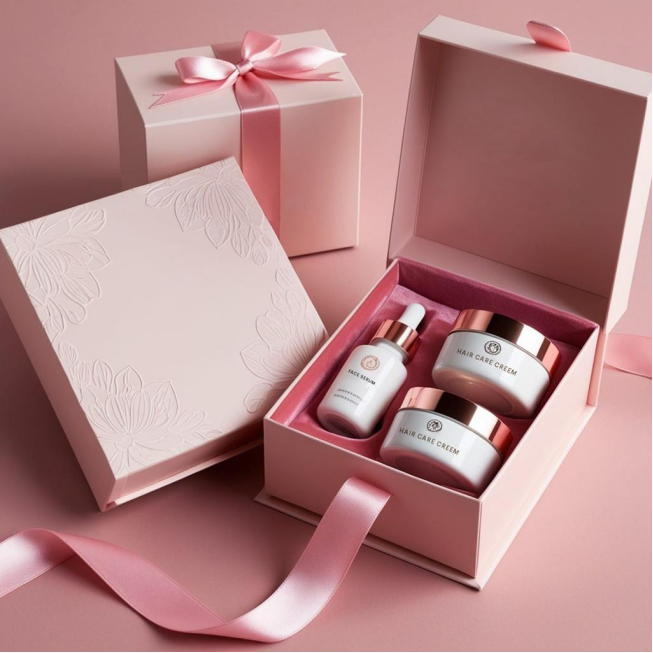
Cosmetic packaging can range from folding cartons for individual products to rigid boxes for gift sets, launches, and premium collections. The choice depends on the product dimensions, number of items, retail requirements, and desired presentation. A coordinated family of packages can use consistent colors and branding while adapting the dimensions and internal layout for each item. Explore custom cosmetic boxes for packaging options for beauty and skincare products.
Jewelry, watches, candles, food gifts, and electronics
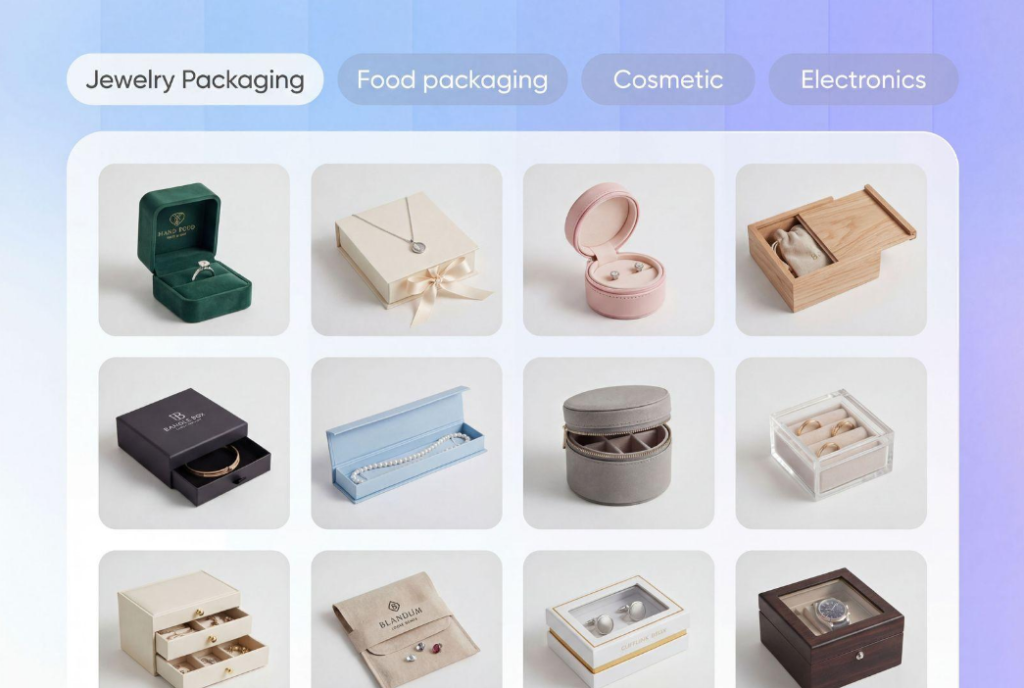
Jewelry and watch packaging often benefits from a compact structure and an insert that keeps the product and accessories organized. Candle packaging needs to account for the container’s dimensions and weight, as well as the intended display and shipping conditions. Electronic product packaging may need a fitted insert for the device and accessories, with protection requirements assessed according to the product and its distribution conditions.
For corporate gifts and multi-product sets, a coordinated box can bring several items together in one presentation. The internal layout should be planned around the exact contents, including any manuals, cards, cables, or promotional items. When a brand has several product categories, it may be possible to establish a consistent visual identity across different box styles without forcing every product into the same structure. Explore custom jewelry boxes, custom candle boxes, and custom gift boxes for related product options.
A useful starting brief includes the product category, product dimensions, weight, number of items per package, reference images, target order quantity, and the role the packaging needs to play. Those details help narrow the options before sampling and make the discussion more productive.
3. Which Materials and Finishes Can Be Used in Custom Packaging?
Material and finish choices influence the appearance, feel, structure, and cost of a package. AKpack’s company information lists common packaging materials such as coated paper, white card, kraft paper, specialty paper, greyboard, corrugated paper, and recycled paper options. The appropriate material depends on the box structure, required stiffness, print design, surface finish, product weight, and intended use. Material suitability should be confirmed for the specific project rather than assumed from the product category alone.
How do packaging materials differ?
Greyboard is commonly used as the structural core of rigid boxes, with printed or decorative paper wrapped around it. Coated paper and white card can support printed graphics and retail carton applications. Kraft paper can provide a natural visual character, while specialty papers offer different textures and surface appearances. Recycled paper options may be suitable for certain projects, subject to the required appearance, performance, and supply specifications.
The visible paper is only one part of the decision. A box may also need a structural board, lining paper, insert, adhesive, and protective outer packaging. These components should work together. For example, a delicate decorative paper may require careful handling during wrapping, while a heavier product may call for a more supportive structure. Material samples are useful when the final color, texture, stiffness, or surface feel is important to the brand.
Which printing and finishing options can improve presentation?
Depending on the design and production requirements, available finishing options listed in AKpack’s company information include matte lamination, gloss lamination, soft-touch lamination, gold or silver foil stamping, embossing, debossing, spot UV, texturing, and screen printing. These techniques can be used to emphasize a logo, create contrast, add texture, or support a particular brand style. The right combination depends on the artwork, paper surface, design scale, and budget.
Foil stamping can add a metallic accent to selected design elements. Embossing raises part of the surface, while debossing presses a design into it. Spot UV adds a localized gloss effect, which can contrast with a matte surface. Lamination changes the surface appearance and feel and may offer a layer of protection against routine handling. Not every finish is appropriate for every paper or structure, so the production team should review the artwork and material before confirming feasibility.
For a balanced result, choose finishes according to the brand’s most important visual priorities. A logo may need only one accent process rather than several competing effects.
4. How Much Do Custom Packaging Boxes Cost?
The price of a custom packaging box depends on its structure, dimensions, materials, printing, finishes, insert design, order quantity, and packing requirements. There is no single price that applies to every custom box.
Which factors affect the unit price?
Box size and structure influence material consumption and manufacturing complexity. A larger box may require more board and paper, while a multi-part design may require additional cutting, wrapping, assembly, or inspection. Material choice affects both the visible finish and the construction. Printing coverage, number of colors, specialty paper, foil stamping, embossing, spot UV, and lamination can all affect the cost depending on the design and production setup. A custom insert adds another cost component based on its material, shape, number of cavities, and manufacturing method.
Order quantity also matters. A growing brand may need to balance unit economics against storage, cash flow, product updates, and the risk of holding outdated packaging. The best quantity is the one that fits both the commercial plan and the manufacturing requirements.
How can you request an accurate custom packaging quote?
To help prepare a useful quote, provide the following details where available:
- Product dimensions and approximate weight.
- Preferred box style or a reference sample, sketch, or image.
- Target quantity and whether multiple sizes or designs are required.
- Material preferences, print artwork, logo treatment, and finishing requirements.
- Insert requirements, accessories, dividers, or protective components.
- Packing method, delivery destination, and required delivery date.
If you do not yet know the exact structure or material, explain the product and the intended presentation. A packaging discussion can identify the details that need to be decided before a quote can be finalized. When reviewing a quote, check whether it includes the same box structure, materials, finishes, insert, packing method, and quantity as the alternatives you are comparing. You can then request a custom packaging quote based on the agreed specifications.
A clear brief reduces avoidable back-and-forth and makes it easier to identify practical alternatives.This allows the packaging proposal to focus on the features that matter most rather than reducing quality indiscriminately.
5. How Do Custom Packaging Samples Help You Approve the Design?
A sample allows a brand to evaluate the packaging before committing to bulk production. It can help confirm the box dimensions, structure, product fit, opening experience, materials, print appearance, and finishing details. For a custom project, sampling is especially useful when the packaging includes a new structure, fitted insert, several components, or special finishing. The exact sample options, costs, and lead time depend on the project requirements and should be confirmed with the supplier.
What should you check on a packaging sample?
- Dimensions and fit: confirm the product fits as intended and can be inserted and removed without unnecessary force.
- Structure: check the lid, magnetic closure, drawer, hinges, folds, and other moving parts where applicable.
- Material and surface: review paper texture, board stiffness, color, and the appearance of the selected finish.
- Printing and branding: inspect logo placement, text legibility, color appearance, and alignment.
- Insert and compartments: check whether the product and accessories remain organized and are easy to access.
- Handling: consider how the package behaves when opened, closed, lifted, and packed.
- Packing and shipping: assess whether the proposed packaging system suits the expected distribution conditions.
If changes are needed, record them clearly and confirm which version is approved. Artwork changes, dimensions, material substitutions, or insert adjustments should be communicated before bulk production begins. Keeping a clear approval record helps reduce the risk of misunderstandings.
How can you reduce differences between the sample and bulk production?
The approved sample should be linked to a clear specification covering structure, dimensions, materials, artwork, finishes, insert layout, and packing requirements. A sample is an important reference, but it does not replace the need for defined specifications and quality checks during manufacturing.
AKpack provides sample development as part of its packaging service offering.
6. Why Choose AKpack as Your Custom Packaging Manufacturer in China?
Choosing a packaging manufacturer involves more than comparing a product photo or unit price. Buyers need to understand whether a supplier can interpret the brief, recommend workable structures, coordinate materials and finishes, develop samples, manage production, inspect quality, and support delivery. AKpack is based in Dongguan, China, and its company information describes more than 20 years of industry experience and an integrated service covering packaging development, production, quality inspection, and export support.
What should you look for in a packaging manufacturer?
Start by checking whether the supplier understands your product and can explain the trade-offs between different structures, materials, and finishes. A useful manufacturing partner should ask about product dimensions, use, target quantity, brand positioning, budget, and shipping requirements rather than recommend a box style without context.
Review the supplier’s relevant product experience and ask for examples that match your requirements. If your project needs a fitted insert, specialty paper, or multiple finishing processes, confirm that these details can be coordinated and that the responsibilities for each process are clear.
How does AKpack support a project from concept to production?
AKpack’s stated service scope includes packaging requirements review, structural design and optimization, material recommendations, custom sample development, printing and finishing, insert design, bulk production management, quality inspection, assembly, and export delivery support. This integrated approach can be useful for buyers who have a clear design as well as brands that need help developing a packaging concept into a manufacturable product.
For an established brand, the work may begin with supplied artwork, dimensions, drawings, or a reference sample. For a newer brand, the first step may be to clarify the product, positioning, presentation goals, and budget before evaluating suitable packaging directions. For repeat orders, consistent specifications and approval records become important for maintaining continuity across production runs.
AKpack’s product range includes magnetic closure boxes, book-style boxes, lid-and-base boxes, drawer boxes, double-door boxes, folding rigid boxes, and packaging for industries such as cosmetics, skincare, perfume, jewelry, food, chocolate, candles, gifts, electronics, calendars, flowers, and wigs. This breadth can help buyers explore packaging formats for different product lines while keeping the final recommendation grounded in actual product requirements.
When evaluating any supplier, request clear communication on specifications, sampling, production approval, quality inspection, packaging, and delivery.
7. How Is Custom Packaging Quality Managed From Sample Approval to Bulk Production?
Quality is built through a sequence of checks rather than a single final inspection. Packaging specifications need to be understood before production, and the finished boxes need to be checked against those requirements. The appropriate inspection points depend on the structure, materials, printing, finishes, insert, and intended use. Clear standards make it easier to identify problems early and communicate corrective actions.
Which specifications should be confirmed before production?
Before bulk production, confirm the approved dimensions, structure, material specifications, artwork version, colors, surface finishes, insert layout, assembly details, packing method, and quantity. If the package has special functional requirements, such as a particular closure, a fitted product cavity, or space for accessories, those requirements should be documented. Any changes made after sample approval should be reviewed for their impact on cost, feasibility, and delivery.
What quality checks matter for custom packaging?
AKpack’s company information identifies quality checks covering incoming materials, printing appearance, surface finishing, dimensions and structure, assembly, and final inspection before shipment. The relevant checks should be matched to the project. For example, a box with a fitted insert needs checks on product fit and insert placement, while a package with special printing or finishing needs checks on alignment, appearance, and execution of the approved design.
Quality review should also consider the complete package rather than each component in isolation. A printed wrap may look correct but still need to be checked for alignment when applied to the box. An insert may meet its own dimensions but fail to hold the product properly.
How can production and delivery risks be reduced?
The most useful safeguards are clear specifications, a documented approval sample, timely confirmation of artwork and changes, agreed inspection criteria, and communication about delivery requirements. Buyers should share launch dates and shipping constraints early, particularly when packaging is part of a wider product launch. The production schedule and delivery plan should be confirmed for the specific order rather than assumed from a general estimate.
If the packaging is intended for export, the packing method and shipment requirements should be discussed alongside the product itself. The aim is to ensure that the packaging is suitable not only for presentation but also for the way it will be stored, handled, and transported. Clear coordination helps reduce avoidable issues and supports a more predictable order process.
8. How to Request a Custom Packaging Quote and Start Your Project With AKpack
Starting a packaging project does not require every detail to be finalized. The most useful first step is to share what you know about the product, the desired presentation, the estimated quantity, and the timing. AKpack can then review the brief and discuss which details need to be confirmed before a specification or sample can be prepared. The clearer the starting information, the easier it is to evaluate suitable options.
What information should you prepare?
- Reference photos, a physical sample, sketches, dielines, or existing packaging if available.
- Preferred box style, materials, colors, logo treatment, and surface finishes.
- Insert requirements, product accessories, compartments, or protective needs.
- Target budget, intended delivery destination, and required timing.
If you do not have artwork or a finished structure, send a reference image or explain the result you want to achieve. If you already have production-ready files, provide the latest approved version and any structural specifications. If you are comparing options, identify the features that matter most so the discussion can focus on the right trade-offs.
What happens after you submit your requirements?
A practical project discussion typically moves through several stages: review the brief, clarify missing specifications, consider suitable structures and materials, discuss the quote, confirm the sample requirements, review and approve the sample, and then confirm the bulk production specifications. The exact sequence and scope depend on the complexity of the packaging and the information already available.
Before placing an order, confirm the final box structure, dimensions, materials, print and finish details, insert configuration, quantity, packing requirements, price, and delivery plan. Keep the approved artwork and sample references aligned with the order specifications. This makes it easier for both the buyer and manufacturer to work from the same requirements.
Whether you are developing a new product, updating existing packaging, or planning a larger product collection, AKpack can discuss the project based on its product requirements and manufacturing needs. Contact the team with your product details, reference images, and estimated quantity to request a custom packaging quote and explore suitable options.
Custom Packaging Solutions FAQ
What is the minimum order quantity for custom packaging?
The minimum order quantity depends on the box structure, materials, printing and finishing requirements, and production setup Do not assume that every structure or finish has the same minimum order quantity.
How long does custom packaging production take?
The timeline depends on design readiness, sample development, approval cycles, material availability, production complexity, quantity, and shipping arrangements.
Can I request packaging if I only have a product sample or reference image?
Yes. A product sample, reference image, sketch, or basic description can provide a starting point for discussing a packaging concept. Product dimensions, weight, target quantity, and intended use will help clarify the requirements.
Can materials, printing, and finishes be customized?
AKpack’s stated packaging capabilities include a range of paper-based materials, custom inserts, printing, and surface finishes such as matte or gloss lamination, soft-touch lamination, foil stamping, embossing, debossing, spot UV, texturing, and screen printing.
Can I reorder the same packaging design?
Repeat orders can be discussed using the approved specifications, artwork, sample reference, and order details. Keeping these records current helps clarify the requirements for a subsequent production run.
How do I get started with AKpack?
Share your product details, reference images or sample, estimated quantity, preferred packaging style, and target timing. If you have a budget or specific requirements for materials, inserts, printing, or finishing, include those details as well. AKpack can then discuss the next steps for evaluating a suitable packaging solution.