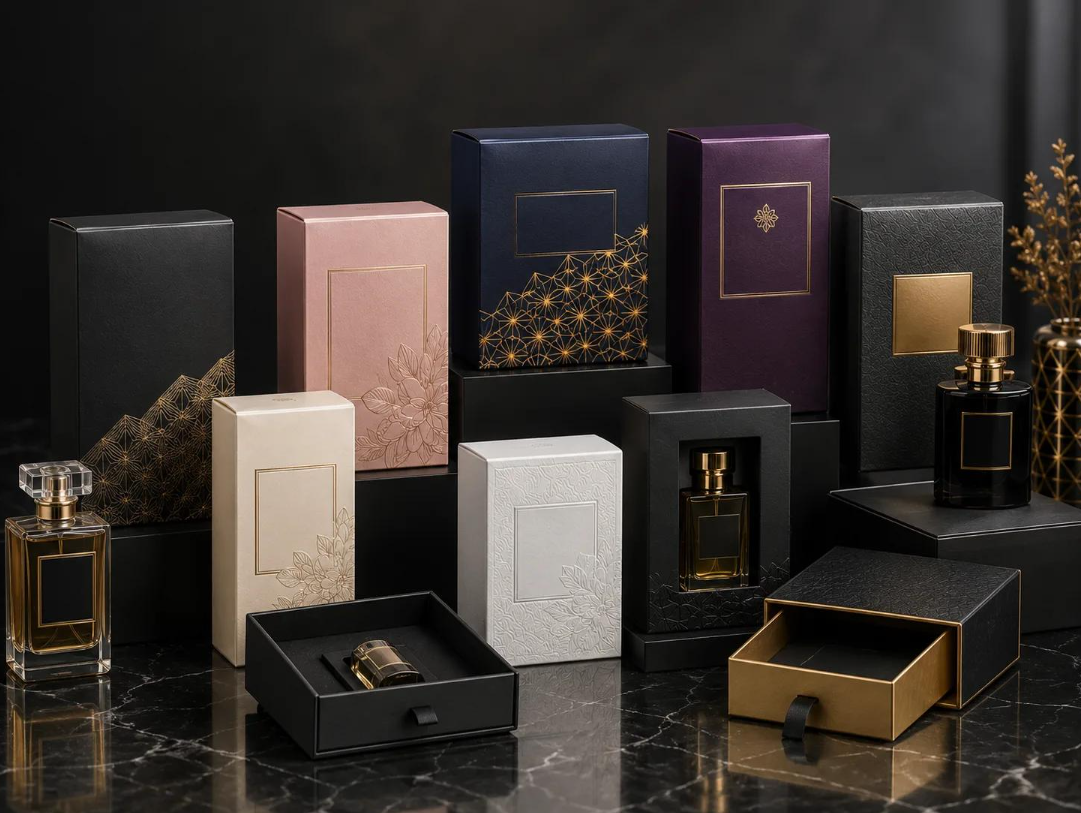

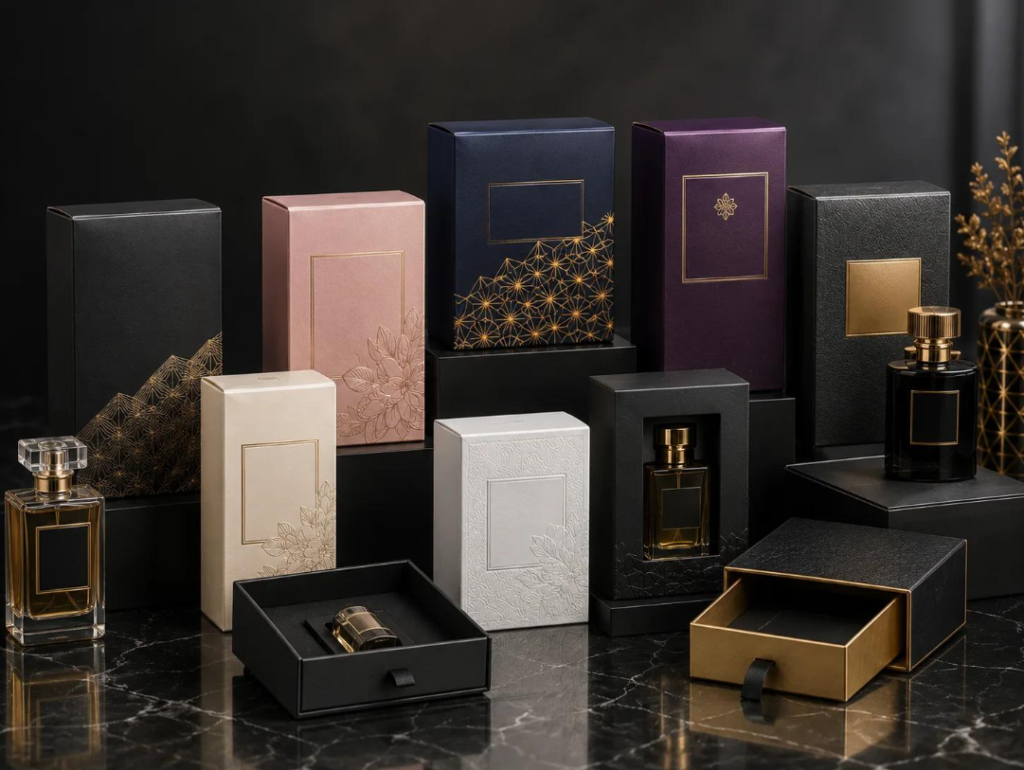
Your cost-effective perfume packaging boxes has a job to do long before anyone smells the fragrance. It introduces your brand, supports the bottle, influences how the product looks on a shelf, and shapes the customer’s first physical experience. Yet one of the most common packaging mistakes is assuming that a more complicated box automatically creates a more valuable product.
A beautiful magnetic box with several decorative finishes might be the right choice for a luxury gift collection. For an emerging fragrance brand selling everyday perfumes, a well-printed folding carton with a carefully fitted insert could be a much smarter solution.
Choosing cost-effective perfume packaging boxes means matching the structure, materials, protective inserts, and finishing details to the fragrance’s positioning and practical requirements. Start with the bottle’s dimensions, filled weight, distribution channel, target customer, and expected order quantity. Then compare suitable box styles, identify which custom features genuinely improve presentation or protection, and remove unnecessary complexity. A physical sample should confirm bottle fit, material appearance, and opening performance before bulk production. This approach helps fragrance brands build attractive packaging while making responsible purchasing decisions.
At AKpack, we support fragrance companies with structural development, material selection, printing, decorative finishes, protective inserts, sampling, and custom box manufacturing. Whether you are launching a new perfume line or improving an established collection, the goal is to create packaging that works beautifully for your product and makes sense for your business.
1. How to Choose the Best Cost-Effective Perfume Packaging Boxes for Your Fragrance Brand?
The best cost-effective perfume packaging is the option that meets your product’s protection requirements, supports your brand positioning, and can be manufactured consistently without unnecessary features. Folding cartons are often practical for everyday retail fragrances, while rigid boxes provide a substantial presentation for premium collections. The right choice depends on bottle dimensions, weight, customer expectations, sales channels, and replenishment plans. Begin with those requirements rather than selecting a box purely because it looks luxurious.
What Makes a Perfume Packaging Box Truly Cost-Effective?
A box can look expensive without being expensive to manufacture. The reverse is also true: a complicated structure can create substantial manufacturing work without noticeably improving the product experience.
For fragrance brands, packaging value comes from four connected functions:
- Product protection: keeping the glass bottle adequately supported through normal handling and distribution.
- Brand presentation: creating the appearance, texture, and opening experience expected by your customers.
- Manufacturing practicality: using materials and structures that can be produced and inspected consistently.
- Purchasing efficiency: supporting sensible quantities, storage, assembly, and future replenishment.
Consider a compact 50ml fragrance with a rectangular glass bottle. If the bottle can be securely held in a paperboard insert inside a folding carton, a large rigid gift box may add little functional value.
Now consider a collectible fragrance with an unusually shaped bottle, elaborate cap, and gifting-focused presentation. A custom rigid structure may be entirely appropriate.
Neither solution is universally better. Packaging becomes cost-effective when every major component has a reason to exist.
Which Perfume Packaging Solution Matches Your Brand Positioning?
The most useful starting point is the customer experience you want to create.
| Fragrance product | Suitable packaging direction | Primary consideration |
| New fragrance launch | Folding carton with fitted insert | Practicality and manageable development |
| Everyday retail perfume | Printed paperboard box | Shelf appearance and efficient packing |
| Premium fragrance collection | Rigid lid-and-base box | Material quality and refined presentation |
| Gift-oriented perfume | Magnetic or drawer-style rigid box | Opening experience and product display |
| Multi-scent collection | Shared structure with individual artwork | Visual consistency and production coordination |
A startup fragrance brand does not need to duplicate the packaging of an established luxury house. It needs a recognizable identity, secure bottle protection, and a design it can continue producing as sales grow.
Likewise, a premium collection should not compromise an important customer experience simply to simplify the structure.
The best packaging decision is specific to the product rather than the industry category.
How Should Bottle Shape and Sales Channel Influence Your Packaging Choice?
Bottle capacity alone is not enough to determine packaging. Two 100ml fragrances may have completely different outer dimensions, weight distribution, shoulder shapes, and cap designs. One may fit comfortably into a conventional carton. The other may require a specially developed insert.
Distribution matters just as much. A fragrance delivered to a department store in master cartons faces different handling conditions from an individual online order shipped directly to a customer. The retail box may be only one layer of the complete shipping system.
Before settling on a structure, review:
- Maximum bottle dimensions, including the cap
- Weight of the filled bottle
- Fragile decorative features
- Preferred orientation inside the box
- Ease of product removal
- Retail display method
- Individual shipping or wholesale distribution requirements
A packaging supplier can make better recommendations when these requirements are clear.
Is Premium Perfume Packaging Always Worth the Extra Complexity?
Premium packaging can create a meaningful difference when customers expect a gift-like presentation, substantial materials, or a distinctive opening experience. But luxury does not always require magnetic closures, elaborate compartments, and multiple surface finishes.
A rigid box with excellent proportions, clean wrapped edges, well-chosen textured paper, and a precisely fitted insert can feel more refined than an oversized design with excessive decoration.
The objective is not to use the largest number of premium features. It is to select the details that communicate your brand most effectively.
2. Which Custom Perfume Packaging Box Styles Offer the Best Balance of Quality and Cost?
Choosing the right perfume box structure is one of the most effective ways to balance manufacturing complexity, product presentation, and practical performance. Folding cartons use lightweight paperboard and can be shipped flat, making them suitable for many retail fragrances. Rigid boxes offer a firmer structure and premium appearance, while magnetic and drawer-style designs create more distinctive opening experiences. Evaluate each option against your bottle, packaging purpose, storage requirements, and sales channel.
Folding Carton vs. Rigid Perfume Box: Which Should You Choose?
A folding carton is commonly made from printed paperboard that is cut, creased, and folded into its final shape. It works particularly well when the fragrance needs a lightweight retail package with attractive graphics and straightforward handling.
A rigid perfume box uses a thicker structural board, typically wrapped with printed or decorative paper. Unlike an ordinary folding carton, a conventional rigid box generally retains its shape after manufacturing.
| Feature | Folding carton | Rigid perfume box |
| Construction | Folded paperboard | Thick structural board with covering paper |
| Storage before packing | Commonly supplied flat | Usually retains its formed shape |
| Presentation | Lightweight and versatile | Substantial and refined |
| Printing | Well suited to detailed graphics | Decorative wrapped-paper options |
| Production | Relatively straightforward | More forming and assembly steps |
| Suitable applications | Retail fragrances, growing collections | Premium perfumes and gift presentations |
One important point is often overlooked: a thicker box does not necessarily provide better bottle protection. If a heavy perfume bottle moves freely inside a rigid gift box, the structure may still perform poorly during transportation. The internal support system must match the bottle.
For many brands, the better decision is not simply folding carton versus rigid box. It is choosing a complete packaging structure that satisfies both presentation and protection requirements.
Explore different custom perfume boxes to determine which structural approach suits your fragrance.
Magnetic Closure vs. Drawer vs. Lid-and-Base Perfume Boxes
These three formats can look equally premium, but they create different experiences.
A magnetic closure box opens through a hinged panel and typically uses concealed magnets to hold the lid closed. It can be attractive for fragrance gifts and presentation sets.
A drawer box allows the inner compartment to slide out of an outer sleeve. It creates a controlled product reveal and is especially useful when the bottle and insert are intended to appear together.
A lid-and-base box separates into two components. Its classic construction allows considerable flexibility in exterior proportions, covering materials, and internal arrangement.
| Box type | Distinctive feature | Suitable use |
| Magnetic closure | Hinged opening and concealed closure | Premium gifting and special collections |
| Drawer box | Sliding product presentation | Boutique fragrances and gift sets |
| Lid-and-base | Separate lid and base | Premium retail and classic gift packaging |
| Book-style box | Opens like a book | Story-led perfume collections |
| Double-door box | Two opening panels | Special presentation and launch sets |
For brands comparing magnetic closure boxes and drawer boxes, pay attention to the opening movement, number of components, insert stability, and assembly requirements.
A complicated opening mechanism should serve the product experience, not merely make the design different.
When Are Folding Rigid Boxes a Better Alternative?
Conventional rigid boxes can occupy considerable space during storage and international transport because they usually remain assembled. A folding rigid structure may help address this issue by allowing the package to be transported flat and assembled later.
These structures can be useful when a brand wants a substantial presentation but also needs to evaluate storage and shipping efficiency. However, folding rigid boxes introduce additional design considerations:
- Assembly sequence
- Adhesive or closure performance
- Panel alignment
- Corner appearance
- Structural stability after assembly
- Packing labor at the destination
The advantages depend on the complete project. For some brands, folding rigid boxes offer an attractive compromise. For others, a conventional rigid structure or a folding carton will be more practical.
Physical sampling is essential before making the final choice.
Which Perfume Box Structure Is Best for Multiple Bottle Sizes?
Brands often want one consistent packaging look across 30ml, 50ml, and 100ml fragrances. That consistency does not necessarily require identical box dimensions.
A useful approach is to create a packaging family with shared visual rules:
- Similar opening styles
- Consistent material selection
- Coordinated printing finishes
- Matching logo positions
- Proportionally adjusted external dimensions
- Bottle-specific internal inserts
When different bottle sizes share similar profiles, some structural elements may be standardized. When the bottles vary significantly, separate internal engineering may be necessary.
The result should feel like a coordinated collection, not three unrelated boxes forced into one format.
3. What Perfume Packaging Materials and Custom Printing Finishes Can You Choose?
Perfume packaging materials and finishing processes should be selected according to structural needs, visual positioning, and production practicality. Coated paperboard is often appropriate for printed folding cartons, while greyboard provides the structural base for many rigid perfume boxes. Specialty papers can add texture, and printing finishes such as foil stamping, embossing, spot UV, and soft-touch lamination can create distinctive brand details. The best combination is one that achieves the intended appearance without unnecessary manufacturing steps.
Which Paper Materials Are Best for Custom Perfume Boxes?
Material selection has a direct influence on how the box looks, feels, folds, and performs.
Coated paperboard is a versatile choice for printed cartons. Its relatively smooth surface can accommodate detailed graphics, color printing, and selected decorative processes.
Greyboard is widely used as the structural component of rigid gift boxes. It is commonly covered with printed paper, textured paper, or another decorative wrapping material.
Kraft paper provides a natural appearance and may suit minimalist or nature-inspired fragrance branding. Its base color, however, influences printed color reproduction.
Specialty papers offer distinctive surface characteristics such as linen-like texture, fine patterns, pearlescent effects, or tactile fibers.
Recycled paper options may also be considered when they meet the project’s appearance and performance requirements.
| Material | Main characteristic | Common application |
| Coated paperboard | Smooth printable surface | Folding perfume cartons |
| Greyboard | Strong structural core | Rigid perfume gift boxes |
| Kraft paper | Natural paper appearance | Minimalist fragrance packaging |
| Specialty paper | Decorative texture and surface effect | Premium wrapped boxes |
| Recycled paperboard | Recycled-content material options | Selected paper-based packaging |
Material thickness should not be chosen by appearance alone. A board that is unnecessarily thick may complicate creasing, increase packaging weight, and consume more material. Conversely, an unsuitable lightweight board may buckle or deform.
The right specification should be confirmed through structural samples and production evaluation.
How Do Gold Foil Stamping, Embossing, and Spot UV Improve Perfume Packaging?
Decorative finishing helps translate brand identity into a physical experience.
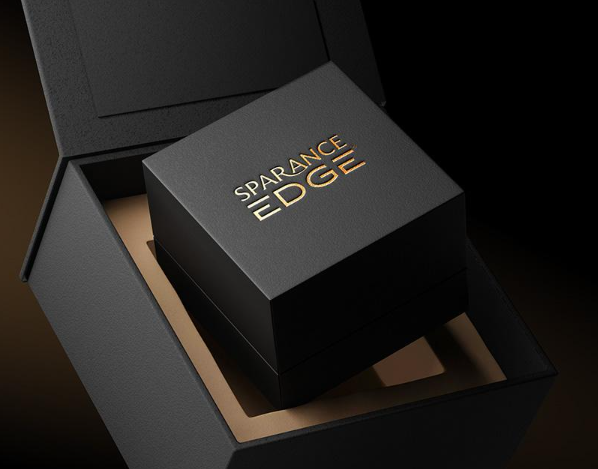
Gold and silver foil stamping introduce metallic highlights. They are commonly used for logos, perfume names, borders, and selected design details.
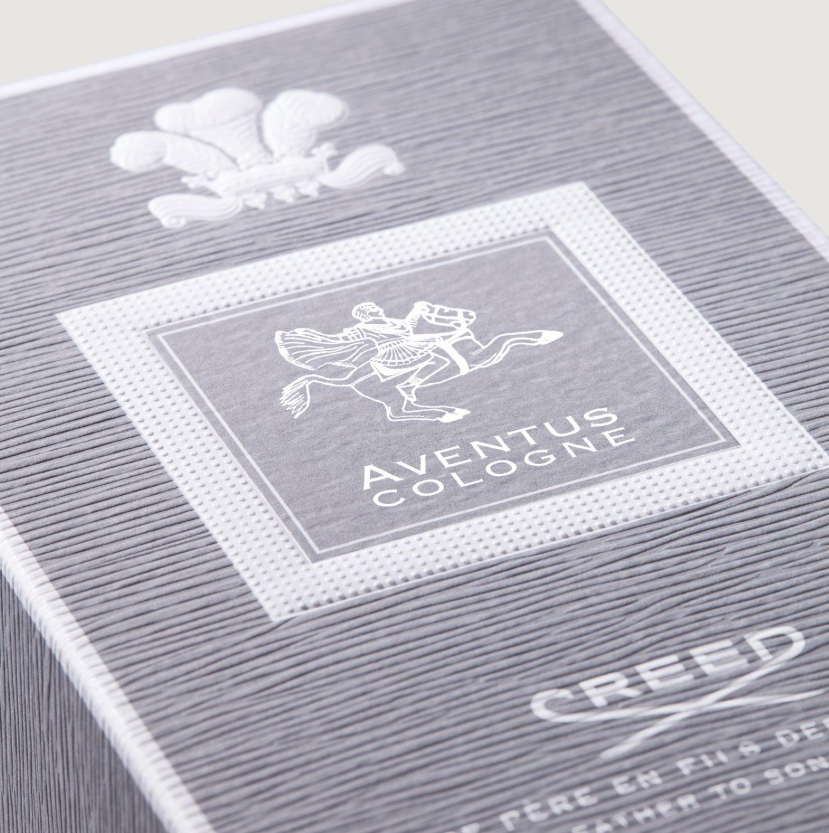
Embossing creates a raised feature, while debossing creates a recessed impression. Both can add a tactile element without requiring elaborate printed graphics.
Spot UV produces localized gloss, allowing selected details to contrast with a surrounding matte surface.
Silk screen printing and specialty paper treatments can offer additional design possibilities, depending on the selected construction.
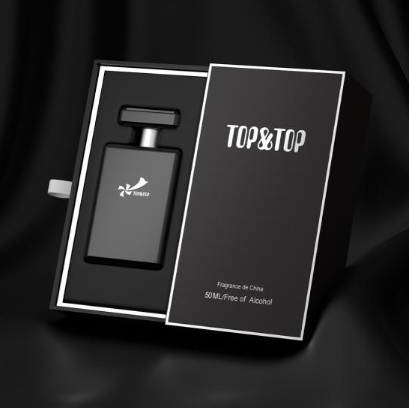
The strongest results often come from combining the right process with the right material. For example, an embossed logo on textured paper communicates something different from a reflective gold logo on a smooth black surface.
Neither is inherently more luxurious. They express different brand personalities.
What Is the Difference Between CMYK and Pantone Printing for Perfume Boxes?
CMYK printing uses combinations of cyan, magenta, yellow, and black to reproduce multicolor artwork. It is well suited to packaging that includes illustrations, photography, gradients, and detailed graphics.
Pantone spot-color printing uses separately specified colors and can be useful when a brand requires a particular color appearance or when process printing alone does not deliver a satisfactory result.
The printing decision should account for:
- Artwork complexity
- Brand color requirements
- Paper whiteness and texture
- Ink absorption and finish
- Printing method
- Approval standards for color matching
Colors may appear different on coated white paper, uncoated kraft paper, and textured specialty paper even when the same design files are used.
For a fragrance collection, consistency between different box sizes and production runs is particularly important. Ask for suitable printed proofs or physical samples when color accuracy is a priority.
Which Surface Finishes Create a Premium Look Without Overdesigning the Box?
The secret to premium perfume packaging is often restraint. A simple rigid box can become visually distinctive with one well-executed finish.
| Desired brand effect | Finishing option to consider |
| Metallic logo detail | Gold or silver foil stamping |
| Raised or recessed branding | Embossing or debossing |
| Gloss contrast | Spot UV |
| Smooth tactile surface | Soft-touch lamination |
| Rich material texture | Specialty covering paper |
| High-gloss overall appearance | Gloss lamination |
Soft-touch lamination can provide a refined feel, but surface durability should be evaluated with the actual material and expected handling conditions.
A glossy finish may suit a vibrant fashion fragrance. A matte textured surface may be more appropriate for a quiet, minimalist scent collection.
AKpack supports various custom printed packaging options, including CMYK and spot-color printing, foil stamping, embossing, debossing, spot UV, and laminated finishes.
Rather than selecting several processes automatically, choose a combination that reinforces your brand identity and works reliably with the intended material.
Are Sustainable Perfume Packaging Materials Always the Most Practical Choice?
Sustainability decisions deserve careful evaluation rather than relying on a material’s appearance. A brown kraft box is not automatically environmentally preferable to every white paperboard alternative. Recycled content, material sourcing, adhesives, coatings, inserts, transportation, and end-of-life handling all matter.
Paper-based inserts can sometimes simplify material selection and separation, but their suitability depends on bottle protection requirements. A complex combination of laminated paper, plastic trays, foam, and decorative layers may be more difficult to separate after use.
If sustainability is important to your brand, ask specific questions:
- What is the actual material composition?
- Is recycled content documented for the selected grade?
- Can the packaging components be separated?
- Are specialized coatings or adhesives necessary?
- Does the design use more material than the bottle requires?
- What disposal or recycling information is appropriate for the target market?
Environmental certifications and claims should be supported by appropriate documentation for the actual materials supplied. The objective is to choose materials responsibly while maintaining product protection and manufacturing quality.
4. Which Custom Perfume Box Inserts Best Protect Glass Fragrance Bottles?
A custom insert protects a perfume bottle by controlling movement, supporting its weight, and helping prevent damaging contact with the surrounding box. Paperboard inserts can work well for regular bottle shapes, while EVA foam can be cut to fit more complex profiles. Flocked inserts add a refined presentation when appropriate. The best choice depends on bottle geometry, weight, surface sensitivity, packaging structure, and shipping conditions—not simply the appearance or softness of the insert material.
Paperboard Inserts vs. EVA Foam Inserts: Which Is Better?
Paperboard inserts are available in folded, die-cut, and multi-piece structures. They can support a bottle through carefully positioned panels, openings, and retaining features.
For regular bottle shapes, a properly developed paper insert may offer an effective balance of support, presentation, and material efficiency.
EVA foam inserts are cut into custom cavities that follow the bottle’s profile. They can accommodate irregular forms and provide positioning and cushioning.
However, foam performance depends on density, thickness, cavity accuracy, and how forces are transmitted through the complete package.
| Insert type | Main benefit | Points to evaluate |
| Folded paperboard | Lightweight, paper-based construction | Support points and folding stability |
| Die-cut paperboard | Tailored bottle positioning | Edge contact and structural strength |
| EVA foam | Custom-fit cavities and cushioning | Density, fit, material choice |
| Flocked insert | Refined appearance and soft surface | Substrate, adhesion, protection performance |
| Sponge insert | Flexible cushioning possibilities | Compression, recovery, bottle compatibility |
A soft insert is not automatically a safe insert. If it allows a heavy bottle to move excessively, the bottle can still strike internal surfaces. If the cavity is too tight, the insert may damage delicate decoration or make removal difficult.
The design needs the correct balance between retention and accessibility.
When Should You Choose Flocked or Premium Presentation Inserts?
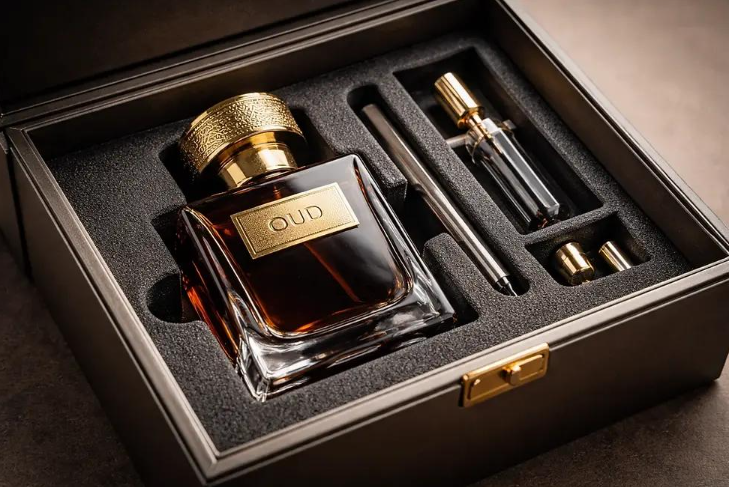
A flocked insert can make the bottle appear more carefully presented, particularly when the package opens to reveal the fragrance in a display-like arrangement. This approach may suit premium gifts, limited editions, and special fragrance collections.
But appearance should not replace engineering. A flocked surface is a finish applied to a supporting structure. The protective performance depends on the complete construction beneath that surface.
For example, a flocked formed tray and a flock-covered foam insert may behave differently under pressure.
When considering custom packaging inserts, first determine how the bottle must be supported. Then choose the surface appearance that suits the brand.
How Do You Design Inserts for Irregularly Shaped Perfume Bottles?
Unusual glass bottle shapes can create specific packaging challenges. A round bottle may rotate. A tall bottle with a narrow base may need greater lateral support. A decorative cap may be vulnerable to pressure, while a heavy base may require additional cushioning.
A good insert design identifies stable contact areas instead of gripping the bottle indiscriminately.
Important information includes:
- Filled bottle weight
- Maximum profile dimensions
- Location of the center of mass
- Fragile caps and decorative elements
- Printed or coated glass surfaces
- Required finger access for removal
- Intended orientation during packing
For bottles with delicate finishing, the insert material should be evaluated for rubbing, marking, and compatibility with the surface.
A physical bottle sample is especially valuable because drawings may not fully communicate weight distribution, surface friction, and small design details.
How Can You Check Whether the Perfume Bottle Is Secure?
Begin with a basic physical fitting test. The bottle should sit in the intended position without excessive movement or uncomfortable insertion force.
Check the base support, side restraint, cap clearance, and finger access. Then examine how the complete packaged product behaves during normal opening, closing, turning, and handling.
For products shipped through parcel networks or demanding distribution routes, suitable transport testing may be necessary. The test should reflect the actual finished product and shipping configuration, rather than an empty retail box alone.
A successful packaging design protects the bottle while preserving an intuitive and pleasant opening experience.
5. How Can Brands Reduce Custom Perfume Packaging Costs Without Sacrificing Quality?
The most effective perfume packaging cost reductions come from better structural decisions, efficient material selection, appropriate finishes, and coordinated production planning. Avoid removing protective features or lowering essential quality standards simply to simplify manufacturing. Instead, evaluate oversized dimensions, unnecessary internal layers, excessive decoration, complicated openings, and opportunities to share structures across fragrance products. The objective is a packaging design that delivers the intended brand experience with fewer avoidable production steps.
How Does Right-Sizing Improve Perfume Box Manufacturing Efficiency?
Oversized packaging creates more than empty space. It may require additional paperboard, larger internal supports, more covering paper, increased storage space, and a less efficient export-carton configuration.
Start with the perfume bottle, not the exterior box. Identify the minimum practical space needed for bottle support, insertion, removal, and any required information or accessories. Then evaluate the dimensions and proportions of the outer structure.
For example, a bottle may look attractive in a tall box, but excessive headroom could require extra internal components to keep it stable.
Reducing that unnecessary space may simplify the insert and improve the overall design.
Right-sizing should never compromise bottle clearance or make packaging assembly difficult. The optimized structure must still be tested with the actual product.
Which Packaging Features Are Worth Keeping, Simplifying, or Removing?
An effective way to review a perfume box design is to divide its features into three groups.
| Feature category | Examples | Recommended approach |
| Essential function | Bottle support, structural integrity, required product information | Preserve and verify |
| Brand-defining detail | Logo, signature colors, appropriate finish, visual identity | Protect the features that matter |
| Optional enhancement | Extra panels, decorative layers, redundant compartments | Simplify when they add little value |
A carefully placed foil logo may be central to a fragrance brand’s visual identity. A second metallic border, additional laminated panel, or complicated ribbon arrangement may be less important.
The decision should be based on what customers see, feel, and use. For a gift presentation, an opening ribbon may have a genuine purpose. For a basic retail carton, that same feature might only increase complexity.
The goal is purposeful design rather than indiscriminate simplification.
Can Shared Box Structures Reduce Complexity Across Multiple Perfume SKUs?
Fragrance brands often develop several scents using similar bottles. When the dimensions and protective requirements allow, a common box structure can support a coordinated product family.
Different fragrances can be distinguished through:
- Printed color schemes
- Fragrance names
- Artwork and illustrations
- Selected decorative details
- Labels or sleeves, where appropriate
This approach can simplify structural development, material selection, assembly instructions, and quality-control requirements.
However, each printed design may still require its own production setup, and minimum quantities may apply separately to different artwork versions.
A shared structure is therefore an engineering and coordination advantage, not an automatic guarantee of identical manufacturing terms.
For growing brands, consistent packaging architecture can also make later collection extensions easier to manage.
What Common Perfume Packaging Mistakes Create Unnecessary Production Work?
Several avoidable decisions can make packaging projects more difficult than necessary.
One is developing a box before the production bottle dimensions are finalized. Another is choosing a complicated rigid structure without considering the assembly process or shipping configuration.
Brands may also approve artwork on a screen without checking how it reproduces on the selected paper.
Other common issues include:
- Choosing inserts based only on appearance
- Overlooking bottle weight and cap clearance
- Using too many decorative finishes
- Specifying different materials for nearly identical products
- Changing box dimensions after tooling preparation
- Failing to establish a confirmed reference sample
- Assuming multiple printed designs share the same MOQ
Early technical discussions help prevent these problems. Before production begins, AKpack can review the proposed box structure, materials, inserts, and finishing requirements to help customers identify practical alternatives and clarify manufacturing details.
When Should You Upgrade Packaging Instead of Simplifying It?
Reducing complexity is not always the right answer. A brand may need to upgrade packaging when the existing design produces excessive bottle movement, damages delicate surfaces, feels inconsistent with the fragrance’s retail positioning, or creates problems during packing.
For example, a better-fitting insert may be more important than a decorative finish. A more suitable board grade may improve folding performance or structural stability. An upgraded surface treatment may be worthwhile when it creates a recognizable brand feature that customers consistently see and handle.
The strongest packaging improvements solve a defined problem. Every proposed change should answer a practical question: what does this feature improve, and is that improvement important to the product?
6. What Custom Perfume Packaging Options Are Available for Different Fragrance Brands?
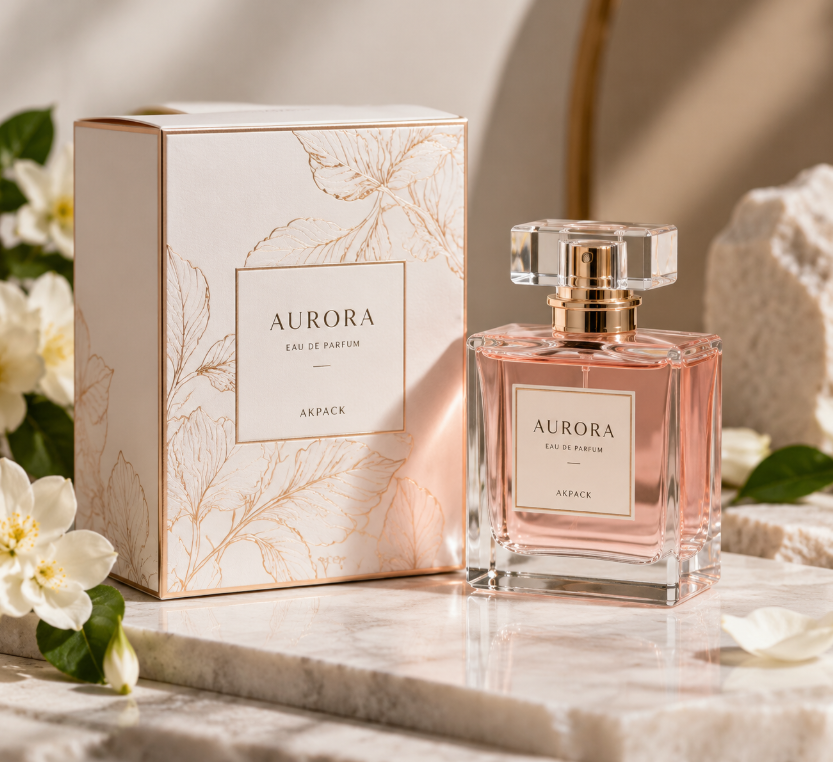
Custom perfume packaging can be developed through adjustments to box dimensions, opening structures, paper materials, printing, decorative finishes, protective inserts, and branded accessories. The right combination depends on the fragrance collection’s positioning, bottle shape, retail environment, and production requirements. Brands do not need to treat every element as equally customizable or equally important. A focused selection of features can create a distinctive result while keeping the structure practical to manufacture.
Which Parts of a Custom Perfume Box Can Be Personalized?
A perfume box can be customized at several levels. Structural customization includes dimensions, opening mechanisms, compartment arrangements, and bottle orientation.
Material customization covers paperboard grades, rigid board, covering paper, and selected surface textures.
Visual customization includes logo placement, printed artwork, colors, decorative finishes, and branded details.
Internal customization can include inserts, retaining structures, and compartments for accessories.
Common options include:
- Box dimensions and proportions
- Folding, magnetic, drawer, or lid-and-base structures
- Coated, kraft, or specialty papers
- CMYK and spot-color printing
- Foil stamping and embossed details
- Matte, gloss, and soft-touch finishes
- EVA, paperboard, sponge, or flocked inserts
- Ribbons, pull tabs, and selected packaging accessories
Not every combination is suitable for every structure. Manufacturing compatibility should be evaluated during development.
How Can Premium Fragrance Brands Create a Distinctive Unboxing Experience?
An effective unboxing experience does not begin with decoration. It begins with the sequence of interaction.
What does the customer see first? How does the box open? Where is the bottle positioned? Is it easy to lift out? Do the materials feel consistent with the fragrance’s identity?
For a minimalist perfume, a clean lid-and-base structure with textured covering paper may provide a sophisticated experience.
A useful design exercise is to prototype the complete opening sequence, not just the closed-box appearance.
For brands developing luxury perfume packaging, the visual and tactile details should work together rather than compete for attention.
Are Custom Perfume Gift Boxes Suitable for Seasonal and Limited-Edition Collections?
Seasonal collections often have different requirements from permanent product lines. They may include multiple fragrance products, travel-sized bottles, sample vials, decorative elements, or additional printed materials.
A custom gift box can be developed around these arrangements using fitted compartments and an appropriate opening structure.
However, limited-edition packaging should still be practical to manufacture, assemble, and ship.
Special structures should be reviewed against the project schedule, artwork approval, insert complexity, and required production quantity.
If the launch date is fixed, simplify decisions that introduce avoidable development uncertainty.
A seasonal box that arrives too late cannot deliver the intended commercial value, regardless of how attractive the design looks.
How Can One Packaging System Support an Entire Fragrance Collection?
A coordinated packaging system helps customers recognize related products. The outer boxes do not need to be identical, but they should share a visual language.
For example, a fragrance collection might use the same covering paper, logo treatment, typography, and opening style across several bottle sizes.
Different scent names and colors can distinguish individual products.
This approach supports brand recognition while simplifying communication with the manufacturing team.
For repeat orders, it also becomes easier to maintain a consistent appearance when approved material references, dielines, and finishing standards are documented.
7. How Do Perfume Packaging Samples, MOQ, and Bulk Production Work?
Custom perfume packaging typically moves from specification review and structural development to sampling, approval, bulk manufacturing, quality inspection, and shipment. The minimum order quantity depends on the structure, materials, artwork versions, and production requirements. Sampling is especially important because it allows brands to evaluate bottle fit, printing, finishes, and assembly before committing to production. A clear approval process helps reduce misunderstandings and supports more consistent finished packaging.
What Information Does a Perfume Box Factory Need Before Quoting?
The more complete your initial packaging information, the easier it becomes to evaluate suitable solutions.
Start with the bottle. Provide its dimensions, filled weight, photographs, and any unusual details such as a heavy cap or irregular glass profile.
Then describe the packaging you want. Useful information includes:
- Preferred box style or reference image
- Approximate external dimensions, if known
- Target material or desired appearance
- Logo and artwork files
- Printing and decorative finish preferences
- Insert or compartment requirements
- Expected order quantity
- Delivery destination
- Planned launch schedule
A target packaging budget can also help guide material and structure recommendations without requiring public price discussions.
If you do not have finished artwork or a structural drawing, a reference image and clear product information are a useful starting point.
AKpack can support packaging development from reference concepts and customer requirements through structural review and sample preparation.
What Types of Custom Perfume Packaging Samples Should You Request?
Different sample types answer different questions. A white structural sample allows the box dimensions, opening mechanism, and bottle fit to be checked before final decorative work.
A printed sample helps evaluate artwork positioning, visual appearance, and selected colors.
A finishing sample can demonstrate processes such as foil stamping, embossing, or specialty paper effects.
A pre-production sample should reflect the approved materials and manufacturing specification as closely as practical.
| Sample stage | What to evaluate |
| Structural sample | Dimensions, bottle fit, opening, insert geometry |
| Printed sample | Graphics, color appearance, artwork position |
| Finishing sample | Foil, embossing, coating, material texture |
| Pre-production sample | Final construction and approved specification |
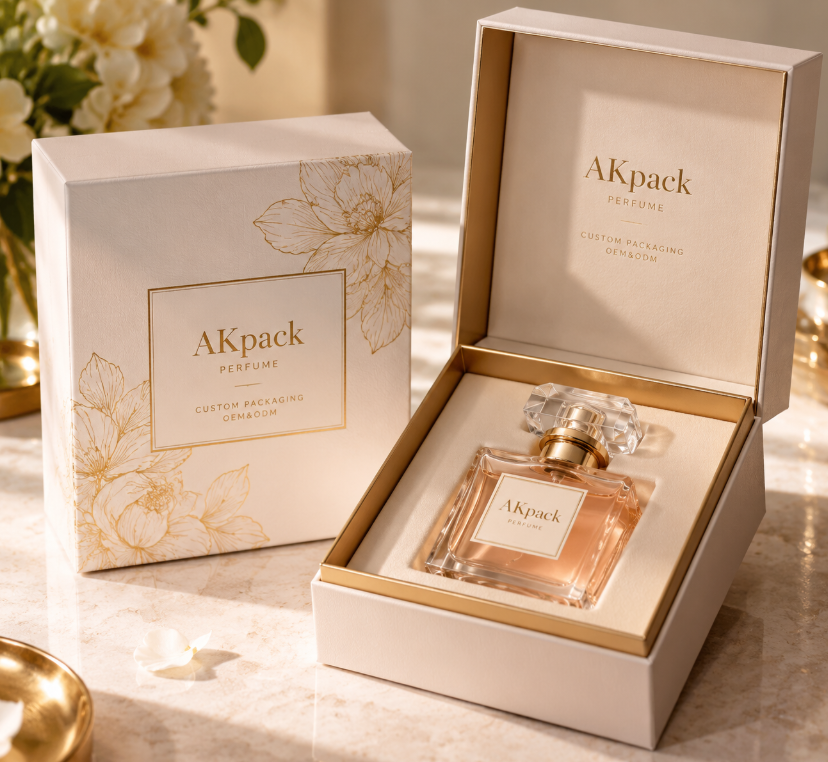
The right sampling sequence can reduce unnecessary revisions. There is little benefit in perfecting a foil-stamped logo while the bottle cavity remains incorrect.
Explore packaging sample development before proceeding with full production.
What Is the MOQ for Custom Perfume Packaging Boxes?
MOQ refers to the minimum order quantity accepted for a specific production arrangement. It may vary according to board type, printing setup, finishing requirements, and box construction.
AKpack supports custom packaging projects with a stated minimum order quantity of 500 pieces, subject to the confirmed product specifications and production arrangement.
When discussing an order, clarify whether the MOQ applies per design, size, color version, or combined production run.
This is especially important for fragrance brands launching several scents at the same time. A collection consisting of multiple different printed designs may not follow the same quantity conditions as one identical packaging design.
How Long Does Custom Perfume Box Sampling and Manufacturing Take?
Sampling and production schedules depend on structural complexity, material sourcing, printing processes, finishing requirements, revisions, and manufacturing capacity.
A basic folding carton may require a different development sequence from a rigid magnetic box with several custom components.
A typical project follows these stages:
- Packaging requirement review
- Structural design and material evaluation
- Sample development
- Customer inspection and feedback
- Final sample and artwork approval
- Material preparation and production scheduling
- Printing, finishing, die-cutting, and assembly
- Quality inspection and packing
- Export shipment coordination
Confirm the schedule for the actual project rather than assuming that every box type follows the same timeline.
Brands should also allow time for sample transportation, artwork corrections, and unexpected technical changes.
How Can You Maintain Consistency Between the Approved Sample and Bulk Production?
A beautiful sample is only useful if the production process can reproduce the approved result consistently.
Before manufacturing, establish clear reference standards. These may include:
- Approved dieline and finished dimensions
- Confirmed board and covering material
- Printed color references
- Foil and embossing positions
- Insert dimensions and fit
- Assembly details
- Surface appearance standards
- Packing and labeling instructions
During production, relevant inspection points can include incoming materials, printing, finishing, forming, assembly, and finished goods.
AKpack’s company information identifies a dedicated eight-person quality-control team supporting its manufacturing operations.
For each project, agreed specifications, sample references, inspection requirements, and acceptance criteria should be confirmed before bulk production.
The objective is straightforward: the finished boxes should meet the agreed standard, not merely resemble the original concept.
8. How to Choose a Reliable Custom Perfume Packaging Manufacturer in China?
A reliable perfume packaging manufacturer should be able to evaluate structural feasibility, recommend appropriate materials, develop samples, manage production requirements, and communicate clearly throughout the project. The lowest quotation does not automatically represent the best manufacturing value. Buyers should look for evidence of technical understanding, relevant box-making capabilities, quality-control procedures, realistic production planning, and responsibility for resolving issues.
What Should You Look for in a Perfume Box Factory?
A packaging manufacturer should understand more than the appearance of the finished box. It should be able to discuss board selection, structure, insert geometry, printing, decorative finishes, assembly, and export packing.
When evaluating a supplier, consider:
- Experience with your intended box structure
- Ability to develop packaging from references or drawings
- Familiarity with decorative printing and finishing
- Options for protective inserts
- Sample preparation capability
- Quality-control procedures
- Production and delivery coordination
- Clear quotation and approval processes
One useful indicator is the quality of the questions the manufacturer asks. A supplier that requests bottle dimensions, filled weight, and a sample is addressing real engineering needs.
A supplier that immediately promises any packaging design without technical evaluation may be overlooking important manufacturing details.
Factory vs. Trading Company: Which Is Better for Custom Perfume Packaging?
Direct manufacturers and trading companies can serve different purchasing needs. Working directly with a manufacturer may give buyers closer access to structural development and production discussions.
A trading company may provide useful sourcing coordination across multiple product categories or manufacturing partners.
Neither arrangement automatically guarantees superior quality or lower overall cost.
The important questions are who manages the production specification, who approves samples, who checks finished goods, and who takes responsibility if something does not meet the agreed requirements.
For a technically demanding perfume box with a custom insert and several decorative finishes, direct communication with the manufacturing team can be particularly valuable.
What Questions Should You Ask Before Choosing a Packaging Supplier?
A strong sourcing process begins with clear questions. Ask whether the supplier has experience manufacturing the intended box structure.
Confirm which materials and finishing processes are available. Discuss whether the bottle fit can be validated through physical sampling. Clarify the minimum quantity for each artwork variation.
Also confirm:
- What is included in the quoted specification?
- Are sample development and tooling separate items?
- How are material and color references approved?
- What inspections are included during production?
- How are defects and corrective actions handled?
- What is the final packing arrangement?
- Which delivery terms apply?
- What information is needed before the production schedule can be confirmed?
Compare suppliers using equivalent specifications. An offer for a standard printed carton cannot fairly be compared with one that includes a custom rigid structure, fitted insert, and multiple finishing operations.
Why Work with AKpack for Custom Perfume Packaging Development?
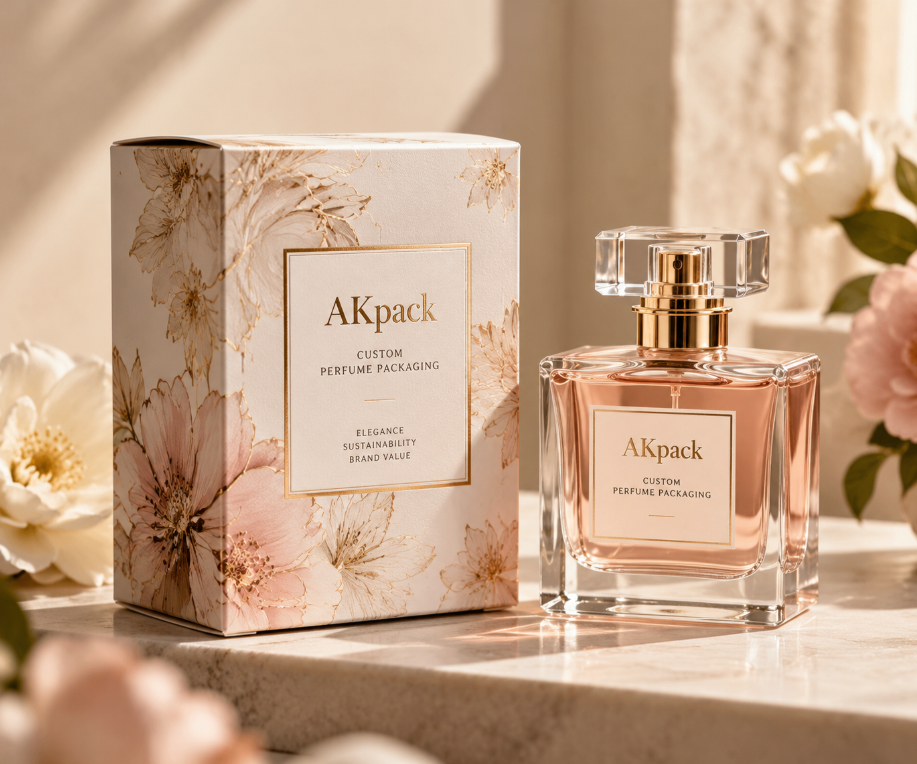
AKpack is a custom paper packaging manufacturer based in Dongguan, China.
We support fragrance brands with structural design, material recommendations, printing, surface finishing, insert customization, sample development, bulk manufacturing, and export delivery coordination.
Our capabilities cover multiple packaging structures, including folding cartons, rigid boxes, magnetic boxes, drawer boxes, and lid-and-base designs.
Our material and finishing options include coated paperboard, greyboard, kraft paper, specialty papers, CMYK printing, spot colors, foil stamping, embossing, debossing, and protective insert materials.
For brands looking for a custom packaging manufacturer, an integrated development process can make it easier to evaluate the relationship between appearance, protection, and manufacturing requirements.
Rather than approaching structure, materials, finishing, and inserts as separate decisions, we can review them as parts of one packaging project.
This is particularly useful when a fragrance brand has a reference image or packaging concept but needs help developing a practical structure and production specification.
9. How Can You Get a Custom Perfume Packaging Solution and Quote from AKpack?
Getting a custom perfume packaging quotation begins with sharing the essential details of your fragrance and packaging requirements. Provide the bottle dimensions, preferred box style, estimated order quantity, visual references, and delivery destination. With this information, AKpack can review possible structures, materials, finishes, and protective inserts before preparing a project-specific proposal. You do not need to finalize every technical detail before starting the discussion.
What Should You Prepare Before Requesting Custom Perfume Boxes?
A packaging project usually begins with a few basic pieces of information.
First, share your bottle measurements and photographs. If the bottle has an unusual shape, decorative cap, or heavy base, mention these details.
Second, describe the type of packaging you have in mind. Reference photographs, sketches, previous packaging examples, or brand mood boards can all help communicate the desired appearance.
Third, provide your estimated order quantity and required destination.
If you already have a design file or dieline, include it. If not, explain your preferred colors, materials, and presentation style.
The more accurately the initial information reflects the real product, the easier it becomes to develop a suitable structure.
Can AKpack Help If You Only Have a Perfume Packaging Idea or Reference Image?
Yes. AKpack supports packaging development based on customer ideas, reference images, drawings, and product requirements.
A brand may know the appearance it wants without having a production-ready structure.
For example, you may want a magnetic perfume gift box inspired by an existing design but need different dimensions, covering paper, and internal protection for your bottle.
The development process can begin by reviewing the concept and identifying its functional requirements.
Material and structural options can then be discussed before sample production.
A reference image is a useful communication tool, but manufacturing feasibility should be confirmed through proper technical evaluation.
How Do You Move from Packaging Concept to Bulk Manufacturing?
Once the preferred structure and specifications are established, sample development provides an opportunity to check the actual result.
The sample can be reviewed for bottle fit, opening behavior, material appearance, printing, and finish quality.
If changes are necessary, they should be resolved before final approval.
After the packaging specifications are confirmed, the project can proceed to material preparation, manufacturing, quality inspection, and shipment coordination.
For repeat orders, keeping approved references and specifications helps maintain consistency and simplifies future communication.
Ready to Develop Perfume Packaging That Fits Your Brand?
Whether you need a clean retail carton, a refined rigid perfume box, or a distinctive gift presentation, AKpack can help you explore packaging structures and customization options suitable for your fragrance.
Share your bottle dimensions, preferred style, reference images, estimated quantity, and delivery destination. Our team can review your requirements and discuss the next steps for your project.
Start your custom perfume packaging project with AKpack and turn your fragrance packaging ideas into a practical manufacturing solution.