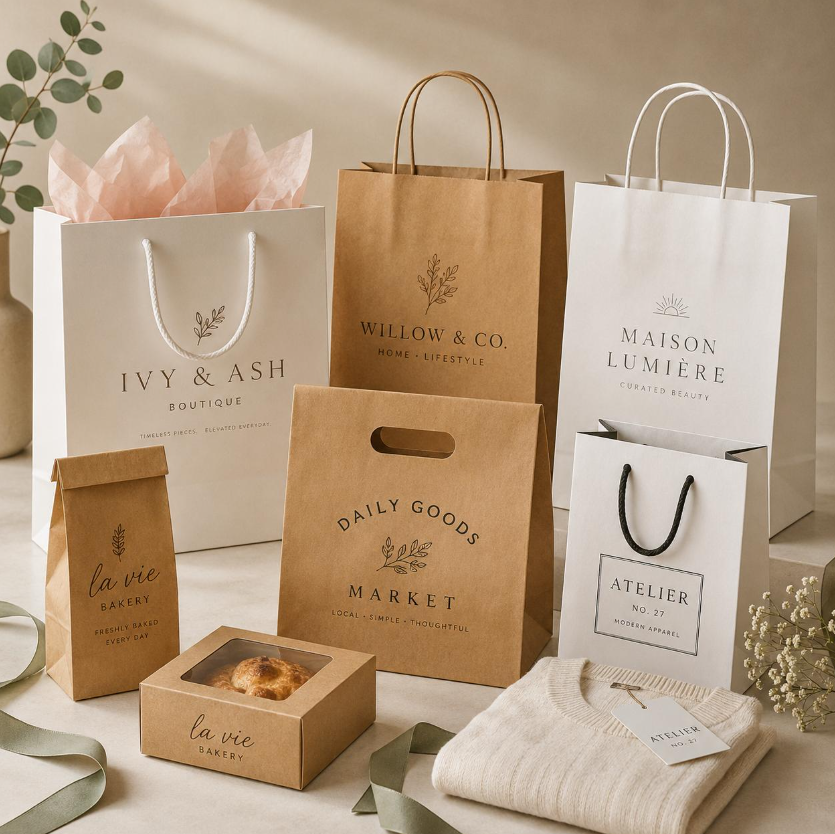

Choosing paper for a Custom Shopping Bags becomes much more important when the bag must carry books, glass bottles, boxed products, multiple retail purchases, or other heavy items. A bag that looks attractive on a shelf may not perform well once it is loaded, lifted, carried, and placed down repeatedly. If the paper tears, the handle pulls away, or the bottom opens, the problem affects more than the packaging itself. It can damage products, create inconvenience for customers, and undermine the brand’s reputation.
The solution is not always to choose thicker paper. Reliable carrying performance depends on the relationship between paper grade, grammage, bag dimensions, handle attachment, bottom construction, adhesive bonding, and the way a product’s weight is distributed. Surface finishes also matter, but their role is different: printing, lamination, and decorative treatments primarily influence appearance and surface protection rather than automatically improving load-bearing performance.
For brands, wholesalers, and retailers sourcing custom paper bags, the most effective approach is to define the actual carrying requirement first and then select the material and construction that meet it. Natural kraft paper, white kraft paper, coated art paper, and recycled kraft paper each offer different advantages. The right choice balances practical performance, brand presentation, manufacturing requirements, and total cost.
This guide explains how to compare paper bag materials, identify weak points, choose useful reinforcement features, specify paper grammage, evaluate different product applications, and approve samples before bulk production. It also outlines the information buyers should prepare to obtain a more accurate quotation for custom heavy-duty paper bags.
1. Which Paper Bag Materials Are Best for Heavy Items? Compare Kraft Paper, White Kraft, and Coated Paper
The best paper bag material depends on what the bag will carry, how it will be handled, the required appearance, and the available budget. Natural kraft paper is a practical option for many everyday retail applications. White kraft paper provides a clean background for branding, while coated art paper supports detailed printing and premium finishes. Recycled kraft paper may be suitable when recycled content is part of the packaging specification. None of these materials should be selected by appearance or paper weight alone; the finished construction must meet the intended carrying requirements.
| Material | Main advantages | Limitations to consider | Typical applications |
| Natural kraft paper | Natural appearance, versatile construction, practical for many retail uses | Performance depends on grade, dimensions, and structural design | Shopping bags, books, boxed products, general retail |
| White kraft paper | Clean appearance and a light printing background | Strength and print results vary by grade and printing process | Fashion retail, beauty products, gifts |
| Coated art paper | Smooth surface, detailed graphics, premium print presentation | Heavier loads may require careful structural reinforcement | Luxury retail, cosmetics, jewelry, premium gifts |
| Recycled kraft paper | Can incorporate recycled fiber into packaging | Strength, consistency, recycled content, and documentation need verification | Retail and promotional packaging with recycled-material requirements |
| Laminated paper construction | Can improve surface protection and provide a refined finish | Lamination does not automatically increase carrying strength or make a bag waterproof | Premium shopping bags and branded gift bags |
Natural kraft paper: a practical starting point
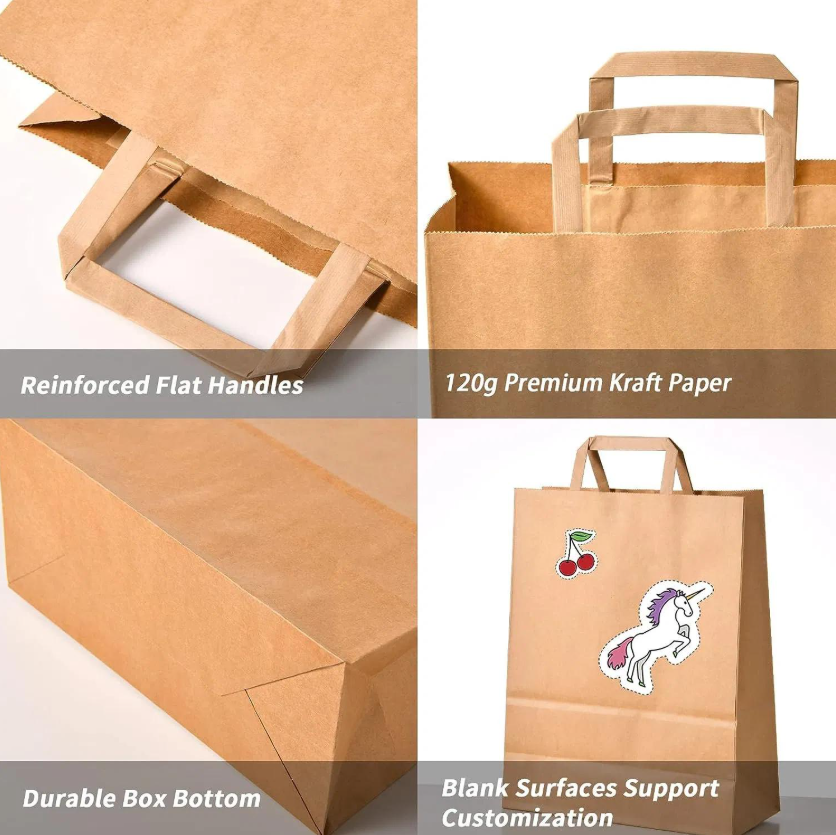
Natural kraft paper is widely used for shopping bags, grocery carriers, and general retail packaging. Its brown color and fibrous appearance suit brands that prefer a natural, understated style. It can also be adapted to different bag dimensions and structural designs.
For many applications, natural kraft paper provides a practical balance of appearance, everyday functionality, and cost. However, the term “kraft paper” does not specify a single strength level. Different grades can vary in fiber composition, grammage, stiffness, and performance. A supplier should therefore evaluate the actual grade and the proposed bag construction rather than recommend a material based on its name alone.
Natural kraft paper is worth considering when a brand needs a functional shopping bag, a natural visual identity, or a versatile starting point for custom packaging. For heavier contents, it may be combined with a suitable handle attachment, a reinforced top edge, or a bottom insert, depending on the product and the bag design.
Buyers comparing kraft paper bags should ask for the proposed paper grade, finished dimensions, handle style, and bottom construction. These details provide a more useful basis for evaluating a bag than paper color alone.
White kraft paper: a clean background for branding
White kraft paper is suitable for brands that want a bright, simple appearance while retaining a paper-based look. It can work well for fashion accessories, cosmetics, gift products, and selected retail applications where brand colors and logos need a light background.
White kraft paper is not automatically stronger than natural kraft paper. Its carrying performance depends on the selected grade, fiber composition, dimensions, and finished construction. Buyers should confirm the printing method, intended color appearance, specified grammage, and structural requirements before approving the material.
For companies developing custom paper bags, white kraft can provide a useful balance between visual simplicity and practical packaging functionality when the selected material meets the project’s requirements.
Coated art paper: premium printing and surface appearance
Coated art paper is often chosen for bags that require detailed graphics, product images, fine text, or a polished retail presentation. It can be paired with finishes such as matte or gloss lamination, foil stamping, embossing, debossing, and spot UV, depending on the product design and manufacturing process.
These finishes can improve brand presentation, but they should not be mistaken for structural reinforcement. A premium printed bag can still fail if its handle attachment is weak or its bottom seam is poorly bonded. For heavier products, the paper grade and the bag’s construction need to be evaluated together.
Recycled kraft paper: material requirements and performance
Recycled kraft paper may suit brands that want to incorporate recycled fiber into their packaging. Its performance depends on the actual grade, fiber composition, manufacturing quality, and consistency. Buyers should confirm recycled-content claims and any required supporting documentation rather than assume that all recycled papers have the same characteristics.
Recycled content, recyclability, and third-party certification are different claims. Surface treatments can also affect end-of-life options, so the intended packaging requirements should be considered as a whole.
How should you make the final material choice?
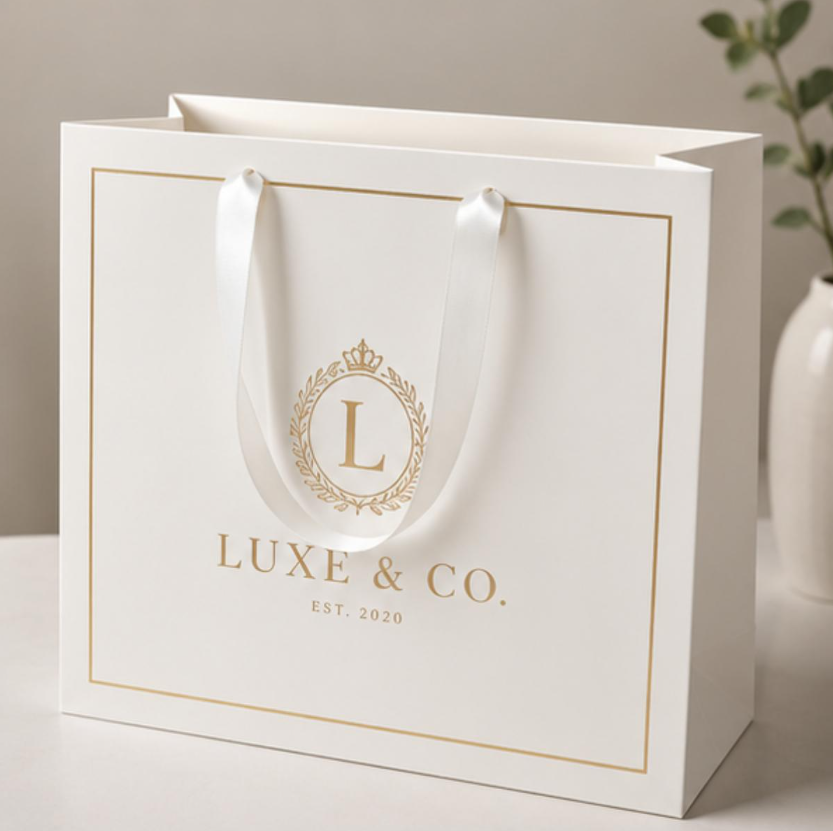
Start with the product and its carrying requirements, then consider appearance and cost. Natural kraft paper may suit practical everyday applications; white kraft can provide a clean branded look; coated art paper can support more detailed visual presentation; and recycled kraft may suit projects with defined recycled-material requirements.
These are starting points, not fixed rules. A premium bag can use kraft paper, and a coated-paper bag can be designed for heavier contents. The final decision should be based on the full specification and, where necessary, a sample evaluation.
2. How Can You Prevent Heavy-Duty Paper Bags from Tearing, Sagging, or Losing Their Handles?
Paper bag failures often occur at the points where forces concentrate: handle attachments, top edges, bottom seams, folded corners, and areas that support unevenly distributed products. Increasing the paper grammage may help in some cases, but it does not automatically fix a weak attachment, a poorly bonded seam, or a base that does not adequately support the contents.
The most effective approach is to identify how the bag is likely to fail and address that weakness through the appropriate material, structure, or manufacturing adjustment.
Why do paper bag handles pull away?
Handles transfer the weight of the contents to a relatively small area of the bag. When a loaded bag is lifted, the attachment points experience concentrated forces. The risk may increase if the product is heavy, the handle spacing is unsuitable, the attachment area is too small, or the paper tears around the fixing point.
A suitable handle design should be evaluated together with the paper grade, attachment method, and any reinforcement used. Depending on the construction, a reinforcement patch can distribute stress across a larger area. A folded top edge may also provide additional support, but its effectiveness depends on the paper, fold design, adhesive, and attachment method.
Handle material matters too. Paper handles, twisted paper handles, flat paper handles, and rope handles have different appearances and construction requirements. No handle type should be assumed to provide a specific load capacity without evaluating the complete assembly.
Why do paper bag bottoms sag or open?
The bottom of a paper bag supports the contents and transfers their weight to the side panels and seams. A compact, heavy product can concentrate pressure in a small area. Several products may shift during movement, creating uneven loading. If the base is poorly fitted, insufficiently supported, or inadequately bonded, the bag may sag or open.
A properly designed bottom insert can help distribute the load and provide a more stable base. The insert must fit the bag and work with its dimensions and intended contents. An insert that is too small, too flexible, or poorly positioned may provide limited benefit.
The bottom seam also needs attention. Paper grade, adhesive compatibility, application, and curing conditions can influence the bond. For bags that will carry demanding loads, the complete bottom construction should be checked using a sample made to the proposed specification.
How do folds, corners, and side seams affect durability?
Folds and corners are natural stress points in a paper structure. Incorrect folding, damaged edges, poor alignment, or inconsistent adhesive application may create weak areas. Side gussets also affect how the bag expands and how its contents are distributed.
The bag’s dimensions should match the product. A bag that is too narrow may force the contents against the side panels, while a bag that is too wide may allow products to move excessively. Insufficient gusset depth can make bulky products difficult to position, while excessive unused space can increase movement during carrying.
Before approving a design, check that the product fits without forcing the seams, that the base supports the full footprint, and that the handles can be gripped comfortably without pulling the upper panel out of shape.
A practical failure-prevention checklist
Before ordering heavy-duty paper bags, review these points with your packaging supplier:
- Confirm the maximum packed weight and the product’s dimensions.
- Identify whether the load is compact, bulky, fragile, or unevenly distributed.
- Select a suitable paper grade and bag size.
- Evaluate the handle attachment and top-edge construction.
- Check the bottom insert, base dimensions, and adhesive seams.
- Consider moisture, repeated handling, and other expected use conditions.
- Test the proposed finished bag with representative products before bulk production.
The goal is not to reinforce every part of the bag indiscriminately. It is to strengthen the areas that need support while maintaining an appropriate balance between performance, appearance, material use, and cost.
3. Which Paper Bag Reinforcements and Handle Designs Are Worth Paying For?
Reinforcement is worth considering when it addresses a specific weakness or helps the finished bag meet its intended carrying requirements. Adding every possible reinforcement feature can increase material use and manufacturing complexity without necessarily improving performance enough to justify the cost. The best choice depends on the product, load distribution, bag design, and expected use.
Handle reinforcement patches
A reinforcement patch adds material around the handle attachment area. Its purpose is to help distribute concentrated forces and reduce the risk of the handle pulling through the paper. The patch material, size, placement, adhesive, and attachment method all influence how effectively it works.
For bags carrying relatively heavy products, this feature may be worth evaluating when the handle attachment is a likely failure point. However, the patch should be designed as part of the complete bag rather than added without considering the surrounding paper and structure.
Reinforced top edges
A folded or reinforced top edge can add support to the upper part of the bag and provide a more finished appearance. It may also help stabilize the handle attachment area, depending on the design.
The fold must be compatible with the paper grade, handle placement, and bonding method. A reinforced edge cannot compensate for an unsuitable handle attachment or a paper grade that does not meet the project’s requirements.
Bottom inserts and base reinforcement
A bottom insert can provide a firmer base and help distribute the contents’ weight. It is particularly worth considering when a bag carries compact, dense products or several items that need a stable base.
The insert’s dimensions and rigidity should match the bag. A base that is too small may not support the full footprint of the contents, while a poorly fitted insert may shift during use. The bottom seams and side panels must also be able to work with the added support.
Handle styles: paper, rope, and flat handles
Handle selection affects comfort, appearance, and the way forces are transferred to the bag. Twisted paper handles and flat paper handles can suit different retail styles, while rope handles are often used for premium presentation. The correct choice depends on the bag design, attachment system, product weight, and expected handling.
A comfortable grip does not necessarily mean a stronger attachment. The handle and its fixing points should be assessed together. Buyers should avoid selecting a handle solely because it looks robust or feels substantial.
When are additional structural features unnecessary?
Not every bag requires the same reinforcement. A lightweight retail bag for soft, low-weight products may not need the same construction as a bag carrying glass bottles or heavy boxed goods. Adding a thick insert or multiple reinforcement layers to every design can increase cost, weight, and material use without a clear benefit.
The most cost-effective approach is to identify the likely failure points, select the relevant features, and verify the finished construction. Discussing the design with a supplier before finalizing artwork can also help avoid expensive structural changes late in the project.
For buyers developing custom paper bag designs, the most useful specification describes the product, the load, the required appearance, and the expected handling conditions. The supplier can then assess which reinforcement features are worth considering for the application.
4. What Paper Bag GSM and Specifications Do You Need for 2 kg, 5 kg, or 10 kg Loads?
GSM means grams per square meter. It measures the mass of paper per unit area, not the safe carrying capacity of a finished paper bag. Although grammage is an important specification, it cannot be used alone to guarantee that a bag will carry a particular weight.
A bag designed for a 2 kg product may need a different construction from a bag designed for a 5 kg or 10 kg load. However, those load values are design scenarios, not universal GSM recommendations. The appropriate paper grade and structure must be determined from the product dimensions, load distribution, handle system, bottom design, and required performance.
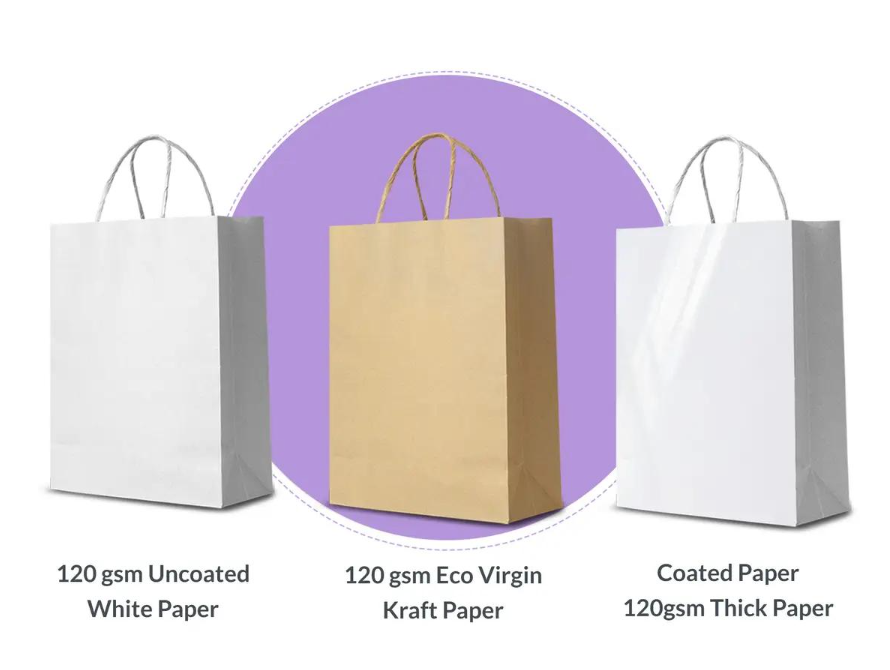
Why GSM alone cannot determine load capacity
Two papers with the same GSM can behave differently because of differences in fiber composition, stiffness, tear resistance, manufacturing quality, and other material properties. The finished bag adds further variables, including dimensions, gusset depth, seams, adhesive bonding, handle placement, and reinforcement.
For example, a compact product may concentrate its weight over a small area of the base. A larger but lighter product may distribute its load more evenly. A bag with weak handle attachments can fail even if the main panels use relatively heavy paper.
For this reason, suppliers should not promise a carrying capacity based solely on GSM. Buyers should provide the intended product weight and dimensions so the proposed material and structure can be assessed as a complete design.
How to specify a bag for different load scenarios
| Intended packed weight | What should be evaluated | Important design questions |
| Around 2 kg | Paper grade, bag dimensions, handles, and bottom construction | Is the product compact, fragile, or unevenly shaped? |
| Around 5 kg | Material suitability, handle attachment, seams, base support, and load distribution | Will the bag be carried over a distance or handled repeatedly? |
| Around 10 kg | Full structural design, reinforcement, handle system, adhesive bonding, and representative testing | Is the bag suitable for the product’s dimensions and intended handling conditions? |
These examples are starting points for specifying a project, not guarantees of performance. Actual requirements depend on the product, design, manufacturing process, and applicable testing criteria.
Which specifications should buyers provide?
When requesting a quotation for custom heavy-duty paper bags, provide the following information wherever possible:
- Product weight, including the maximum expected packed weight.
- Product dimensions and the number of items per bag.
- Required bag width, height, and gusset depth.
- Preferred paper type, appearance, and printing requirements.
- Handle style and any reinforcement preferences.
- Whether the contents are fragile, sharp-edged, or moisture-sensitive.
- Expected carrying conditions and intended product use.
- Order quantity and delivery requirements.
If the exact material is not yet known, describe the product and its requirements first. A packaging supplier can then discuss suitable options and clarify which specifications need confirmation before sampling.
How should the proposed construction be verified?
The most useful next step is to evaluate a sample made to the intended specification. Load it with representative products, inspect the handles and seams, and observe whether the base remains stable during normal handling. If the application is demanding, agree on an appropriate test method and acceptance criteria before approving production.
Do not use an arbitrary paper weight or a single successful lift as proof of a universal load rating. Performance should be evaluated under conditions that reasonably represent the actual use of the bag.
5. Which Custom Paper Bags Work Best for Bottles, Books, Boxed Products, and Luxury Gifts?
The best bag construction depends on the product’s shape, weight, fragility, and handling requirements. Matching the material and structure to the application is usually more useful than selecting one paper type for every product category.
Glass bottles and other fragile products
Bottles create specific design challenges because their weight can be concentrated at the base, and their shape may allow them to move during carrying. Glass products also require attention to collision and breakage risks.
For bottle packaging, consider the bag dimensions, base support, handle placement, and the need for internal dividers or other protective features. A divider may help separate multiple bottles and limit direct contact, but it must be sized for the products and the finished bag.
The packaging should be evaluated with the actual bottle dimensions and filled weight. A bag that accommodates an empty bottle may behave differently once the bottle is filled. Where protection is important, the carrying bag should be considered alongside the product’s primary packaging and any additional protective packaging.
Books and other compact, dense products
Books can be relatively heavy for their size. Their rectangular shape may also create pressure at corners and along the base. For this application, the bag should accommodate the book dimensions without forcing the side seams or leaving excessive room for movement.
A suitable paper grade, well-constructed bottom, and appropriate handle attachment can help address the main load points. If multiple books will be carried together, evaluate their combined weight rather than considering the weight of a single item.
Boxed retail products
Boxed products vary widely in size and density. A small, dense box may place more concentrated pressure on the base than a larger, lighter box. Multiple boxes can also shift during movement if the bag dimensions are not appropriate.
Before selecting a material, confirm the number of boxes per bag, their arrangement, and the maximum packed weight. The bag should provide enough space for the products to be placed inside without damaging the packaging, while avoiding excessive movement during carrying.
Luxury gifts and premium retail products
Luxury gifts often require a combination of presentation, comfortable handling, and suitable protection. Coated art paper, carefully selected printing, and decorative finishes may support the brand’s visual identity, while the structural design must still match the products being carried.
Premium presentation does not remove the need for functional design. A foil-stamped or laminated bag can still tear if its handle attachment or bottom construction is unsuitable. Choose the surface finish after the main material and structural requirements have been considered.
Match the bag to the product, not just the product category
| Product type | Main concern | Features worth evaluating |
| Glass bottles | Concentrated weight and product movement | Base support, dividers, handle placement |
| Books | Dense load and corner pressure | Bag dimensions, bottom construction, handle attachment |
| Boxed products | Combined weight and movement | Bag size, gusset depth, base support |
| Luxury gifts | Presentation and functional carrying performance | Paper finish, printing, handle style, structural reinforcement |
| Mixed retail purchases | Uneven load distribution | Flexible sizing, handle attachment, bottom design |
These are general design considerations rather than fixed construction prescriptions. The actual solution depends on product dimensions, packed weight, intended use, and manufacturing requirements.
For buyers exploring custom shopping bags, providing photographs or drawings of the products can help clarify their shape and arrangement. Dimensions, packed weight, order quantity, and branding requirements are also useful when developing a suitable specification.
6. How Do You Test Custom Paper Bags Before Approving Bulk Production?
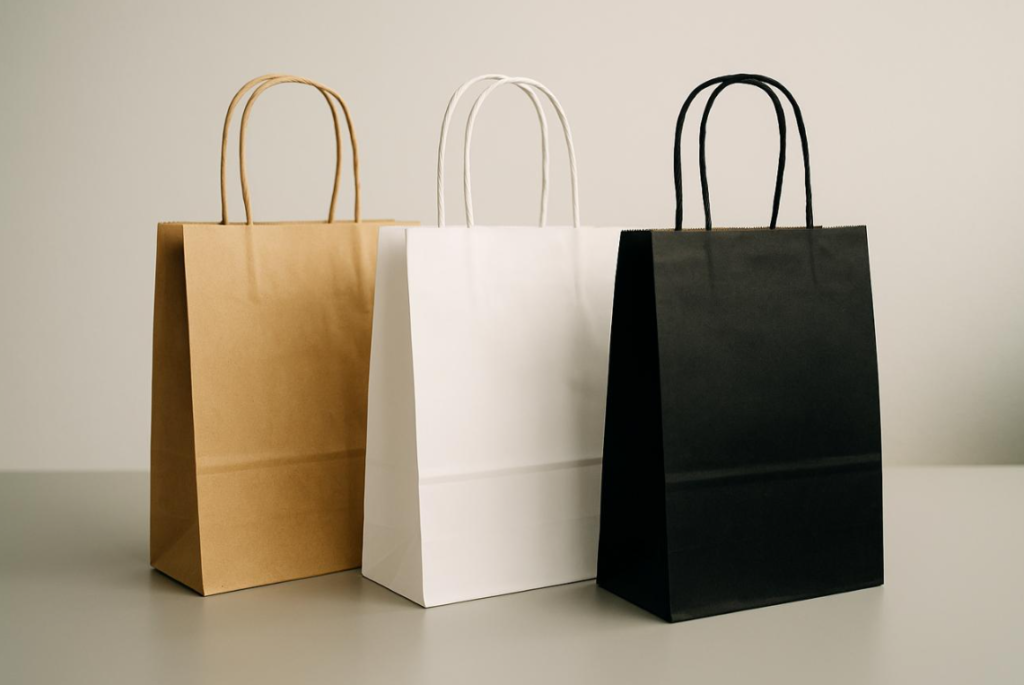
Sample approval is an important step because a material specification does not, by itself, prove that the finished bag will perform as intended. A sample allows buyers to check dimensions, appearance, handle comfort, structural details, and compatibility with the actual products before committing to a production run.
Check the finished dimensions and product fit
Start by measuring the sample and comparing it with the approved specification. Confirm the width, height, gusset depth, opening, and base dimensions. Place the intended products inside and check whether they fit without forcing the side panels, corners, or handles.
A bag that is too small may strain its seams, while one that is too large may allow products to move excessively. The fit should support normal loading and carrying without unnecessary pressure or excessive free space.
Inspect the handle attachments and seams
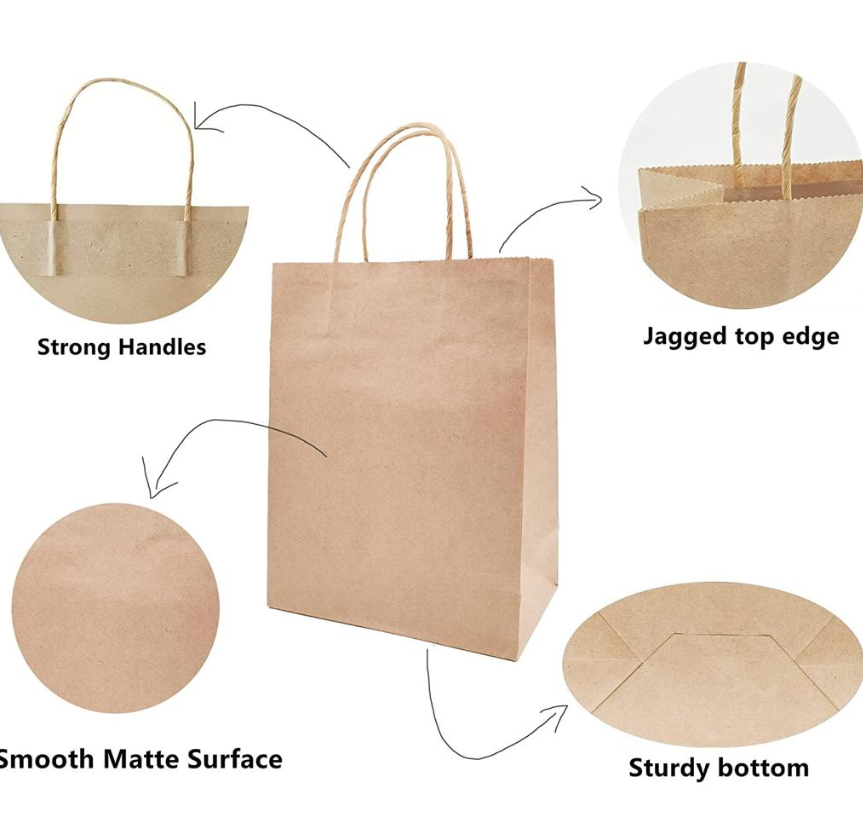
Examine the handle fixing points, top edge, side seams, folded corners, and bottom construction. Look for visible gaps, poor bonding, uneven folds, damaged paper, or inconsistent finishing. Check that the handles are positioned as specified and can be gripped comfortably.
Visual inspection is useful, but it cannot establish a verified load capacity on its own. Where carrying performance is critical, the sample should also be evaluated under agreed conditions using representative products.
Test with the actual product
Load the bag with the product or a representative load that matches the intended application. Follow an agreed test procedure, observe the bag during normal handling, and inspect the structure afterward.
The test should reflect realistic use. For example, a bag intended for a short retail carry may face different conditions from one expected to be carried repeatedly over a longer distance. If moisture, temperature, or other environmental factors are relevant, those conditions should be considered as part of the evaluation.
Avoid assuming that one successful lift establishes a universal carrying limit. The outcome applies to the tested sample and conditions; different sizes, materials, handle configurations, or production variations may require separate evaluation.
Agree on acceptance criteria before testing
Before sample approval, clarify what constitutes an acceptable result. Criteria may include finished dimensions, visual quality, handle attachment, seam integrity, product fit, and performance under the agreed test conditions.
If a particular industry standard or formal test method is required, confirm its correct name, scope, and applicability before referencing it in the specification. Do not substitute an informal handling check for a formal test when the project requires documented verification.
Maintain consistency during bulk production
The approved sample should provide a clear reference for the production specification. Confirm the material grade, dimensions, printing, finishing, handle construction, bottom design, and any agreed quality checks.
For larger orders, buyers may also want to agree on inspection arrangements and how deviations will be handled. Clear specifications reduce ambiguity and make it easier for both parties to evaluate whether the delivered products match the approved design.
For projects involving a custom paper bag manufacturer, the most useful supplier discussion covers not only the material and price but also the sample specification, approval process, production requirements, and agreed quality expectations.
7. How Can You Get a Custom Heavy-Duty Paper Bag Quote That Balances Strength, Branding, and Cost?
A useful quotation starts with a clear product requirement. If the supplier knows only the preferred paper color or a rough bag size, it may be difficult to recommend a suitable material and structure. Providing the product weight, dimensions, intended use, and order quantity creates a more reliable basis for discussing cost and performance.
What information should you include in your quotation request?
Prepare as many of the following details as possible:
- Product type, dimensions, and maximum packed weight.
- Required bag width, height, and gusset depth.
- Quantity per order and estimated future demand, if known.
- Preferred paper material or visual reference.
- Handle style and any reinforcement requirements.
- Printing artwork, logo requirements, and preferred finish.
- Internal dividers or other protective features, if needed.
- Delivery destination and required delivery date.
- Any special testing, documentation, or packaging requirements.
If some specifications are undecided, explain the application and identify which choices need guidance. A useful quotation discussion should help clarify the requirements rather than force the buyer to choose every technical detail before receiving advice.
What affects the total cost of a custom paper bag?
The total price depends on more than the paper’s grammage. Material grade, finished dimensions, bag structure, handle type, reinforcement, printing coverage, surface finishes, order quantity, and production requirements can all influence the quotation.
Additional features should be selected according to their value for the intended application. A bottom insert may be worthwhile for a bag carrying dense products, while a decorative finish may be more important for luxury retail. In other cases, a simpler construction may meet the requirement without unnecessary expense.
The aim is not to choose the lowest-cost material regardless of performance, nor to add every possible reinforcement feature. It is to specify a bag that meets the actual carrying and branding requirements at an appropriate cost.
How can you avoid unnecessary costs and production changes?
Confirm the main specifications before finalizing artwork and approving a sample. Changes to bag dimensions, material grades, handle attachments, or bottom construction may affect the design and quotation. Identifying these requirements early helps reduce avoidable revisions.
When comparing quotations from different suppliers, check that the specifications are comparable. Two quotations may appear different because they include different paper grades, handle systems, finishes, reinforcement features, or packaging arrangements. A lower unit price is not necessarily the better option if the proposed construction does not meet the same requirements.
Why discuss the complete packaging solution with AKpack?
A custom paper bag should be specified around the product it needs to carry and the experience the brand wants to create. Material, structure, printing, finishing, and cost should be considered together rather than selected independently.
For a quotation discussion with AKpack, share your product dimensions, maximum packed weight, preferred appearance, estimated quantity, and delivery requirements. Photographs, product drawings, or examples of bags you like can also help communicate your expectations.
These details provide a starting point for discussing suitable material options, structural considerations, and the specifications that may need to be confirmed through sampling. The final recommendation should be based on the actual project requirements and the agreed production capabilities.
If you are sourcing custom heavy-duty paper bags or comparing paper bag wholesale options, focus on the complete specification rather than price alone. A clear brief helps you compare offers more fairly and reduces the risk of selecting a bag that looks right but does not perform as required.
Ready to discuss your custom paper bag project? Share your product details, required dimensions, packed weight, preferred material, order quantity, and branding requirements with AKpack to begin evaluating a suitable packaging solution.